Bengaluru Traffic Crisis Deepens After Road Failure
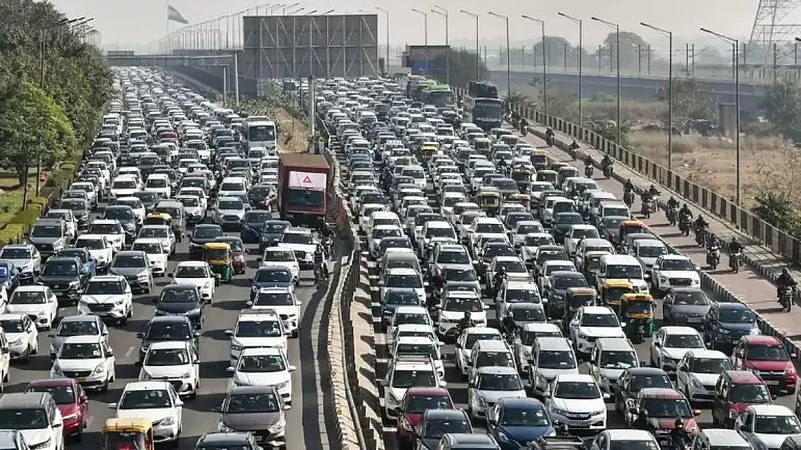
A structural failure along a critical stretch of Hosur Road has once again brought Bengaluru’s fragile transport infrastructure under scrutiny, after a major cave-in disrupted traffic on National Highway 44 at the city’s southern edge. The collapse, affecting a section of roadway under active construction near Chandapura, triggered hours-long gridlock and highlighted systemic challenges in managing high-density urban corridors amid ongoing upgrades. Hosur Road functions as one of Bengaluru’s most economically significant arterial routes, carrying daily commuter traffic to industrial clusters, technology parks, and residential zones, while also serving as the principal gateway for freight and intercity movement from Tamil Nadu and Kerala. The sudden loss of road capacity sharply reduced throughput during peak hours, cascading delays across public transport services and private mobility networks.
Infrastructure officials attributed the Hosur Road collapse to soil instability aggravated by sustained heavy vehicle movement and prolonged excavation work. Urban planners note that such incidents are becoming more frequent in rapidly expanding metropolitan regions where infrastructure renewal is layered onto legacy highways without adequate traffic segregation or phased load management. The immediate impact has been felt most acutely by daily wage workers, office commuters, and logistics operators, many of whom faced travel times stretching multiple hours for short intra-city distances. Transport economists warn that recurring disruptions along NH44 risk raising logistics costs for southern supply chains, particularly for electronics manufacturing, warehousing, and last-mile delivery operations concentrated along Bengaluru’s southern corridor.
Multiple infrastructure projects are currently underway along this stretch, including grade separators, underpasses, highway widening, and a parallel rail overbridge. While these interventions are intended to address long-standing accident-prone junctions and improve long-term safety, experts argue that the lack of integrated construction sequencing has resulted in prolonged congestion, safety hazards, and environmental stress from idling vehicles. Urban resilience specialists also point to climate and sustainability concerns. Excavation-intensive roadworks without robust drainage and soil reinforcement increase vulnerability during heavy rainfall, while congestion-driven emissions undermine Bengaluru’s clean mobility goals. As cities pursue denser, transit-oriented growth, temporary infrastructure failures can have outsized economic and environmental consequences.
Authorities have initiated stabilisation and diversion measures, including temporary backfilling and plans to reroute traffic onto newly developed carriageways. However, with multiple projects scheduled to continue for at least two more years, commuters are unlikely to see immediate relief. The Hosur Road collapse underscores the need for stronger coordination between highway authorities, rail agencies, and urban transport planners. As Bengaluru continues to expand outward, experts say future infrastructure investments must prioritise construction resilience, multimodal planning, and commuter safety ensuring that growth corridors remain functional not just in design, but during execution.