Mumbai has formally tightened its civic cleanliness enforcement framework with the implementation of a revised set of sanitation by-laws, marking a significant shift in how the city regulates waste, public hygiene, and everyday civic behaviour. The updated rules, which came into effect earlier this month, introduce a structured list of offences and penalties aimed at improving compliance in a city struggling with mounting waste volumes, dense public spaces, and uneven sanitation outcomes.
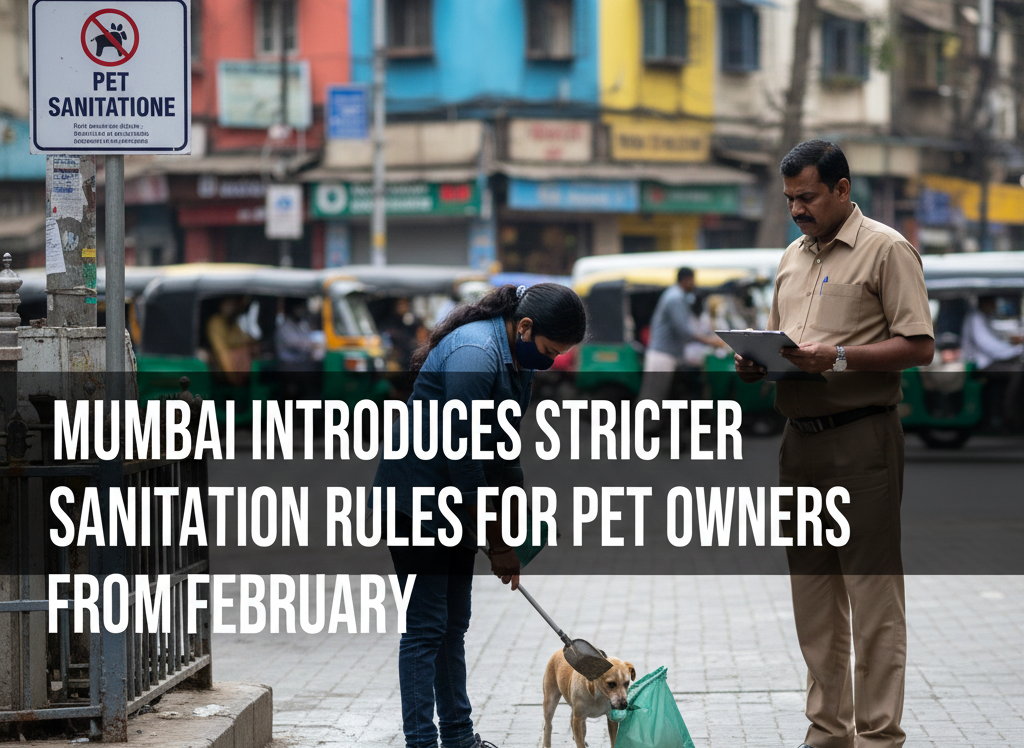
The revised framework expands the scope of punishable violations across residential, commercial, and public domains. Civic officials said the intent is to move beyond symbolic fines and establish predictable consequences for behaviours that contribute to littering, public nuisance, and inefficient waste handling. Penalties now range from relatively modest amounts for minor violations to substantially higher fines for repeat or large-scale offences, signalling a stronger enforcement posture by the city administration. One notable inclusion relates to pet waste management in public spaces. Urban health experts have long flagged uncollected animal waste as a contributor to surface contamination, blocked drains, and localised health risks, particularly during the monsoon season. Under the updated by-laws, failure to clean up after pets in shared spaces attracts a fixed monetary penalty, placing responsibility squarely on owners to manage waste responsibly in high-density neighbourhoods.
The rules also introduce clearer accountability for public and private event organisers. Officials overseeing sanitation compliance said organisers are now required to restore cleanliness at venues and surrounding areas within a defined time window after events conclude. Failure to meet these standards can result in financial penalties and forfeiture of cleanliness deposits, a move aimed at reducing post-event waste accumulation on streets and open grounds. Urban planners view the changes as part of a broader recalibration of Mumbai’s waste governance model. With landfill capacity under pressure and transport costs rising, the city’s sanitation challenge is no longer limited to collection alone. “Behavioural compliance is as critical as infrastructure investment,” said an environmental policy expert, noting that enforcement-backed rules can complement spending on processing facilities and decentralised waste systems.
From an economic perspective, cleaner public spaces have direct implications for tourism, real estate values, and workforce productivity. Business districts and mixed-use neighbourhoods are particularly sensitive to sanitation standards, which influence footfall and long-term investment confidence. Industry observers say predictable enforcement helps create a level playing field, especially for commercial establishments that already invest in compliant waste practices. However, civic groups caution that enforcement must be consistent and transparent to avoid selective penalisation. They argue that public awareness campaigns, adequate waste infrastructure, and grievance redress mechanisms are essential to ensure that penalties drive behaviour change rather than resentment.
As Mumbai continues to position itself as a climate-resilient and liveable global city, the effectiveness of the new sanitation regime will depend on sustained implementation. The coming months are expected to test whether stricter rules, combined with civic participation and infrastructure support, can deliver measurable improvements in cleanliness across neighbourhoods of varying density and income levels.
Mumbai Introduces Stricter Sanitation Rules For Pet Owners From February