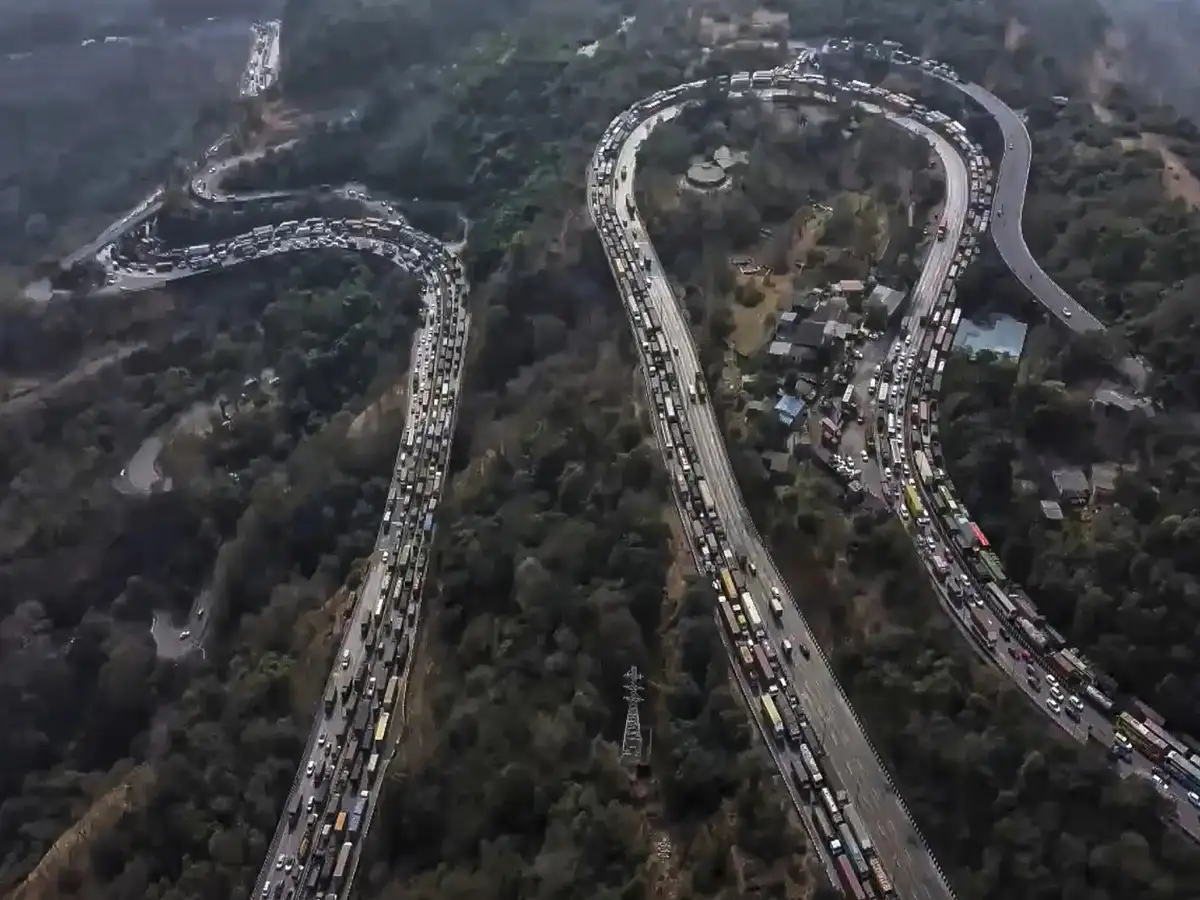
A prolonged traffic breakdown on the Mumbai–Pune transport corridor extended into a second day on Wednesday, exposing the vulnerability of one of India’s most critical intercity links to single-point failures and emergency incidents. The disruption, triggered by a hazardous goods vehicle accident near a key tunnel section, has immobilised large stretches of the expressway while also overwhelming alternative routes across the Western Ghats.
Officials overseeing traffic management confirmed that while the immediate safety risk from the incident has been stabilised, clearance operations have forced the partial closure of the expressway for extended periods. With one carriageway lane unavailable, traffic queues stretched across tens of kilometres, leaving commuters stranded overnight and into the next day. The resulting congestion has disrupted daily travel, logistics movement, and public transport services between Maharashtra’s two largest economic centres. The impact has not been confined to the expressway itself. State-designated diversion routes through ghat roads and regional highways quickly became saturated as private vehicles and freight operators sought to bypass the bottleneck. These routes, designed for moderate traffic volumes, struggled to absorb the sudden surge, leading to travel times stretching well beyond half a day for journeys that typically take a few hours. Transport planners noted that the lack of scalable alternatives highlights long-standing capacity constraints in the region’s road network.
Public transport services were also affected. State-run intercity bus operations between Pune and Mumbai were temporarily suspended after operators found it impossible to maintain schedules or ensure passenger safety amid unpredictable delays. The suspension further reduced mobility options for daily commuters, students, and low-income travellers who rely on affordable bus connectivity. Emergency response teams and local police units were deployed along congested stretches to provide assistance to stranded motorists. Officials coordinated the distribution of drinking water and basic food supplies, with particular attention to vulnerable passengers such as children, senior citizens, and those requiring medical care. Traffic personnel were also tasked with managing halted heavy vehicles and preventing secondary accidents along narrow ghat sections.
As road-based transport faltered, suburban and intercity rail services emerged as the most reliable link between Mumbai and Pune. Railway officials confirmed that key passenger trains continued to operate on schedule, though with significantly higher occupancy than usual. Urban mobility experts said the shift underscored the resilience of rail-based systems during crisis situations and reinforced the case for strengthening multimodal transport planning. The episode has broader economic and environmental implications. Prolonged idling of vehicles has increased fuel consumption and emissions along sensitive hill corridors, while delayed freight movement affects supply chains serving the Mumbai Metropolitan Region. Infrastructure analysts argue that repeated disruptions point to the need for better hazardous cargo management, emergency lay-bys, and real-time traffic diversion planning on high-density corridors.
Authorities have advised travellers to defer non-essential road journeys until full restoration is achieved. With temperatures forecast to rise further over the coming days, officials stressed that timely clearance and coordinated infrastructure response will be critical to restoring normalcy and ensuring safer, climate-resilient mobility across the Mumbai–Pune economic spine.
Mumbai Pune Expressway Disruption Forces Travel Reroutes