


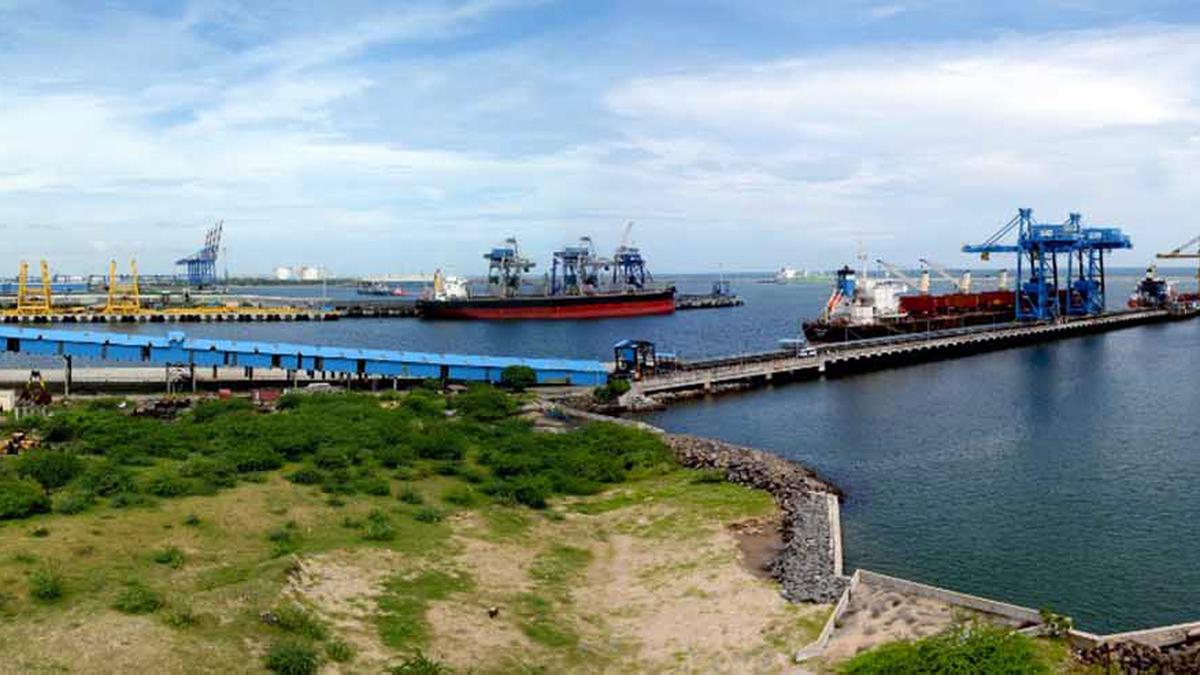
Chennai’s Harbour constituency is witnessing a renewed focus on neighbourhood-scale civic infrastructure, as the city corporation advances a cluster of community and healthcare projects aimed at improving access to essential public services in some of its most densely populated wards. Senior government officials recently reviewed ongoing works as part of routine monitoring of urban development investments in the area.
At the centre of the review is a newly built community facility in the Royapuram zone, developed on a prominent arterial road and designed to serve as a multi-purpose public space for local residents. Urban officials indicate that the facility has been planned to accommodate large social gatherings while easing pressure on informal or undersized venues commonly used for community events in north Chennai.The structure includes a large assembly hall, dining areas and dedicated parking provisions—features that urban planners say are increasingly critical in high-density neighbourhoods where public space is limited. By formalising such functions within regulated civic buildings, city authorities aim to reduce congestion on surrounding streets and improve safety during public events.
Alongside social infrastructure, the Harbour constituency is also seeing targeted investment in primary healthcare. A new urban health centre under construction in Kondithoppu is intended to strengthen first-contact medical care in a locality with high residential density and limited access to private healthcare. Public health experts note that proximity-based clinics play a key role in early diagnosis, preventive care and reducing patient load on tertiary hospitals elsewhere in the city.Together, the projects represent a modest but strategic allocation of municipal capital towards neighbourhood resilience. Officials involved in the review said the works are aligned with broader city priorities of decentralising public services and ensuring that infrastructure spending addresses everyday needs rather than only large-scale transport or commercial projects.
Urban governance specialists observe that such investments are particularly significant in older parts of Chennai, where infrastructure gaps often reflect decades of underinvestment despite high population concentration. Community halls, clinics and similar facilities support social cohesion, public health and informal economies, especially for women, elderly residents and informal workers who rely heavily on nearby services.From a built-environment perspective, the challenge will lie in long-term operations and maintenance. Past experience in Chennai and other Indian cities shows that civic buildings deliver maximum value only when supported by adequate staffing, transparent booking systems and routine upkeep.
As these projects move towards completion, attention will shift to how effectively they are integrated into the surrounding urban fabric. For Harbour, a constituency shaped by heritage, commerce and dense residential life, the success of these facilities will be measured less by ribbon-cuttings and more by how consistently they serve everyday civic needs.
Also Read:Maharashtra Approves Signal Free Atal Setu to NMIA Interchange
Chennai Harbour Sees Civic Facilities Upgrade Push
