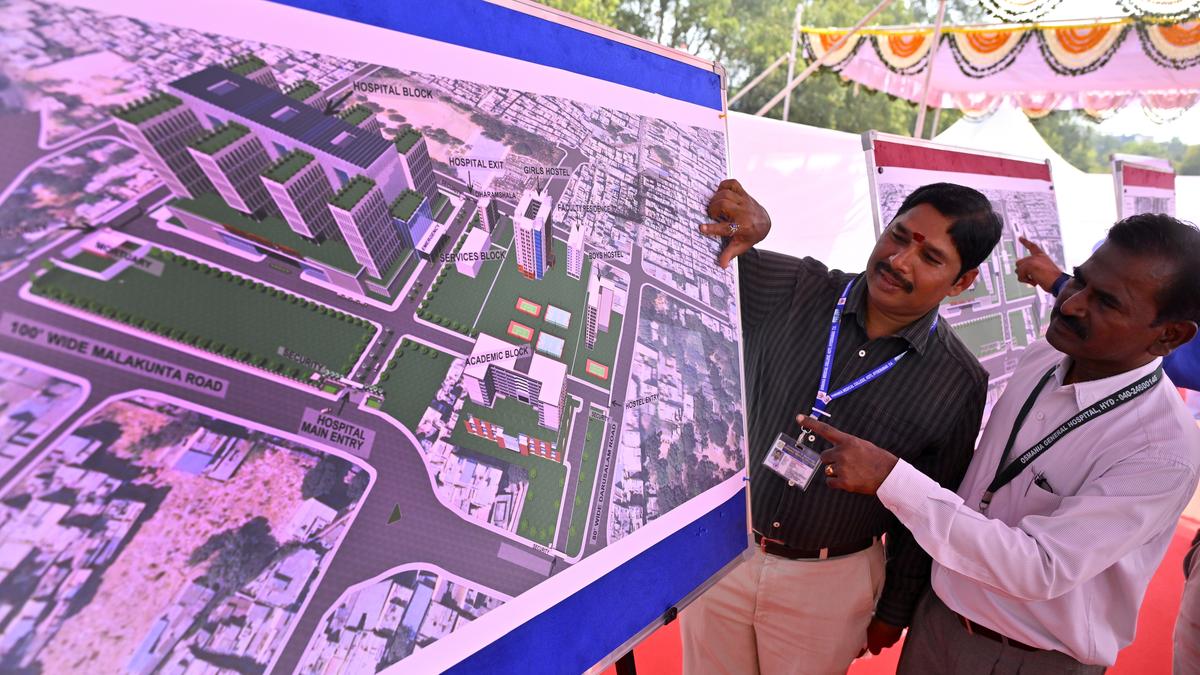
Hyderabad’s urban infrastructure planning is entering a critical phase as civic authorities move to upgrade and widen key approach roads surrounding the new Osmania General Hospital (OGH) campus at Goshamahal, a project seen as central to the city’s future public healthcare delivery. With construction of the hospital progressing, road connectivity has emerged as a priority to ensure reliable access for patients, emergency services, staff and surrounding neighbourhoods.
The Greater Hyderabad Municipal Corporation (GHMC) has prepared detailed road development plans covering nearly 11.7 kilometres across multiple access corridors leading to the hospital site. These upgrades are expected to be implemented in three stages and will involve significant land acquisition, signalling one of the more complex urban infrastructure interventions linked to a public health facility in recent years.
Urban planners note that large tertiary hospitals function as high-intensity mobility hubs, generating continuous traffic from ambulances, public transport, private vehicles and service logistics. Without parallel investment in surrounding road networks, such facilities often strain local streets and worsen congestion. In this context, the road expansion around the new OGH is being positioned as core urban infrastructure rather than ancillary work.
According to officials involved in the planning process, the first phase focuses on shorter but critical stretches closest to the hospital entrance, allowing early operational readiness. Subsequent phases will extend connectivity across wider catchment areas, integrating the facility with arterial roads and neighbourhood networks. Land parcels required for these works are being coordinated with multiple public agencies, reducing dependence on private acquisition in some sections.
However, the scale of land acquisition across all phases also raises questions around urban equity and transition management. Nearly a thousand properties are expected to be impacted, underlining the need for careful rehabilitation planning, transparent compensation mechanisms and phased execution to minimise disruption to local communities and small businesses.
From a sustainability perspective, mobility experts emphasise that road widening alone will not be sufficient. They point to the importance of integrating footpaths, universal accessibility features, stormwater drainage and space for public transport prioritisation. Given Hyderabad’s increasing climate vulnerability, the redesigned corridors are expected to incorporate resilient road engineering to manage heat stress and extreme rainfall.
Parallel to developments at Goshamahal, healthcare infrastructure expansion in the wider Hyderabad region is also reshaping mobility planning. At AIIMS Bibinagar, located on the city’s periphery, construction is nearing completion, with the facility already operating partial clinical services. Connectivity improvements, including suburban rail integration, are being evaluated to support daily patient movement from across the region.
Together, these projects highlight a broader shift in Hyderabad’s urban strategy — one where healthcare infrastructure is increasingly linked with transport planning, land use coordination and regional accessibility. As both hospitals move towards full-scale operation, the effectiveness of these road interventions will play a decisive role in determining whether healthcare access becomes more equitable or more congested in one of India’s fastest-growing metropolitan regions.