


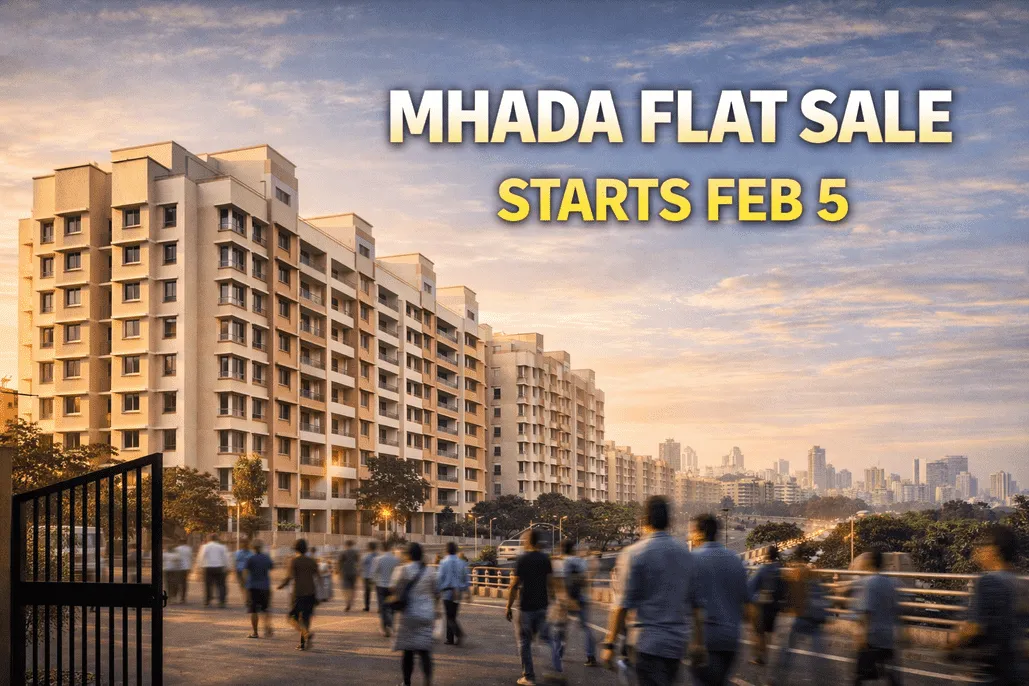
Mumbai’s public housing authority has quietly reopened access to homeownership across the city, placing 120 previously unallotted flats on sale through a first-come, first-served digital system. The move, spanning neighbourhoods from Kandivali to Tardeo, reflects a recalibration of how legacy public housing stock is absorbed in one of India’s most supply-constrained urban markets and why execution now matters as much as construction.
The Maharashtra Housing and Area Development Authority (MHADA) confirmed that the homes were earlier routed through lottery-based allocations but failed to attract takers due to a mix of pricing, timing, and buyer eligibility constraints. By shifting these units to an online booking model, MHADA is testing whether procedural flexibility can unlock stalled inventory without diluting public accountability. Prices range widely, from sub-Rs 40 lakh homes in peripheral eastern suburbs to premium units exceeding Rs 8 crore in South Mumbai. Urban planners note that such variation underscores Mumbai’s fractured housing geography, where state-led supply must simultaneously address affordability pressures and the financial viability of redevelopment projects in high-value zones. Applications will open through MHADA’s digital housing portal in early February, followed by flat selection and payment windows later in the month. Once a unit is chosen, buyers are required to deposit 10 per cent of the sale value within 48 hours a rule that officials say is designed to curb speculative blocking and ensure serious intent. Failure to comply results in automatic cancellation and forfeiture of the security deposit. From a governance perspective, the model signals a shift towards time-bound, transaction-driven public housing delivery. Housing economists point out that unsold government inventory often sits idle for years, tying up capital and delaying neighbourhood regeneration.
Rapid absorption, even at varied price points, allows authorities to redirect funds into new affordable housing and transit-oriented developments. The MHADA flats Mumbai initiative also intersects with broader questions of inclusion. Eligibility conditions require applicants to be Indian citizens above 18 years, with documentation norms differing by marital status. While standardised, housing rights advocates argue that future iterations must better accommodate single women, senior citizens, and informal workers demographics increasingly central to Mumbai’s workforce. Financial institutions are expected to play a role, with buyers allowed to upload pre-sanctioned loan approvals to streamline mortgage-linked allotments. Once full payment and stamp duty are completed, possession is granted a process MHADA says has been digitised to reduce discretion and delays.
Looking ahead, officials indicate that this release is a precursor to a much larger pipeline. Nearly 5,000 affordable homes are expected to enter the Mumbai market in the coming months, with a significant share planned near emerging transit corridors in the western suburbs. For a city grappling with density, climate risk, and housing inequality, how MHADA balances speed, access, and urban resilience will shape not just who owns homes but how Mumbai grows next.
Also Read: Delhi DDA Solar Carport Bid Signals Clean Shift
