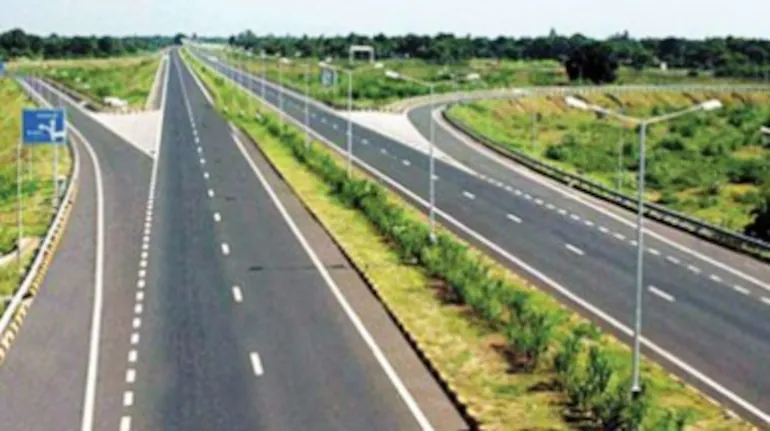
Delhi’s long-stalled road modernisation plans are poised for renewed momentum as the city’s Public Works Department prepares to seek substantial central funding under the Union Budget 2026–27. The proposal, estimated at ₹1,200 crore, is aimed at accelerating critical road upgrades across the capital at a time when traffic congestion, air quality, and commuter safety remain pressing urban challenges.
According to senior government officials, the funding request reflects a growing alignment between the city administration and the Centre on the need to prioritise core infrastructure in high-density metropolitan regions. For Delhi, where roadways carry a disproportionate share of daily travel despite an expanding metro network, investment in surface transport is increasingly seen as essential to economic productivity and liveability. Urban planners note that Delhi’s road infrastructure has struggled to keep pace with rising vehicle ownership, last-mile freight movement, and population growth spilling into peripheral districts. Poor surface quality, inconsistent drainage, and unsafe junction design have compounded congestion and accident risks, particularly during monsoon months. The proposed capital infusion is expected to target arterial roads, key connectors, and safety-critical corridors rather than cosmetic resurfacing.
Industry experts say the timing of the proposal is significant. The Union Budget’s emphasis on regional development and economic resilience has placed urban infrastructure at the centre of national growth strategies. For cities like Delhi, improved road infrastructure is not just about faster commutes but also about supporting construction supply chains, small businesses, and logistics-dependent sectors that underpin employment. From a sustainability perspective, transport analysts caution that road expansion alone cannot solve congestion. However, they argue that well-designed upgrades such as smoother pavements, better lane discipline, integrated cycling tracks, and improved pedestrian crossings can reduce vehicle idling, lower emissions, and improve safety outcomes. Aligning road works with utility upgrades and climate-resilient drainage is also critical in a city increasingly exposed to heatwaves and extreme rainfall.
Officials familiar with the planning process say the funding request also reflects an effort to clear project backlogs delayed by fragmented approvals and budget constraints. Stronger Centre–state coordination is expected to streamline execution, reduce cost overruns, and bring predictability to timelines an issue that has long frustrated residents and contractors alike. For commuters, the stakes are immediate. Delhi consistently ranks among India’s most congested cities, with productivity losses and health costs borne disproportionately by lower-income workers who rely on road-based transport. Better road conditions, experts argue, can deliver tangible improvements in safety, travel time, and access to jobs specially in outer districts where public transport coverage remains uneven.
As budget discussions progress, urban policy watchers will be closely tracking whether the proposed allocation translates into project-level clarity. The real test, they say, will lie not in headline figures but in execution quality, transparency, and whether road upgrades are planned as part of a broader, people-first mobility strategy for the capital.
Delhi Road Infrastructure Gets Central Budget Push