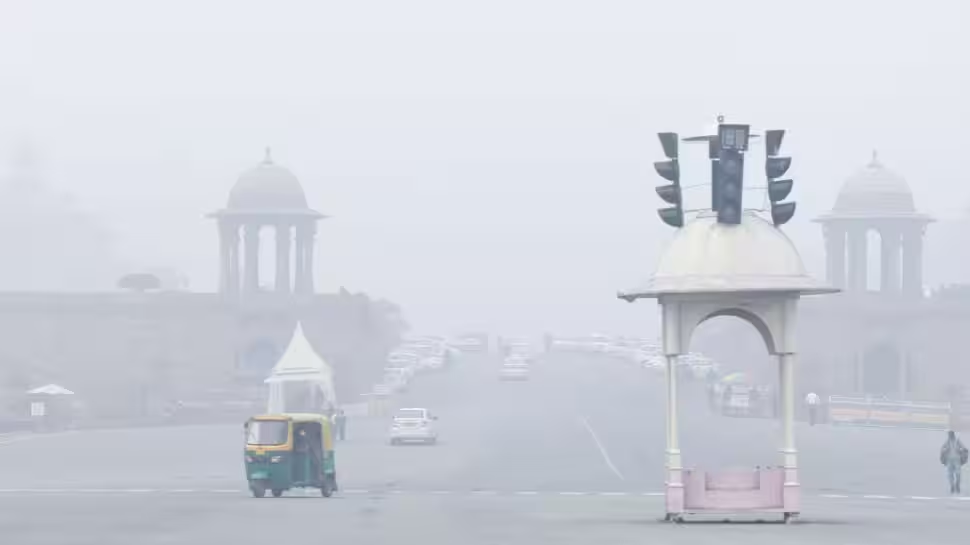
Delhi woke to another disrupted winter morning as dense fog reduced visibility across large parts of the city, slowing traffic movement and triggering aviation safety protocols at the national capital’s airport. The weather episode, part of a longer cold spell, underscores how seasonal climate conditions continue to test the resilience of Delhi’s transport, health, and civic infrastructure.
Low visibility conditions were reported across arterial roads and residential neighbourhoods during early hours, affecting daily commuters and freight movement. Traffic authorities urged caution as fog combined with cold winds and overcast skies, a pattern that has become increasingly frequent during north India’s winter months. Urban mobility experts note that such disruptions carry economic costs, particularly for a city dependent on time-sensitive logistics and intercity travel.
At Indira Gandhi International Airport, operational safeguards designed for poor visibility were activated to ensure flight safety. Airport officials indicated that while runway operations remained functional, schedules could experience knock-on delays depending on evolving conditions. Aviation analysts point out that fog-related advisories have become a regular feature of Delhi’s winters, raising questions about long-term investments in advanced navigation systems and climate-adaptive airport design.
Meteorological assessments suggest that moderate to dense fog is likely to persist during morning hours, with limited sunlight expected through the day due to cloud cover. Temperatures are projected to remain on the lower side, with daytime highs hovering in the low twenties and night-time readings dipping close to single digits. Public health specialists warn that prolonged cold exposure disproportionately affects children, older adults, and outdoor workers, highlighting the need for targeted urban health responses during extreme weather periods.
Beyond immediate inconvenience, the episode points to broader urban challenges. Reduced visibility impacts not only private vehicles but also buses, emergency services, and last-mile connectivity, often slowing response times. Urban planners argue that cities like Delhi must strengthen all-weather transport planning, including better-lit roads, intelligent traffic systems, and safer pedestrian infrastructure to cope with recurrent fog events. The persistence of dense fog has also renewed discussions around air quality and urban microclimates. Environmental researchers note that high moisture levels combined with pollution can intensify fog formation, suggesting that climate resilience and emissions reduction are closely linked. Cleaner mobility options, improved public transport uptake, and urban greening are increasingly seen as co-benefits that can moderate winter extremes while advancing low-carbon goals.
Looking ahead, weather agencies indicate that cold and foggy mornings may continue over the coming days. For city administrators, the focus will remain on minimising disruption through coordinated traffic management, real-time public advisories, and infrastructure upgrades. As climate variability becomes more pronounced, Delhi’s experience highlights the importance of integrating weather resilience into everyday urban governance rather than treating it as a seasonal exception.
Delhi Fog Disrupts Mobility Across City Systems