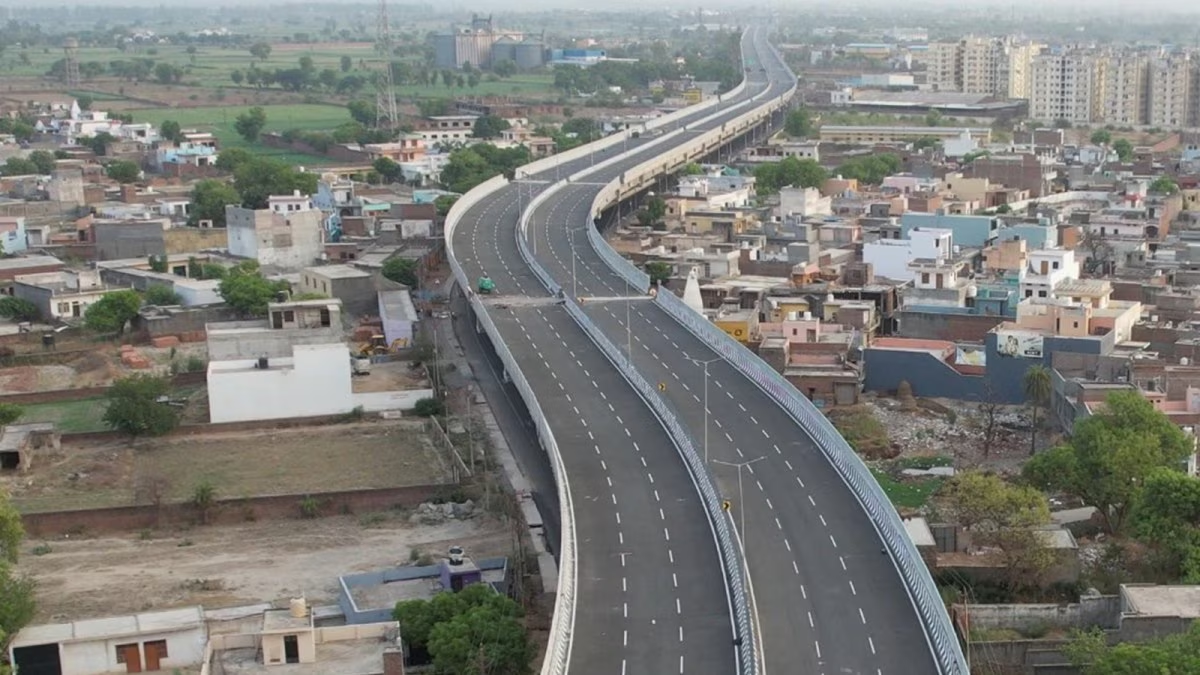
The Delhi–Dehradun Economic Corridor is emerging as a pivotal transport intervention linking the National Capital Region with Uttarakhand, with implications extending far beyond shorter travel times. Designed as an access-controlled highway spine, the corridor is expected to reshape commuting patterns, tourism flows, and regional economic integration across western Uttar Pradesh and the Himalayan foothills.
According to officials associated with the national highways programme, the Delhi Dehradun Economic Corridor is intended to offer predictable, high-speed road connectivity between two fast-growing urban regions. By reducing congestion-prone stretches and limiting unregulated access points, the project aims to make intercity travel more reliable for daily commuters, logistics operators, and emergency services. Urban planners note that such corridors increasingly function as economic infrastructure, not merely transport assets.
The alignment passes through densely populated districts of western Uttar Pradesh before entering Uttarakhand, improving links to cities such as Haridwar and Rishikesh. These towns have witnessed rising tourist footfall and real estate activity over the past decade, often constrained by inadequate road capacity. Improved highway access is expected to ease pressure on existing arterial roads while supporting decentralised urban growth along the corridor. From a regional development perspective, the Delhi Dehradun Economic Corridor could help distribute economic activity more evenly between metropolitan Delhi and smaller urban centres. Industry experts point out that faster road connectivity lowers logistics costs for manufacturing clusters and agri-based enterprises, particularly those supplying perishable goods to NCR markets. This could strengthen local employment opportunities while reducing dependence on long-distance freight movement.
The project also intersects with broader debates on sustainable infrastructure delivery. Transport analysts highlight that access-controlled corridors, when paired with service roads and public transport integration, can improve road safety and reduce emissions caused by stop-start traffic conditions. However, they caution that land-use planning around interchanges will be critical to prevent unplanned urban sprawl and ecological stress, especially in environmentally sensitive zones closer to the hills. For residents and businesses, the corridor’s impact is likely to be felt gradually as sections become operational. Shorter travel times between Delhi and Dehradun could change weekend travel behaviour, increase demand for secondary housing, and influence commercial property development in intermediate towns. At the same time, municipal bodies along the route will face pressure to upgrade drainage, utilities, and last-mile connectivity to fully realise the benefits of the highway investment.
As India continues to invest in high-capacity road networks, the Delhi Dehradun Economic Corridor illustrates how transport planning is increasingly tied to questions of regional equity, climate resilience, and managed urban expansion. Its long-term success will depend not only on engineering execution, but also on coordinated governance across states and cities along its length.
Delhi Dehradun Corridor Signals New Growth Arc