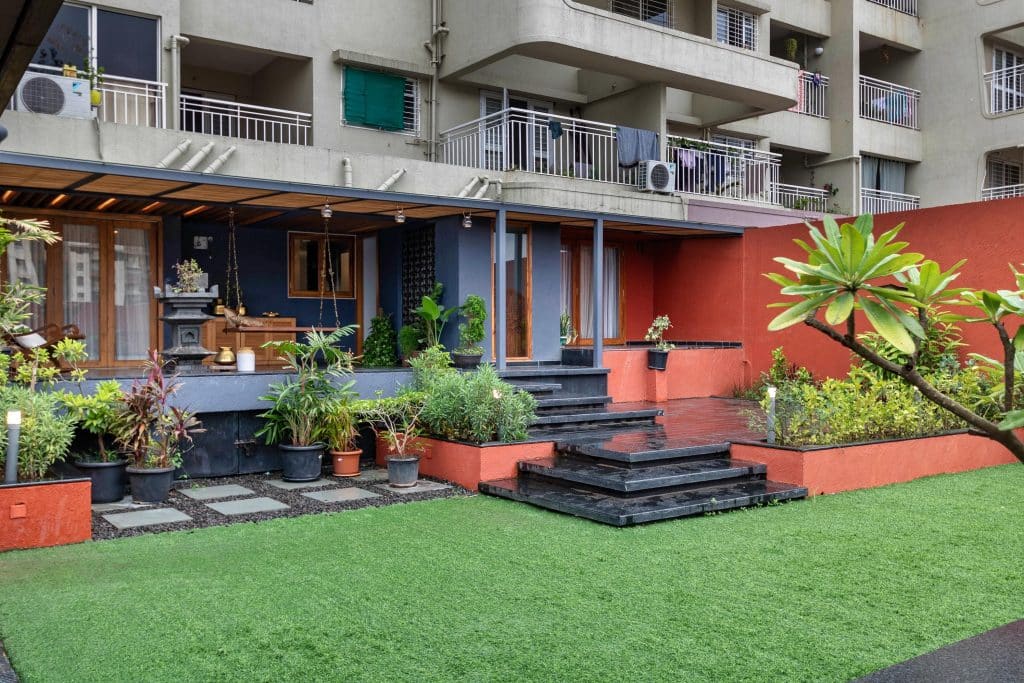
A newly completed apartment in Pune is drawing attention within urban design circles for how it rethinks residential space not through size or luxury, but through restraint. Located in a dense residential neighbourhood, the 1,480 sq ft four-bedroom home has been planned around transition zones and pauses rather than statement rooms. The approach reflects a wider shift in Pune residential interiors, where homeowners are prioritising wellbeing, sensory comfort and long-term liveability over visual excess. Urban planners and housing experts say such projects signal a maturing housing market in Indian cities. As working families increasingly split time between global workplaces and Indian cities, homes are being reimagined as restorative environments rather than purely functional assets. In Pune, this trend aligns with broader concerns around mental health, urban stress and sustainable consumption of space.
The apartment’s planning strategy focuses on how rooms connect rather than how they perform independently. Shared areas are loosely defined, allowing daylight, airflow and sound to move across the home without rigid separation. Screens, partial partitions and textured surfaces subtly guide movement while avoiding enclosed corridors. According to industry experts, this method improves thermal comfort and reduces dependence on artificial lightning an important consideration for energy-conscious urban housing. Design professionals note that such spatial planning supports climate-responsive living. By encouraging cross-ventilation and softer transitions, homes remain usable throughout the day without constant mechanical cooling. In a city like Pune, where rising temperatures and energy costs are reshaping residential choices, these micro-level decisions carry broader environmental relevance.
Private areas of the home follow a similar philosophy. Bedrooms are oriented to maximise access to natural light and outdoor soundscapes, creating a stronger relationship with the surrounding environment. Rather than isolating residents from the city, the design filters urban noise and activity into a calmer domestic experience. Urban designers argue that this approach reflects people-first housing where emotional comfort is treated as infrastructure. The project also highlights changing consumer expectations in the mid-sized apartment segment. Developers and architects report that buyers are now asking detailed questions about material sourcing, durability and long-term maintenance. Neutral finishes, natural materials and adaptable layouts are increasingly favoured for their lower lifecycle costs and reduced renovation needs, reinforcing principles of responsible real estate development.
From a market perspective, Pune residential interiors that emphasise spatial quality over scale may influence future housing supply. As land prices rise and apartment sizes stabilise, value is shifting toward design intelligence rather than square footage. This could encourage more equitable urban growth, where smaller homes still deliver high living standards. As Indian cities confront climate pressures and lifestyle shifts, such residential experiments offer lessons beyond aesthetics. They suggest that sustainable urban housing may depend less on grand solutions and more on how everyday spaces allow people to slow down, adapt and belong.