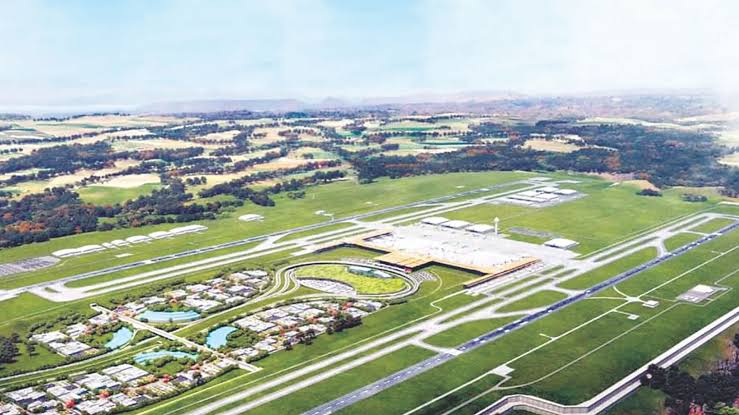
Pune District Airport Project Targets Long Term Capacity
Plans for a new greenfield airport in the Pune region are being positioned as a long-term infrastructure intervention rather than a short-term capacity fix, as the city grapples with rapid urbanisation, industrial growth and mounting pressure on existing transport systems. The proposed facility in Purandar taluka of Pune district is intended to ease congestion at the city’s current airport while reshaping development patterns across the southern periphery of the metropolitan area.
State-level reviews of the project this week underlined the need for time-bound land acquisition and clearer institutional coordination, signalling that authorities want to avoid delays that have historically affected large infrastructure projects. The airport is being planned through the state’s industrial development agency, with other urban and planning bodies expected to work within clearly defined mandates. Urban planners note that Pune’s expansion is no longer confined to its traditional IT and manufacturing clusters. Peripheral talukas are witnessing rising residential demand, logistics activity and land value appreciation, often without matching infrastructure. A second airport, if executed with integrated planning, could redistribute economic activity more evenly and reduce stress on the city’s core transport corridors.
Land acquisition remains the most sensitive aspect of the project. Around 1,200 hectares have been identified across seven villages, with joint surveys and objection assessments currently underway. Senior officials involved in the process said village-wise acquisition authorities have been appointed to streamline engagement with landowners and speed up statutory clearances. How transparently and fairly this process is handled will be closely watched, particularly in a region where agriculture remains a primary livelihood. Beyond aviation capacity, the airport is being framed as a catalyst for planned urban growth. Planning agencies have been directed to safeguard additional land around the site to accommodate future economic activity, including logistics hubs, employment zones and housing. Urban development experts caution that without strong zoning controls and climate-sensitive design, such growth risks repeating patterns of sprawl, water stress and car-dependent development seen around other Indian airports.
Funding clarity is another immediate priority. A proposal outlining financial arrangements is expected to be placed before the state cabinet, while officials have also indicated a push to strengthen the state’s airport development arm by consolidating ongoing airport projects under a single authority. This move could standardise design, sustainability benchmarks and operational efficiency across regional airports. For Pune, the Purandar airport represents more than an aviation upgrade. It is a test case for whether large infrastructure can be aligned with inclusive growth, resilient land use and long-term metropolitan planning. The next phase covering land acquisition outcomes, funding decisions and environmental assessments will determine whether the project becomes a model for balanced urban expansion or another pressure point in a fast-growing region.