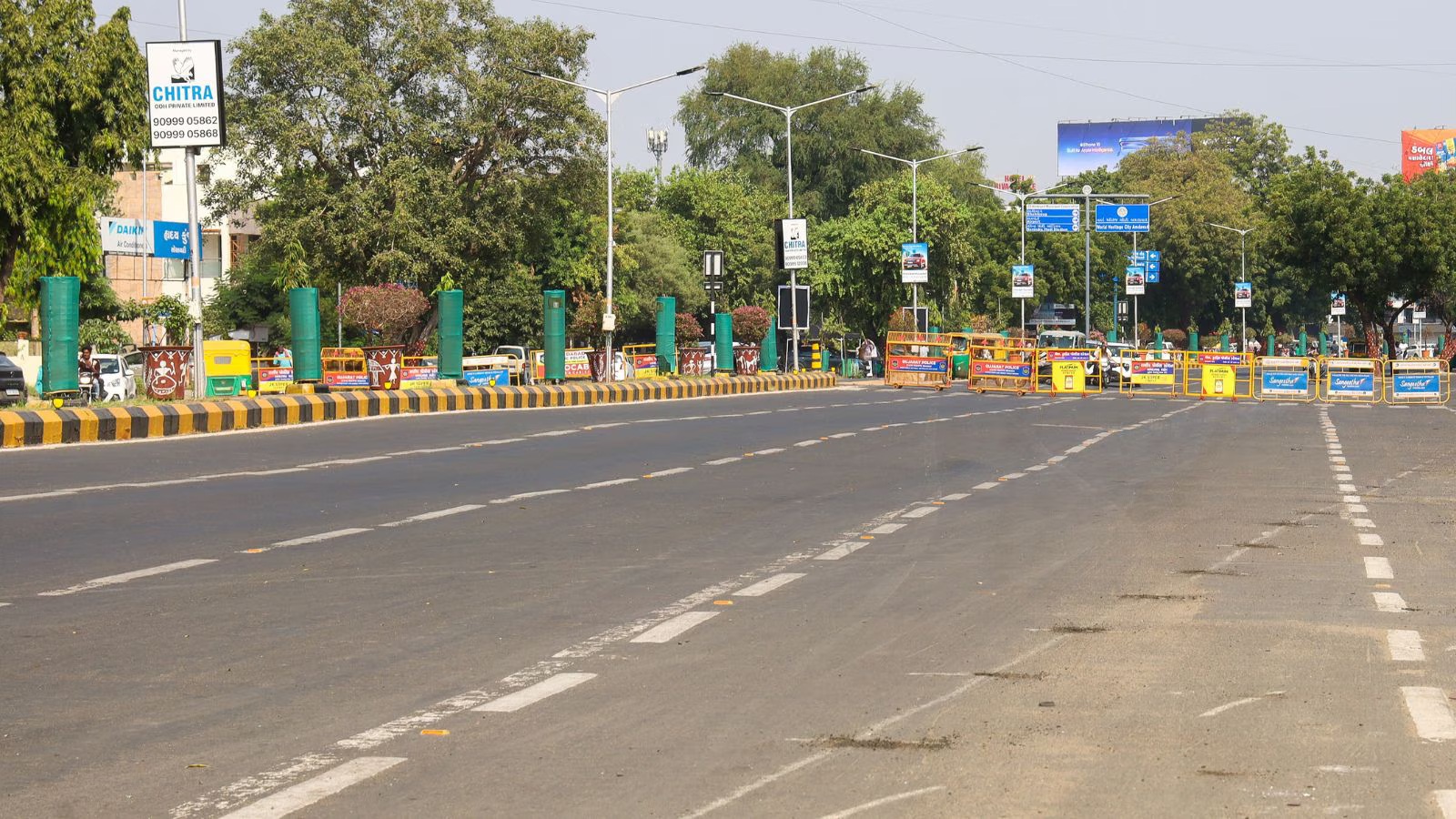
Ahmedabad’s evolving urban landscape is drawing renewed attention from visitors and planners alike, as the city’s streets increasingly reflect years of coordinated investment in infrastructure, traffic management, and public order. Observations shared recently by a visiting entrepreneur from western India have triggered a wider conversation about how Ahmedabad’s road culture and civic environment appear to be changing and why that shift matters for Indian cities navigating rapid growth.
At street level, the changes are visible. Road surfaces across key corridors are smoother, junctions are better marked, and traffic movement appears less chaotic than in many comparable metros. Urban planners say this reflects a decade-long focus on road redesign, junction remodelling, and stricter enforcement rather than vehicle expansion alone. Ahmedabad’s experience suggests that disciplined driving behaviour often follows clarity in street design where lanes, signals, and pedestrian spaces are predictable and enforced. The city’s traffic calm has also been linked to behavioural and regulatory factors. Ahmedabad operates under a longstanding alcohol prohibition regime, which civic officials say has had indirect effects on late-night driving incidents and public disorder. While enforcement challenges remain, transport safety data from comparable dry jurisdictions globally indicates that reduced impaired driving can improve overall traffic discipline, particularly in dense urban areas.
Weather conditions and urban form further shape the city’s street experience. With winter temperatures remaining moderate, non-motorised movement increases, encouraging slower traffic speeds and greater pedestrian presence. Urban designers note that Ahmedabad’s wider arterial roads and service lanes, a legacy of earlier town planning allow for better segregation of local and through traffic, reducing conflict points that often lead to congestion and aggressive driving elsewhere. The implications extend beyond mobility. Real estate analysts say improved road quality and predictable commute times directly influence residential demand, especially among families seeking stable, low-stress urban environments. Areas with calmer traffic are increasingly associated with higher liveability scores, affecting both rental values and long-term housing absorption. For businesses, orderly streets reduce logistics delays and improve workforce productivity.
Ahmedabad’s transition also aligns with broader sustainability goals. Smoother traffic flow reduces idling emissions, while improved walkability supports lower-carbon transport choices. Urban policy experts caution, however, that maintaining this balance will require continuous investment in public transport, enforcement capacity, and inclusive street design particularly as vehicle ownership rises. As Indian cities grapple with the pressures of population growth and climate resilience, Ahmedabad’s changing streets offer a case study in how infrastructure, regulation, and civic culture intersect. The challenge ahead lies in scaling these gains equitably ensuring that calmer roads and better urban order extend beyond core corridors to peripheral and rapidly developing neighbourhoods.