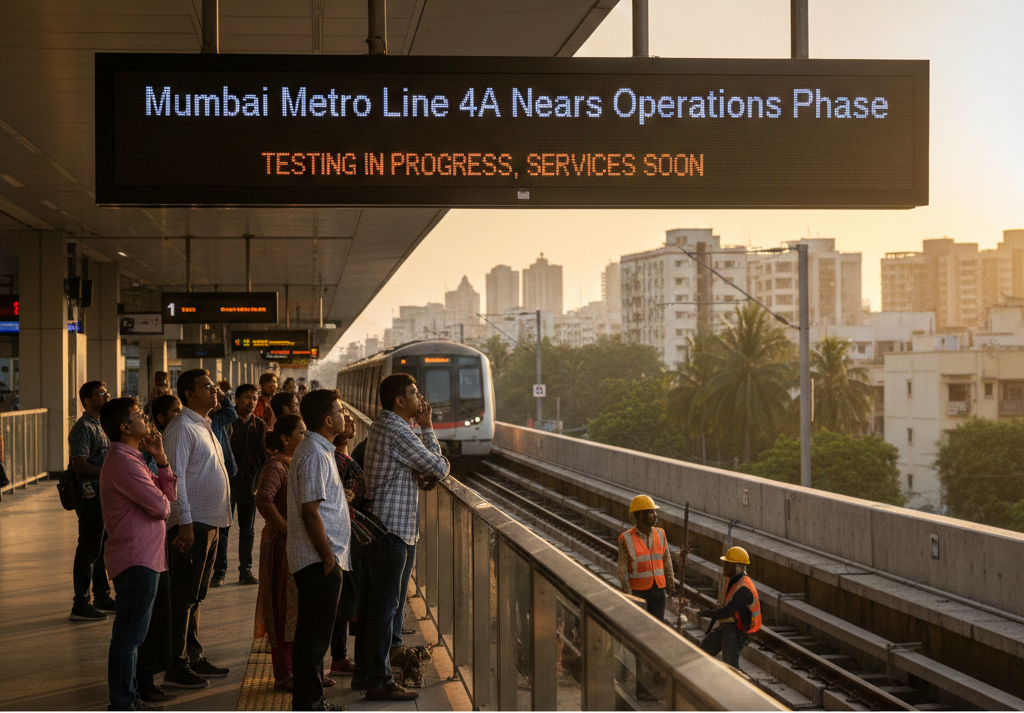
Mumbai’s suburban transit landscape is approaching a pivotal shift as construction work on Metro Line 4A has reached completion, with the project now entering a phase of mandatory technical inspections and safety clearances. The development brings the Mumbai–Thane metro corridor closer to passenger operations, a step expected to significantly alter daily travel patterns in one of the region’s most congested urban belts.
Metro Line 4A forms part of the wider Line 4 and 4A network, designed to create a continuous rapid transit spine between northern Thane and central Mumbai. Urban transport planners have long flagged this corridor as critical due to sustained population growth along the eastern suburbs and persistent pressure on arterial roads connecting Mumbai and Thane. Once operational, the line is expected to offer a time-efficient alternative to road-based commuting, which remains vulnerable to peak-hour congestion and climate-related disruptions. According to project officials, civil and structural components along the Line 4A stretch have been fully executed, while system integration works are nearing closure. These include electrical systems, station accessibility infrastructure, communications, and train control mechanisms. Trial readiness is now dependent on clearance from national rail safety and technical authorities, a process that includes equipment testing, simulations, and compliance verification.
Transport economists note that the Mumbai Metro Line 4A is not merely a mobility upgrade but a strategic urban intervention. Faster east–west connectivity between Mumbai and Thane is expected to improve labour mobility, reduce travel unpredictability, and lower dependence on private vehicles. This shift carries wider implications for air quality, fuel consumption, and carbon emissions across the Mumbai Metropolitan Region. From a land-use perspective, the corridor is also expected to influence development dynamics along its alignment. Real estate analysts observe that metro connectivity typically reshapes housing demand, rental patterns, and commercial clustering, particularly in peripheral zones that were previously constrained by long commute times. However, they caution that these benefits will depend on coordinated planning around stations, pedestrian access, and last-mile connectivity.
Urban governance specialists emphasise that the final phase — inspections, trial runs, and safety certification — is crucial for public confidence. Globally, metro projects that prioritise operational readiness and safety compliance tend to deliver better long-term ridership outcomes and system reliability. Authorities overseeing the project have indicated that passenger services will begin only after all statutory approvals are secured. Once operational, Mumbai Metro Line 4A is expected to shorten travel durations between key nodes to under 20 minutes, reshaping everyday commutes for thousands of residents. As Mumbai continues to invest heavily in rail-based mass transit, the focus now shifts from construction milestones to operational integration, affordability, and service consistency — factors that will ultimately determine whether the metro fulfils its promise of a more inclusive, climate-resilient urban future.
Mumbai Metro Line 4A Nears Operations Phase