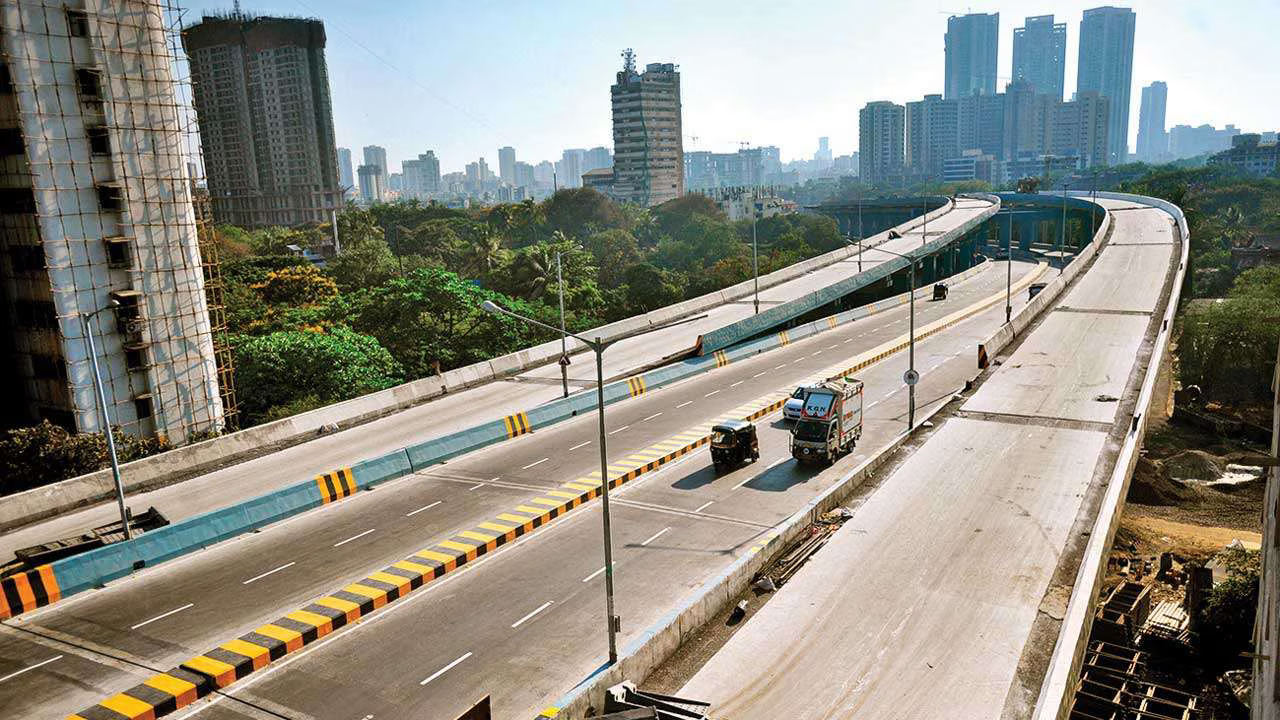
Mumbai’s western suburbs are set to experience extended night-time traffic diversions as authorities begin a critical construction phase of a new flyover across the Oshiwara Nallah. The temporary restrictions, implemented along a busy stretch of S.V. Road, reflect the city’s ongoing push to modernise transport infrastructure while managing disruption in one of its most congested urban corridors.
According to traffic authorities, both carriageways of S.V. Road between Ram Mandir Junction and Relief Road will be closed to vehicular movement during overnight hours as part of the Mrinaltai Gore Flyover project. The restrictions will apply from midnight to early morning through the end of March 2026, coinciding with the installation of large structural girders that require heavy machinery and controlled work zones. Urban transport officials say the night-only closures are designed to reduce daytime congestion and limit economic disruption in a corridor that connects residential neighbourhoods, commercial districts, and transit hubs. S.V. Road is a critical north–south artery serving daily commuters, local businesses, and public transport services, making careful traffic management essential during prolonged construction activity.
Alternative routes have been notified for vehicles approaching from Andheri, Goregaon, and the Link Road, with traffic police directing motorists through Relief Road, BEST Road, and selected junctions to maintain connectivity. Authorities have advised commuters to plan journeys in advance and avoid the affected stretch during restricted hours, particularly freight operators and private vehicle users. Infrastructure planners note that flyover projects such as this one are increasingly being scheduled during low-traffic windows to balance construction efficiency with urban liveability. While short-term inconvenience is unavoidable, the long-term objective is to ease chronic congestion, improve travel times, and enhance road safety along one of Mumbai’s most heavily used suburban corridors.
The flyover forms part of a broader strategy to upgrade east–west and north–south connectivity across the Mumbai Metropolitan Region, where traffic volumes continue to rise alongside population and real estate growth. Transport analysts highlight that coordinated execution, transparent communication, and predictable timelines are critical to maintaining public trust during multi-year infrastructure builds. From a sustainability perspective, officials say smoother traffic flow post-completion could reduce vehicle idling and emissions in the area, aligning with the city’s longer-term climate resilience goals. However, experts caution that benefits will depend on integration with public transport planning, pedestrian safety measures, and last-mile connectivity rather than standalone road expansion.
As work progresses over the coming weeks, civic agencies will be under pressure to ensure strict adherence to safety norms, timely reopening of lanes, and minimal spillover congestion into surrounding neighbourhoods. For residents and commuters alike, the project’s success will ultimately be judged by whether short-term disruption translates into durable mobility gains for Mumbai’s western suburbs.
Mumbai Flyover Work Reshapes Night Traffic