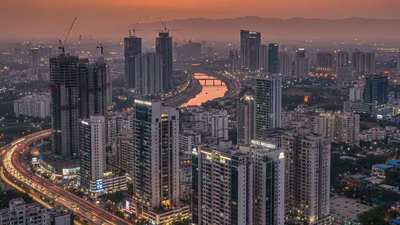
Pune Metropolitan Region is poised for accelerated economic transformation after the Union Government earmarked ₹5,000 crore in the 2026-27 fiscal budget to catalyse its Pune Growth Hub initiative, a strategic infusion aimed at strengthening the city’s role as a technology, manufacturing and innovation centre. The allocation initiates a long-term development trajectory with implications for employment, urban infrastructure and regional competitiveness.
This funding forms part of a broader national strategy to develop seven city-based growth hubs, each slated for similar allocations over the next five years. Pune’s Growth Hub stretches across nearly 6,914 square kilometres, incorporating Pune Municipal Corporation, Pimpri-Chinchwad Municipal Corporation, several municipalities, cantonments and industrial estates.Political and economic planners view the allocation as a critical step toward realising Pune’s latent potential in high-value sectors such as advanced manufacturing, information technology, artificial intelligence and education. Urban planners note that this initiative embeds macroeconomic planning within a regional development framework that aligns with India’s aim to nurture globally competitive secondary cities.
Stakeholders, including civic bodies and industry associations, are now advancing a comprehensive master plan that dovetails with existing infrastructure priorities such as transport connectivity and digital ecosystems. The Pune International Centre is coordinating a detailed economic blueprint, while agencies like NITI Aayog are supporting implementation oversight.Economists highlight three key lenses through which Pune’s Growth Hub funding matters. First, it anchors fiscal commitment to urban industrial clusters at a time when global capital seeks mid-tier Indian cities as alternatives to megacities for investment and talent deployment. Second, integrated planning across municipalities and industrial corridors can reduce policy fragmentation that often hampers regional competitiveness. Finally, the focus on emerging technologies may encourage new business models and startups to scale in Pune’s innovation ecosystem.
But translating budgetary promises into on-the-ground outcomes will require systemic coordination. Urban planners underscore the need to synchronise growth hub investments with public transport enhancements such as metro expansion, road networks and last-mile linkages. This is particularly salient given Pune’s rapid urbanisation, which has strained existing infrastructure and public services.Social resilience factors also come into play. Equitable labour market access, inclusive housing and climate-responsive infrastructure are essential to ensure that expansion does not bypass marginalised communities. Analysts recommend that growth hub planning embeds sustainability criteria—such as green building standards and low-carbon transit systems—to align with long-term urban resilience goals.
As Pune transitions toward a regional growth hub, success will be measured not just by investment inflows but by how effectively this funding catalyses broad-based economic opportunity, climate-smart infrastructure and inclusive urban growth across the metropolitan landscape.