


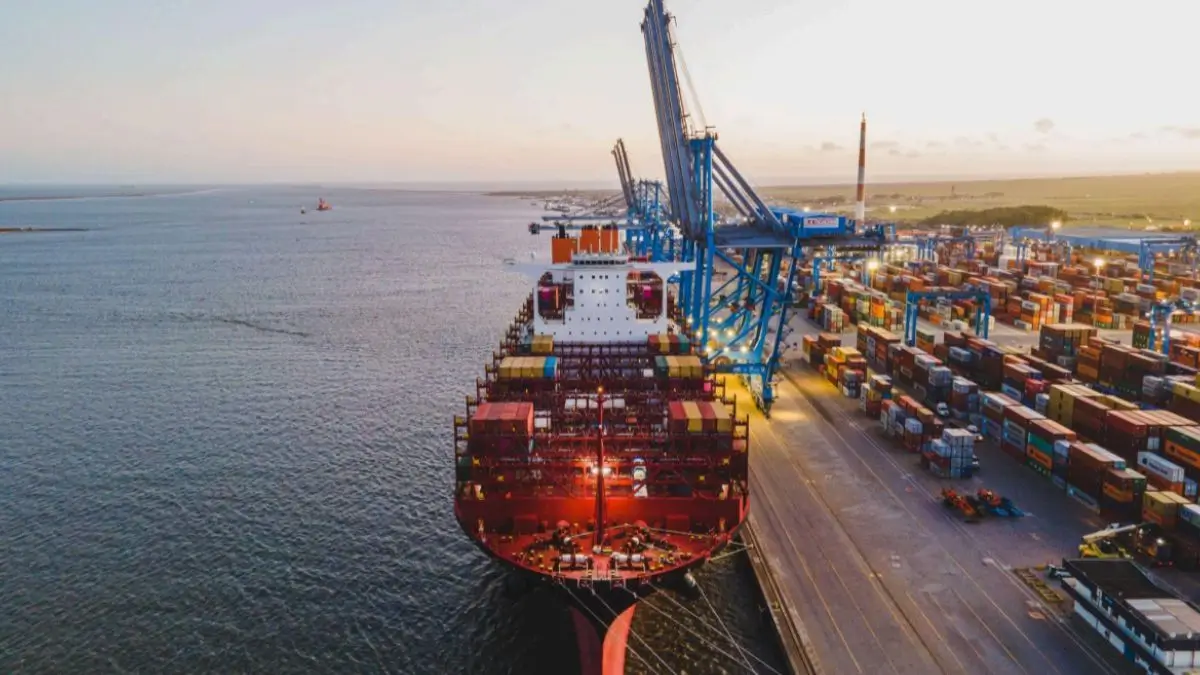
India’s maritime sector is reassessing its dependence on foreign ship design expertise, as industry leaders and policymakers call for building strong domestic capabilities in vessel design and engineering. The discussion, gaining momentum within shipping and port development circles, comes amid a broader push to strengthen India’s industrial self-reliance and expand its role in global maritime trade.
Senior figures in the shipbuilding ecosystem have highlighted that while Indian shipyards have expanded construction capacity over the past decade, design — the most value-intensive and knowledge-driven component of shipbuilding — remains heavily outsourced. This dependence limits domestic value creation, raises project costs, and constrains innovation, particularly as shipping transitions toward low-emission and energy-efficient vessels. India’s maritime ambitions are closely tied to its urban and economic geography. Ports are major employment hubs and anchors for logistics-led development, industrial corridors, and coastal cities. Industry experts argue that strengthening domestic ship design can generate high-skilled jobs in coastal urban centres while supporting the development of ancillary industries such as advanced materials, marine electronics, and digital simulation services. The timing is significant. Global shipping is undergoing structural change, driven by tighter environmental regulations, fuel transitions, and digitalisation. Vessels are increasingly being designed for alternative fuels, reduced emissions, and improved operational efficiency. Without in-house design expertise, Indian shipbuilders risk falling behind in meeting future standards, even if physical construction capacity is available.
Urban economists point out that investment in design capabilities can have spillover benefits beyond shipyards. Design centres, research facilities, and testing labs often cluster in cities, supporting knowledge economies and creating long-term urban employment. This aligns with the need for more balanced growth across India’s coastal regions, many of which face infrastructure stress but also hold significant economic potential. At present, most complex vessel designs — including specialised cargo ships, offshore vessels, and next-generation ferries — rely on foreign licensors. Industry specialists note that this model exposes Indian projects to currency risks, intellectual property constraints, and longer project timelines. Developing indigenous design frameworks could reduce these vulnerabilities while improving project control and lifecycle efficiency. There is also a climate dimension. As ports and shipping contribute to urban air pollution and carbon emissions, cleaner vessel design becomes a public interest issue. Experts emphasise that local design capacity is essential for tailoring ships to Indian operating conditions, including shallow ports, mixed cargo profiles, and dense coastal traffic — factors that influence fuel consumption and emissions.
Policy analysts suggest that moving toward self-reliance will require coordinated action. This includes investment in maritime education, stronger collaboration between shipyards and academic institutions, targeted public procurement, and support for research in green ship technologies. Without these, calls for indigenisation may remain aspirational rather than transformative. Looking ahead, the focus is expected to shift from advocacy to implementation. As India expands port capacity and coastal shipping under national logistics strategies, the ability to design ships domestically could determine how much economic value stays within the country. For cities, shipyards, and workers, the transition could mark a meaningful step toward a more resilient, knowledge-driven maritime economy.
Also Read: Paradip Port Starts Year With Freight Milestone
India Ports Rethink Ship Design Capabilities
