


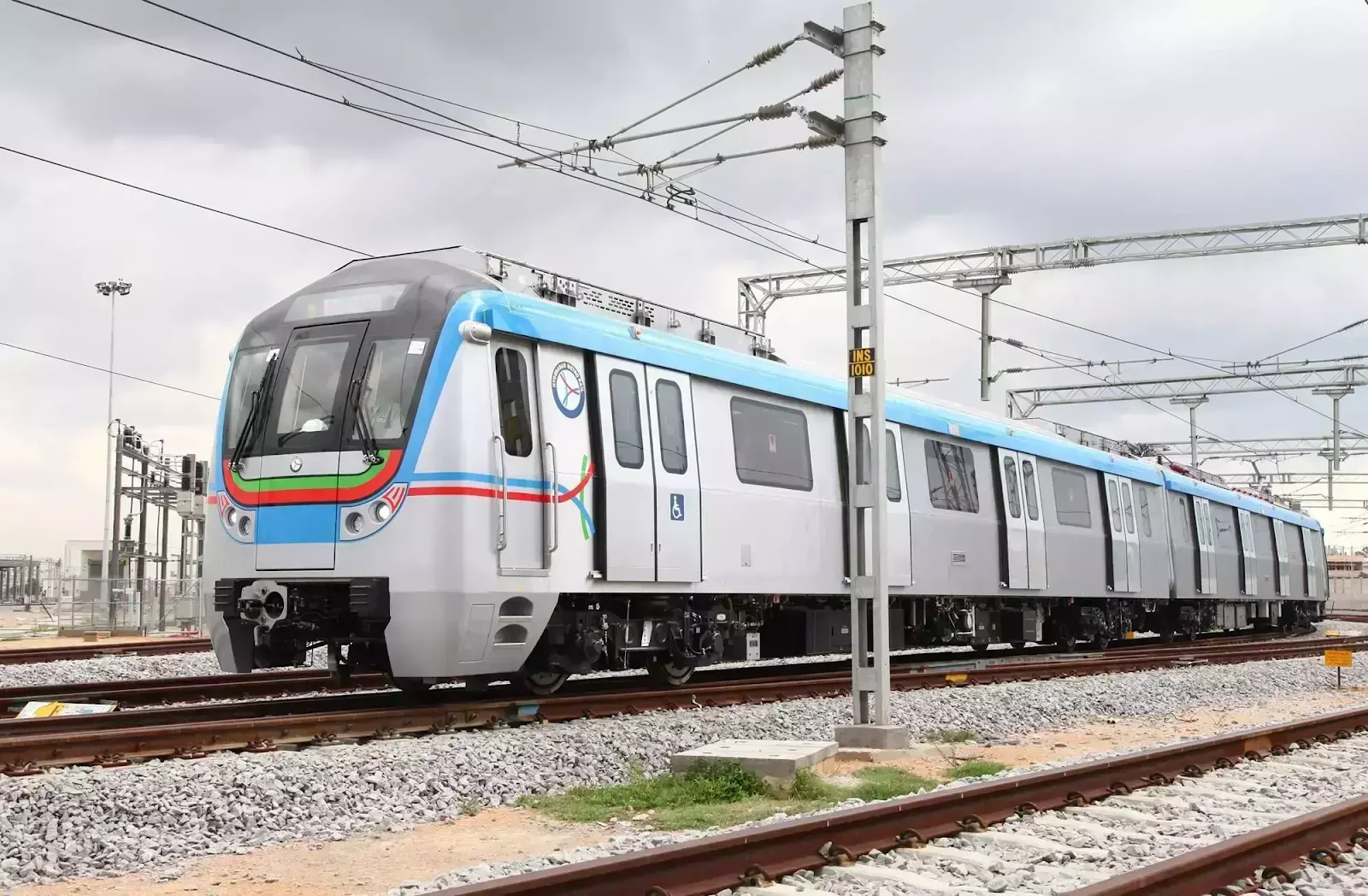
Hyderabad is emerging as a pivotal rail gateway for southern India, following a series of Union Budget–linked infrastructure commitments that place the city at the centre of a proposed high speed rail network connecting key metropolitan economies. The shift matters not only for faster inter-city travel but for how mobility-led infrastructure can reshape regional growth, reduce carbon-intensive road traffic, and influence real estate and labour markets across Telangana.
Public investment in the state’s rail sector has expanded sharply over the past decade, reflecting a broader recalibration of national transport priorities. Annual railway allocations for Telangana have risen multiple times compared to the early 2010s, supporting an expanding portfolio of new lines, capacity upgrades, and station modernisation. Officials involved in rail planning describe the scale of spending as a structural intervention aimed at easing freight bottlenecks, improving commuter reliability, and aligning urban growth with mass transit rather than private vehicles.At the centre of this transformation is Hyderabad’s inclusion in three high speed rail corridors linking the city with Pune, Bengaluru and Chennai. Together, these routes are expected to form a southern mobility triangle designed for trains operating at speeds significantly higher than conventional rail. Urban planners note that such corridors, if executed alongside local transit integration, can compress travel times enough to allow cities to function as extended economic regions rather than isolated job centres.
For Hyderabad, the implications extend beyond passenger convenience. Faster rail links are expected to support decentralised office locations, education clusters and logistics parks across Telangana, potentially easing pressure on the city’s core while expanding employment access. Industry experts point out that high speed rail can also lower the carbon intensity of medium-distance travel, especially when combined with a fully electrified network.Parallel investments are underway within the existing rail system. Dozens of stations across Telangana are being redeveloped under a national modernisation programme, with an emphasis on accessibility, energy efficiency and multimodal integration. Several upgraded stations are already operational, offering improved passenger circulation, digital information systems and safer platforms—features increasingly seen as essential urban infrastructure rather than ancillary amenities.
Network resilience and safety are also a focus area. Telangana’s rail routes are now fully electrified, and new track additions have improved operational flexibility. Advanced train protection technologies are being deployed on high-density sections, while grade-separated crossings are replacing level intersections to reduce accident risks in growing urban and peri-urban areas.Transport economists caution that the long-term success of the high speed rail vision will depend on execution timelines, fare structures and last-mile connectivity. Integrating high speed stations with metro rail, buses and pedestrian infrastructure will be critical to ensuring inclusive access rather than creating premium corridors serving limited users.
As planning moves from allocation to implementation, Hyderabad’s rail-led growth model will be closely watched by other Indian cities seeking climate-resilient, people-first mobility solutions. The next phase will test whether large-scale rail investment can translate into balanced urban development, cleaner travel choices and sustained regional competitiveness.
Also Read:Delhi Water Infrastructure Gets Chandrawal Supply Boost
Hyderabad Rail Hub Shapes Southern Mobility Future
