


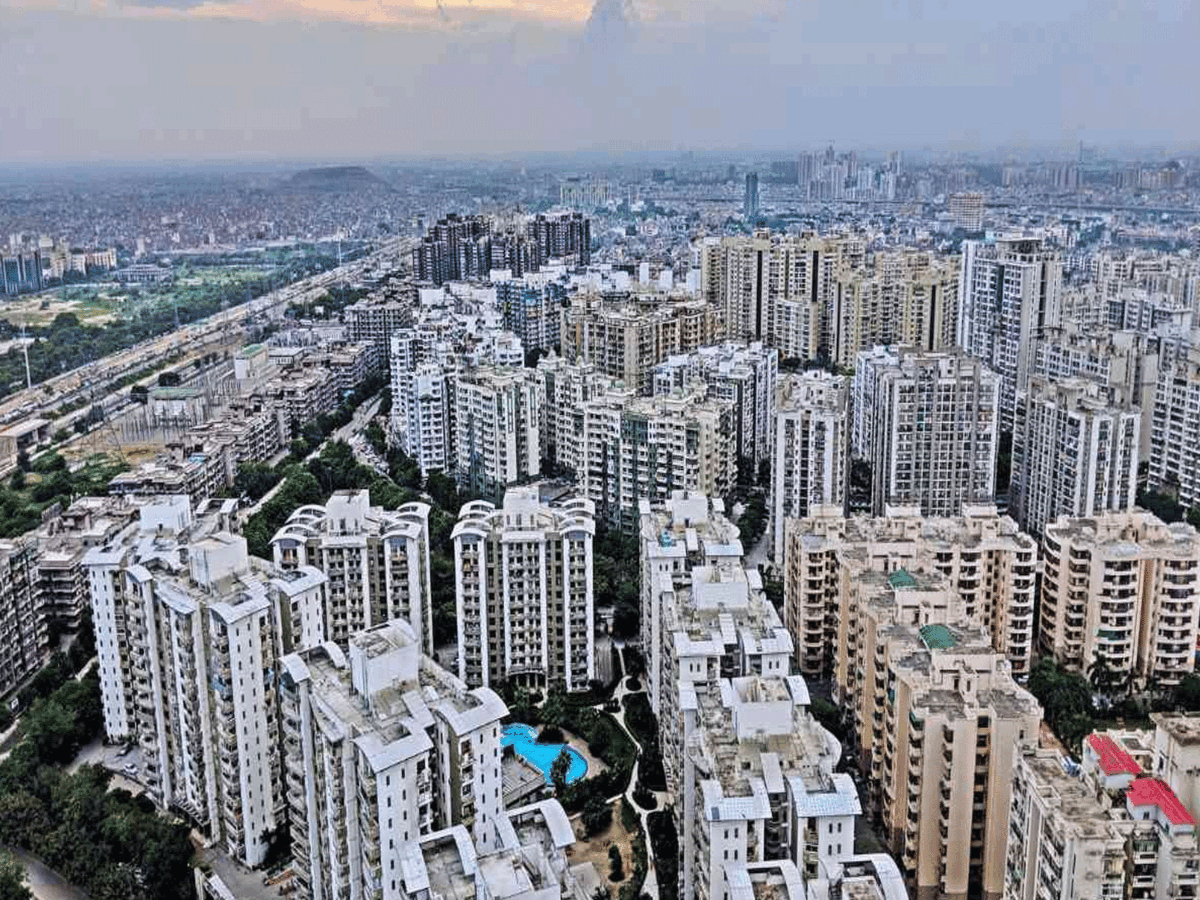
India’s highest court has reaffirmed that real estate developers cannot evade insolvency proceedings when projects remain incomplete and unfit for occupation, delivering a ruling that strengthens legal protections for both homebuyers and commercial property allottees in large urban developments.
In a judgment delivered this week, the Supreme Court declined to interfere with insolvency action initiated against two closely linked real estate companies involved in a high-profile commercial project in Greater Noida. The ruling confirms earlier decisions by insolvency tribunals that admitted buyer-led proceedings under the Insolvency and Bankruptcy Code (IBC), citing prolonged non-delivery of usable units despite substantial payments. The dispute traces back more than a decade, with buyers alleging that possession deadlines were missed by several years and that the project failed to secure mandatory completion approvals from the local industrial development authority. Although partial handovers were claimed by the developers, the court found that the buildings were neither fully completed nor legally fit for occupation, making any such possession claims untenable. Legal experts say the verdict reinforces a key principle that has evolved through multiple IBC cases: payments made by property allottees constitute financial debt when delivery obligations are not met. This places buyers on firm footing to trigger insolvency proceedings when projects stagnate, rather than leaving them trapped in prolonged litigation or arbitration.
The judgment also carries broader implications for India’s urban development landscape. Greater Noida, like several planned satellite cities, has witnessed rapid commercial construction over the past two decades, often driven by aggressive sales models that promised assured returns or early possession. When such promises fail, stalled buildings not only harm buyers but also create long-term urban liabilities in the form of underutilised infrastructure and degraded public spaces. Urban planners note that incomplete commercial towers disrupt local economies, strain municipal services, and undermine confidence in planned business districts. By holding developers accountable through insolvency mechanisms, courts are indirectly reinforcing the need for financially and technically viable project planning. The ruling further clarifies that tribunals are entitled to examine on-ground realities rather than rely solely on developer-submitted documents. This emphasis on functional completion rather than paper compliance aligns with the broader shift in real estate regulation towards outcome-based accountability, also reflected in the Real Estate (Regulation and Development) Act. For lenders and investors, the decision serves as a reminder that project viability, regulatory approvals, and delivery timelines are central to risk assessment. Insolvency proceedings can now advance even where partial occupation or selective possession is claimed, if core obligations remain unmet.
As Indian cities continue to expand through mixed-use and commercial developments, the judgment signals a tightening legal environment for speculative or undercapitalised projects. For buyers, it reinforces the message that delayed possession is not merely a contractual inconvenience, but a legally actionable default with systemic consequences for developers and urban markets alike.
Also Read: Delhi Extends Property Tax Amnesty Window
Greater Noida Ruling Reshapes Real Estate Accountability
