


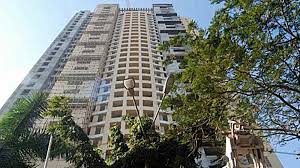
Mumbai’s public housing agency is turning to a faster allocation model to unlock idle residential stock, signalling a tactical shift in how state-owned homes reach buyers in one of India’s most supply-constrained cities. The Mumbai Housing and Area Development Authority (MHADA) has announced that a fresh set of ready-to-occupy flats will be offered through a first-come-first-served mechanism, departing from its more familiar lottery-based distribution.
The inventory comprises just over a hundred homes spread across multiple neighbourhoods, including western and eastern suburbs as well as parts of south and central Mumbai. These units were previously offered through lottery draws but remained unallocated, reflecting the persistent mismatch between housing supply formats and effective demand even within public sector housing. Urban housing experts say the move highlights the growing importance of flexibility in public housing delivery. Lottery systems, while transparent, often involve long waiting periods and uncertainty for applicants. A first-come-first-served approach, particularly for completed homes, allows buyers with ready finances to move quickly, reducing vacancy periods and maintenance costs for the authority. The homes are located within long-established MHADA colonies as well as buildings acquired through development control regulations that mandate rehabilitation and public housing components in private redevelopment projects. This mix illustrates how Mumbai’s housing ecosystem is increasingly interlinked, with public authorities relying on both direct construction and regulatory land capture to maintain stock in high-value urban areas.
From a city-planning perspective, the distribution of these homes across diverse localities including Kandivali, Malad, Powai, Mankhurd, Vikhroli, Lower Parel, and Andheri underscores the spatial complexity of affordable and middle-income housing in Mumbai. While some locations lie in peripheral zones, others are embedded within dense, transit-rich neighbourhoods where access to employment and services is significantly better. Applicants will be required to make an initial payment shortly after selecting a unit, followed by a time-bound schedule to complete the transaction. Housing policy analysts note that such timelines are intended to discourage speculative bookings and ensure that homes are occupied rather than held vacant a key concern in cities facing both housing shortages and underutilised stock. The decision also reflects MHADA’s broader challenge: balancing affordability with financial sustainability. Unsold units tie up capital and delay reinvestment into new housing projects, including redevelopment of ageing buildings and expansion of rental housing. By accelerating sales of completed homes, the authority can redirect resources toward upgrading infrastructure and delivering additional housing in line with evolving urban needs. However, experts caution that allocation mechanisms alone cannot address structural affordability gaps. Public housing agencies must also align unit sizes, pricing, and locations with actual household demand, particularly for lower- and middle-income residents who face rising land and construction costs.
As Mumbai continues to densify under redevelopment pressure, MHADA’s latest move offers insight into how public housing institutions are adapting operational strategies to remain relevant. Whether this approach improves occupancy and access will be closely watched, especially as the city grapples with the dual challenge of housing scarcity and equitable urban growth.
Also Read: Worli Luxury Housing Draws Rs 2000 Crore Demand
MHADA Opens Unsold Mumbai Homes via FCFS Route
