


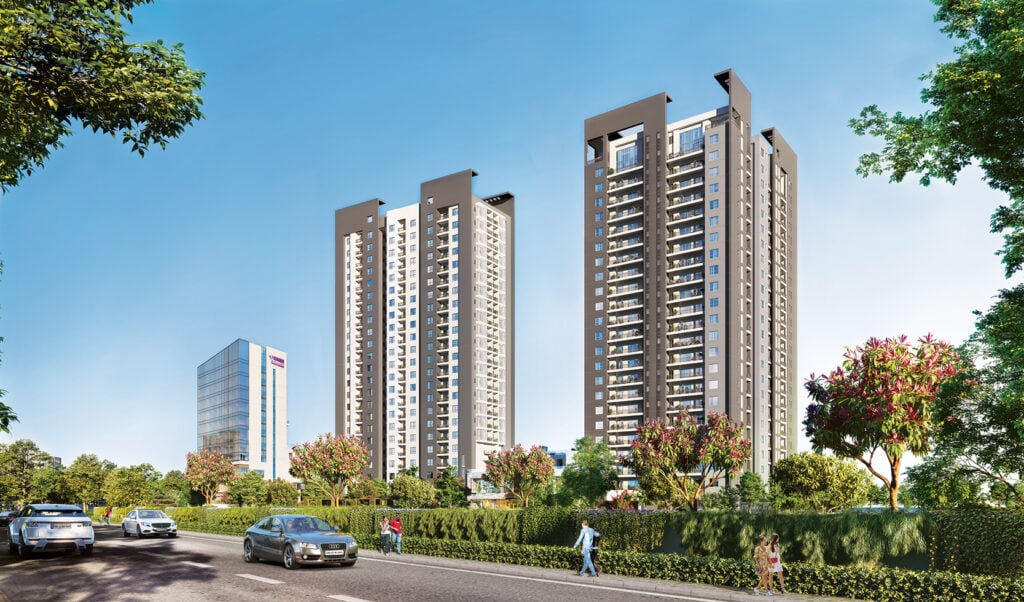
Bhubaneswar, long identified with heritage tourism and public administration, is quietly reshaping its economic profile through sustained gains in residential real estate. Fresh housing market indicators show the Odisha capital delivering stronger long-term property returns than several established metropolitan centres, highlighting a broader rebalancing underway in India’s urban investment landscape.
Recent data from India’s official housing price tracking mechanism indicates that residential values in Bhubaneswar have consistently outperformed those in larger metros over the past year. Annual capital appreciation in the city has ranged between mid- to high-single digits, supported by steady rental income levels. In contrast, property markets in traditional tier-I cities have seen more modest growth as affordability pressures, supply saturation, and regulatory tightening temper investor sentiment. Urban economists attribute Bhubaneswar’s performance to a combination of planned urban expansion and relatively low base prices. Unlike older metros constrained by legacy infrastructure and high land acquisition costs, Bhubaneswar has benefited from structured zoning, wider road networks, and designated residential corridors. This has enabled developers to deliver housing at price points that remain accessible to first-time buyers while still offering scope for value growth. The city’s role as an administrative and institutional hub has also supported housing demand. Growth in public sector employment, education, healthcare, and allied services has created a stable tenant base, reducing volatility in rental markets. For investors, this has translated into predictable yields rather than speculative spikes a quality increasingly valued in uncertain economic cycles.
Urban planners point out that Bhubaneswar’s development trajectory reflects a larger national shift toward mid-sized cities that balance livability with economic opportunity. As congestion, pollution, and commute times intensify in megacities, both households and employers are reassessing location choices. Cities that offer reliable infrastructure, manageable population density, and access to social amenities are emerging as viable alternatives. From a sustainability perspective, Bhubaneswar’s relative advantage lies in its ability to grow without replicating the environmental stresses seen elsewhere. Lower construction density, improved water management planning, and scope for climate-resilient design position the city favourably as climate risks become a central concern in urban real estate decisions. Market analysts caution that maintaining this momentum will depend on disciplined planning and infrastructure delivery. Transport connectivity, drainage systems, and affordable housing provision will need to keep pace with private investment to prevent uneven growth. The experience of larger metros serves as a reminder that unchecked expansion can quickly erode early advantages.
For now, Bhubaneswar’s housing market signals a meaningful shift in where long-term real estate value is being created. As India’s urban future diversifies beyond a handful of megacities, the Odisha capital offers a case study in how secondary cities can attract investment through stability, planning, and people-centric growth rather than scale alone.
Also Read: Piramal Realty Signals Shift Toward Built Form Accountability
Bhubaneswar Emerges as India Real Estate Outperformer
