Ahmedabad High Speed Rail Marks Tunnel Progress Knowing
A key underground construction milestone has been reached on the Mumbai–Ahmedabad high-speed rail corridor, with a second mountain tunnel in Maharashtra’s Palghar district breaking through within weeks of the previous achievement. The development signals accelerating execution on one of India’s most complex urban transport projects, carrying implications for regional connectivity, construction timelines, and long-term urban mobility planning.
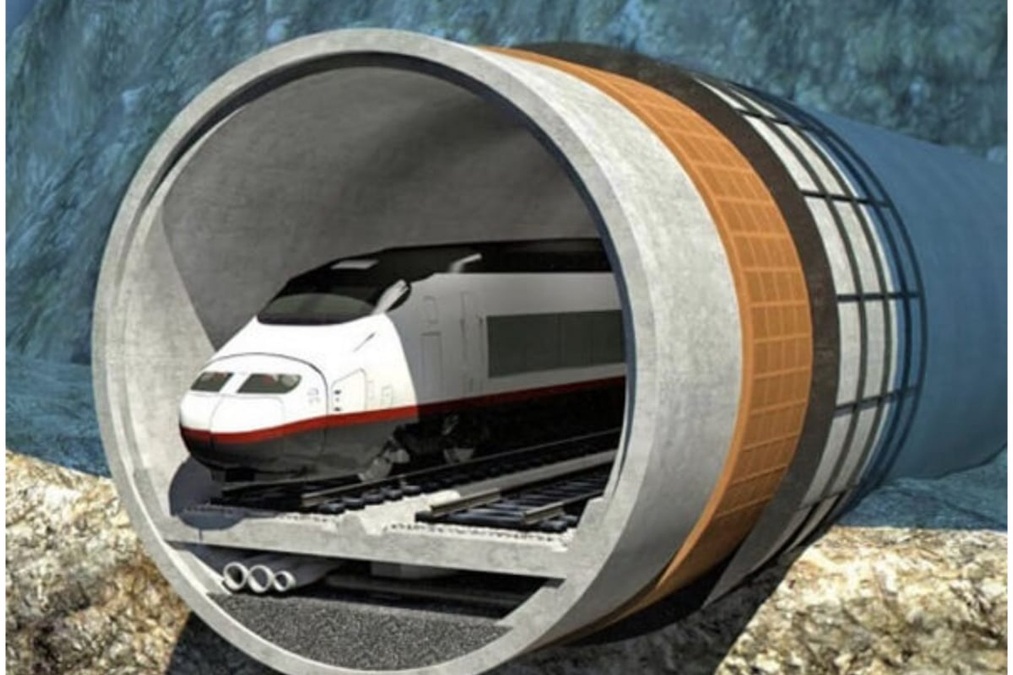
The latest breakthrough involves a twin-track mountain tunnel designed to accommodate high-speed rail operations in challenging geological conditions. Excavated simultaneously from both ends, the structure forms part of a cluster of tunnels required to navigate the hilly terrain of Palghar, a district that acts as a crucial gateway between the Mumbai Metropolitan Region and Gujarat. Infrastructure planners note that faster tunnel completion reduces risk to downstream works such as viaduct erection, track installation, and systems integration. For cities along the corridor, particularly Ahmedabad and Mumbai, progress beneath the surface has tangible surface-level consequences. High-speed rail is expected to compress intercity travel times, influence commercial real estate demand near stations, and reshape daily business mobility between western India’s largest economic hubs. Urban economists point out that construction momentum is closely tracked by investors and developers assessing long-term growth corridors. The tunnel was built using the New Austrian Tunnelling Method, a flexible approach that allows engineers to adapt support systems based on real-time ground conditions.
This technique is increasingly favoured in dense or environmentally sensitive regions, as it limits surface disruption and reduces the need for large tunnel boring machinery. Officials overseeing the works indicated that continuous monitoring, ventilation systems, and controlled access protocols were used to manage worker safety and geological uncertainty.Beyond Palghar, construction activity across the Maharashtra stretch of the Mumbai Ahmedabad Bullet Train project is progressing on multiple fronts. Foundations for major river crossings are advancing, long-span steel bridges are being installed over highways, and station structures are taking shape at key urban nodes. The underground section linking Mumbai’s central business district with its outer suburbs remains among the most technically demanding components, reflecting the broader challenge of delivering megaprojects in saturated urban environments. The full corridor spans more than 500 kilometres, with a majority of viaduct construction already completed in Gujarat.
Track laying and electrification in that section are moving steadily, offering a contrast between the relatively open landscapes of western India and the constrained, infrastructure-heavy zones of the Mumbai region. From a sustainability perspective, transport planners emphasise that high-speed rail offers long-term carbon efficiency gains by shifting passengers away from road and short-haul air travel. However, they add that timely delivery, integration with local transit, and equitable station-area development will determine whether these benefits are fully realised. As tunnel works continue in Palghar and elsewhere, attention will increasingly turn to how the Mumbai Ahmedabad Bullet Train reshapes urban form, land use, and economic opportunity across the corridor well beyond the engineering milestones themselves.