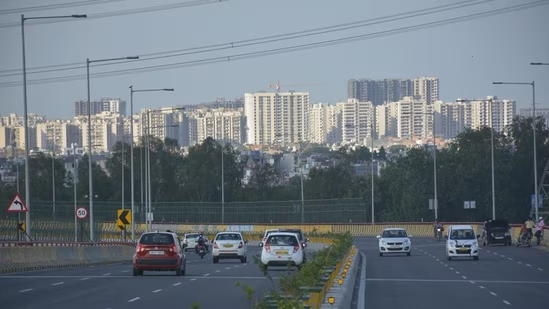
Urban planning across the National Capital Region is poised for a structural shift as Haryana clears a new policy allowing nursing homes to operate within licensed residential colonies. The move has direct implications for NCR cities including Gurugram, Faridabad, Sonipat and Panipat, where rapid housing growth has consistently outpaced the development of neighbourhood-level healthcare infrastructure.
The policy permits qualified medical practitioners to establish nursing homes on residential plots, subject to regulatory conditions and conversion charges. Urban development officials say the decision reflects a growing recognition that healthcare access must be embedded into residential planning, particularly in high-density NCR zones where travel time to hospitals remains a critical concern.
Over the past decade, NCR’s Haryana districts have seen large-scale residential expansion driven by private real estate development, transit corridors and industrial clusters. While housing supply has surged, social infrastructure especially small and mid-sized medical facilities has remained concentrated in commercial belts or older city cores. As a result, residents in newer sectors often rely on distant hospitals for routine or emergency care.
Urban planners note that the new framework aims to correct this imbalance. By allowing controlled healthcare use within residential areas, the policy encourages decentralised service delivery, reducing pressure on tertiary hospitals and lowering dependence on private vehicle travel a key factor in managing congestion and emissions in NCR cities. The policy places clear limits on scale and density, including caps on the number of nursing homes per sector and plot-size requirements linked to development potential. These safeguards are intended to preserve residential character while ensuring facilities remain accessible and manageable. Industry experts say such zoning flexibility is increasingly common in global city regions where mixed-use planning supports resilient urban systems.
For the NCR real estate market, the reform could have measurable ripple effects. Proximity to regulated healthcare services is often viewed as a value enhancer, particularly for senior citizens, working families and rental housing clusters. Developers and housing societies may increasingly factor local medical access into planning and marketing decisions, reshaping how residential micro-markets evolve. The policy also revises multiple urban development fees, aligning regulatory charges with current construction costs and infrastructure demands. Officials indicate that the updated fee structure is designed to support municipal service upgrades while maintaining financial viability for small healthcare providers a critical consideration in rapidly growing NCR towns.
Public health professionals see the move as especially relevant for NCR’s expanding population, which includes migrant workers, ageing residents and young families. Neighbourhood-scale nursing homes can play a vital role in preventive care, post-treatment recovery and maternal health, reducing strain on overburdened city hospitals. As implementation begins, urban governance experts emphasise the need for strict enforcement of safety, traffic and environmental norms. If managed well, the policy could mark a turning point in how NCR integrates healthcare into its residential fabric moving towards a more inclusive, accessible and resilient urban region.
NCR Urban Zoning Expands Local Medical Access