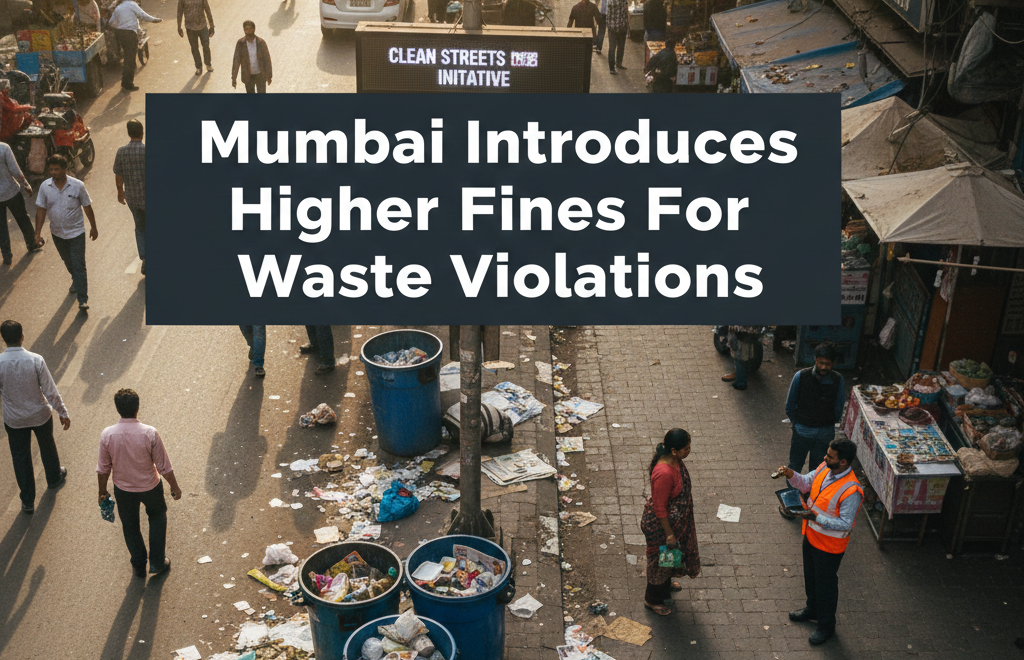
Mumbai has rolled out a stricter civic compliance framework, significantly raising penalties for sanitation and waste-related violations across the city. The revised bye-laws, notified by the municipal administration this week, aim to address persistent gaps in waste handling, public cleanliness, and environmental accountability at a time when India’s financial capital faces mounting pressure to improve liveability and climate resilience.
The updated rules apply uniformly to households, street vendors, housing societies, commercial establishments, construction firms, and institutional premises. Municipal officials said the changes reflect a shift from advisory-based enforcement to deterrence-driven regulation, as repeated warnings and awareness campaigns have failed to deliver sustained behavioural change. Under the revised framework, fines for littering in public spaces have been more than doubled, while penalties for public spitting have also increased. Activities such as washing vehicles on roads, open urination or defecation, and neglecting to maintain drains outside private properties will now attract substantially higher fines. Civic authorities believe these everyday violations collectively contribute to clogged drainage systems, worsening urban flooding risks, and declining public health outcomes.
A key focus of the new bye-laws is waste segregation at source. Failure to separate wet and dry waste will now invite financial penalties, reinforcing a long-standing rule that has seen uneven compliance across neighbourhoods. Urban planners note that without effective segregation, downstream investments in waste processing, composting, and recycling infrastructure remain underutilised, increasing landfill dependence and transport emissions. Construction and infrastructure projects have also been brought firmly under the regulatory lens. Vehicles transporting debris without valid permissions will face steep fines, reflecting the city’s growing concern over dust pollution, illegal dumping, and road safety hazards linked to construction activity. Industry experts say the move could raise compliance costs in the short term but may ultimately level the playing field for developers who follow environmental norms.
The bye-laws establish a comprehensive accountability framework covering residential, commercial, industrial, educational, religious, and public institutions. They also define clear responsibilities for waste generators, building managers, contractors, and municipal agencies, reducing ambiguity around enforcement. Provisions addressing biomedical waste, electronic waste, and plastic disposal have been aligned with national environmental regulations, signalling an effort to integrate local governance with broader climate and sustainability goals. Municipal officials said the revised penalties are part of a larger strategy to modernise solid waste management systems, improve operational efficiency, and reduce the environmental footprint of India’s largest city. With Mumbai investing heavily in drainage upgrades, coastal resilience, and public infrastructure, officials argue that civic discipline is a necessary counterpart to capital spending.
As enforcement begins across wards, the effectiveness of the new rules will depend on consistent implementation and transparent monitoring. For residents and businesses alike, the message is clear: cleaner urban spaces are no longer voluntary, but a shared civic obligation tied directly to the city’s economic and environmental future.
Mumbai Introduces Higher Fines For Waste Violations