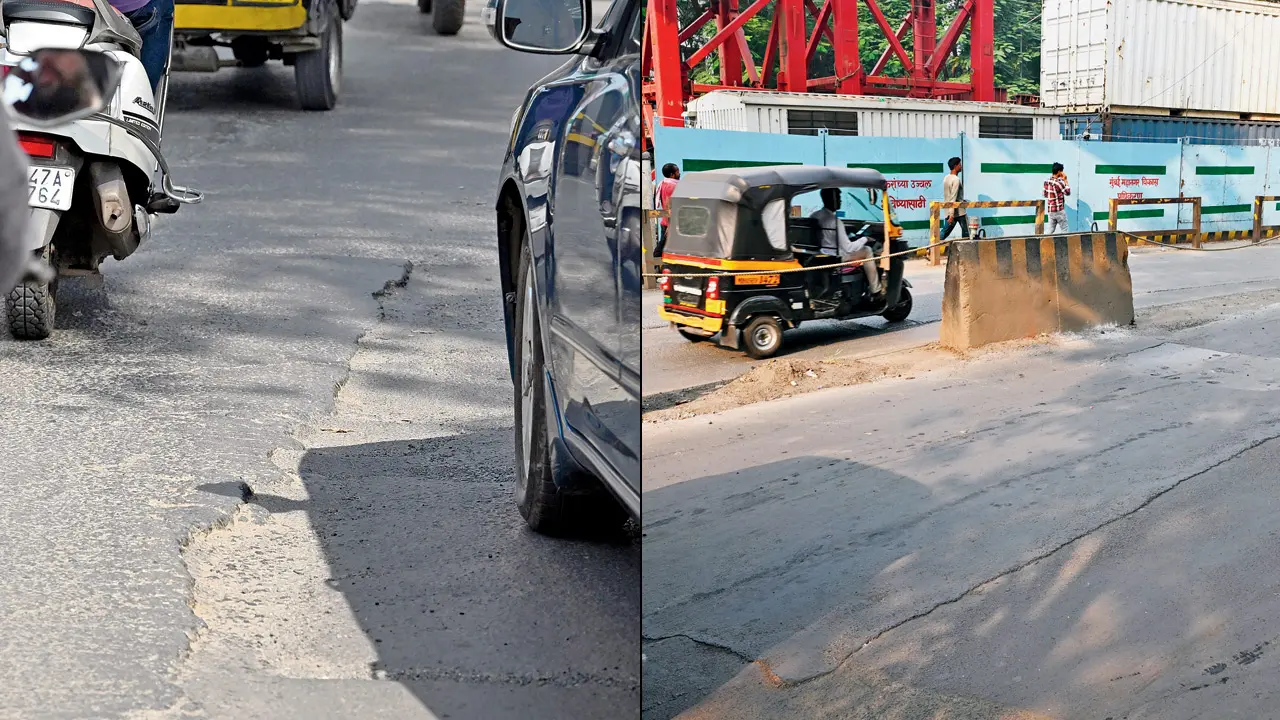
Residents of Lokhandwala Complex in Mumbai’s Andheri West are raising fresh safety and mobility concerns over prolonged Metro construction that has left large structural components occupying a key neighbourhood road for years. What began as a temporary staging arrangement has evolved into a persistent urban bottleneck, narrowing carriageways, degrading walkability, and exposing gaps in construction-phase governance in one of the city’s densest residential zones.
The issue centres on heavy steel girders stored along a stretch of the Lokhandwala back road, a local connector used daily by pedestrians, motorists, and senior citizens accessing nearby housing clusters. Civic groups say the material has remained in place since 2023, blocking lanes and forcing walkers onto active traffic corridors. With vehicle speeds rising on the constrained road, residents argue the risk of serious accidents has increased sharply, particularly during peak morning and evening hours. Urban planners tracking the situation note that construction staging areas often become semi-permanent in Mumbai, especially where timelines slip and accountability is diffused across agencies. In Lokhandwala’s case, the prolonged occupation has also damaged the road surface. Barricading work and repeated heavy vehicle movement have reportedly left behind uneven asphalt, exposed concrete edges, and poor drainage — conditions that worsen during monsoon months and undermine last-mile safety.
Local citizen associations have formally flagged the matter to metropolitan authorities overseeing the Metro project, pointing to the absence of traffic marshals, pedestrian buffers, or basic site maintenance. According to residents, the cluttered stretch has also attracted informal dumping, creating sanitation and mosquito-breeding risks in a neighbourhood already under environmental stress. For a city grappling with climate resilience, unmanaged construction zones add another layer of vulnerability. From a policy perspective, the episode highlights a recurring tension in Mumbai’s infrastructure expansion: balancing rapid transit delivery with liveability at street level. Transport economists argue that while Metro networks are essential for reducing long-term carbon emissions and private vehicle dependence, poorly managed construction phases can erode public trust and impose hidden social costs on communities. These include lost productivity, higher accident risk, and declining quality of public space.
The Lokhandwala Metro safety concerns also carry implications for real estate and neighbourhood economics. Persistent access issues can affect property values, retail footfall, and the perceived liveability of established residential areas — factors closely watched by investors and housing markets alike. Urban governance experts suggest that clearer timelines for material removal, transparent communication with residents, and mandatory pedestrian safety audits during construction could prevent similar situations elsewhere. As Mumbai accelerates multiple Metro corridors simultaneously, resolving the Lokhandwala Metro safety issue may serve as a test case for how the city aligns large-scale infrastructure delivery with people-first urban design.
Mumbai Lokhandwala Road Risks Rise Amid Metro Works