


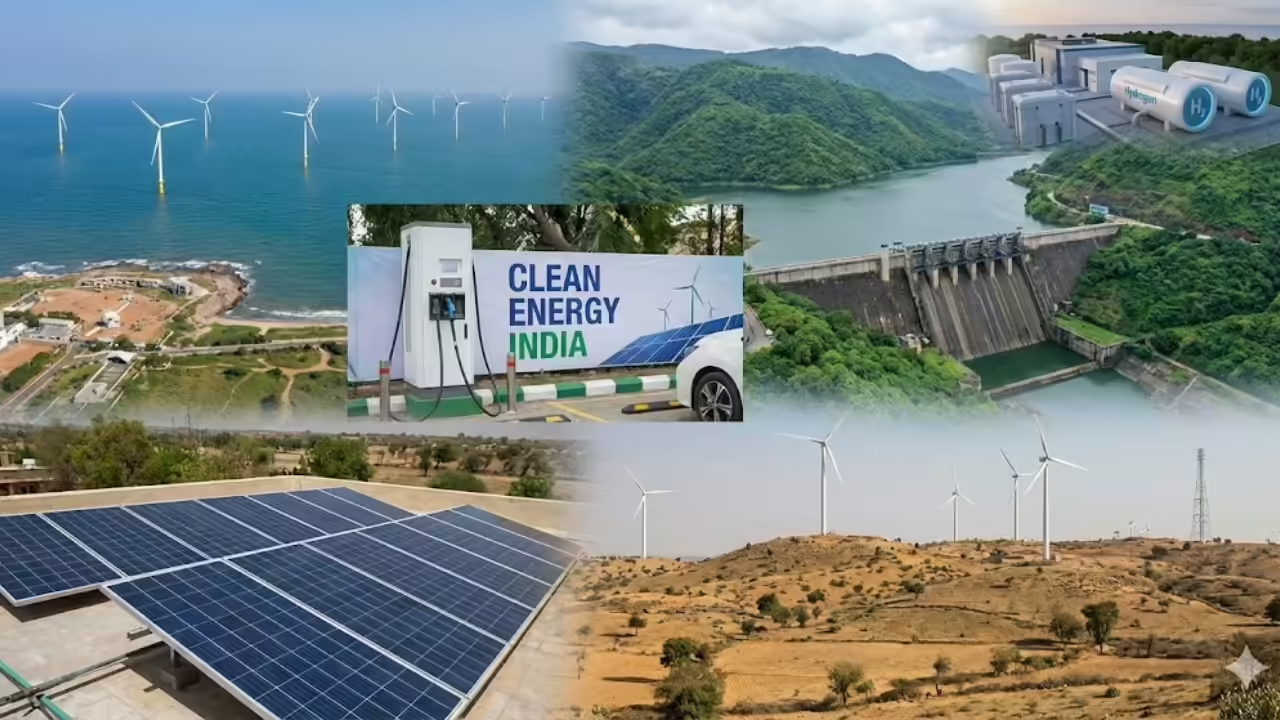
India’s latest Union Budget has placed the power sector at the centre of its economic and urban growth strategy, signalling a decisive push towards clean energy, grid modernisation, and technology-led infrastructure. With allocations and policy signals aimed at renewable generation, energy storage, and distribution upgrades, the budget underscores how electricity systems are becoming foundational to climate-resilient cities, industrial competitiveness, and inclusive development. At the heart of the budget is a renewed emphasis on scaling non-fossil fuel capacity while strengthening the reliability of power supply. Senior government officials involved in budget planning have indicated that meeting India’s medium-term growth targets will depend heavily on the availability of affordable, stable electricity, particularly for manufacturing clusters, data centres, and rapidly expanding urban regions. The budget’s energy focus reflects this strategic linkage between power security and economic productivity.
Industry experts note that the budget continues policy support for renewable energy deployment, with measures designed to encourage private investment in solar, wind, and hybrid projects. These initiatives are complemented by increased attention to energy storage technologies, including battery systems, which are critical for balancing variable renewable supply. For cities, this translates into greater grid resilience, reducing the risk of outages during heatwaves or extreme weather events linked to climate change. Another significant dimension is the push for modernising electricity distribution networks. Urban planners have long pointed out that ageing distribution infrastructure constrains the effectiveness of clean energy adoption at the city level. Budgetary signals supporting smart grids, digital metering, and loss reduction are expected to improve the financial health of distribution utilities while enabling more efficient energy use in residential and commercial buildings.
The budget also aligns energy policy with broader industrial and employment objectives. Analysts highlight that domestic manufacturing of clean energy components — such as solar modules, storage systems, and power electronics — is being positioned as a driver of job creation and regional development. By linking energy transition goals with industrial policy, the government aims to ensure that the shift to low-carbon power also delivers equitable economic opportunities. From an urban development perspective, reliable and cleaner electricity is increasingly viewed as essential civic infrastructure, much like transport or water supply. Cities pursuing electric mobility, energy-efficient buildings, and decentralised renewable systems depend on a robust power backbone. The budget’s direction suggests recognition that climate-resilient urbanisation cannot be achieved without parallel investments in energy systems.
However, experts caution that execution will be key. Regulatory clarity, timely project approvals, and coordination between central and state agencies will determine whether budgetary intent translates into on-ground impact. There are also calls for stronger integration of energy planning with urban local bodies, which often lack the technical capacity to manage complex energy transitions. As India’s cities expand and energy demand rises, the Union Budget’s power sector focus sets the tone for the next phase of infrastructure development. The challenge ahead lies in ensuring that investments not only increase capacity, but also deliver cleaner, more reliable, and more inclusive energy systems that support long-term urban resilience.
Also Read: Ahmedabad Power Transmission Tax Relief Ruling
New Delhi Backs Clean Power Expansion
