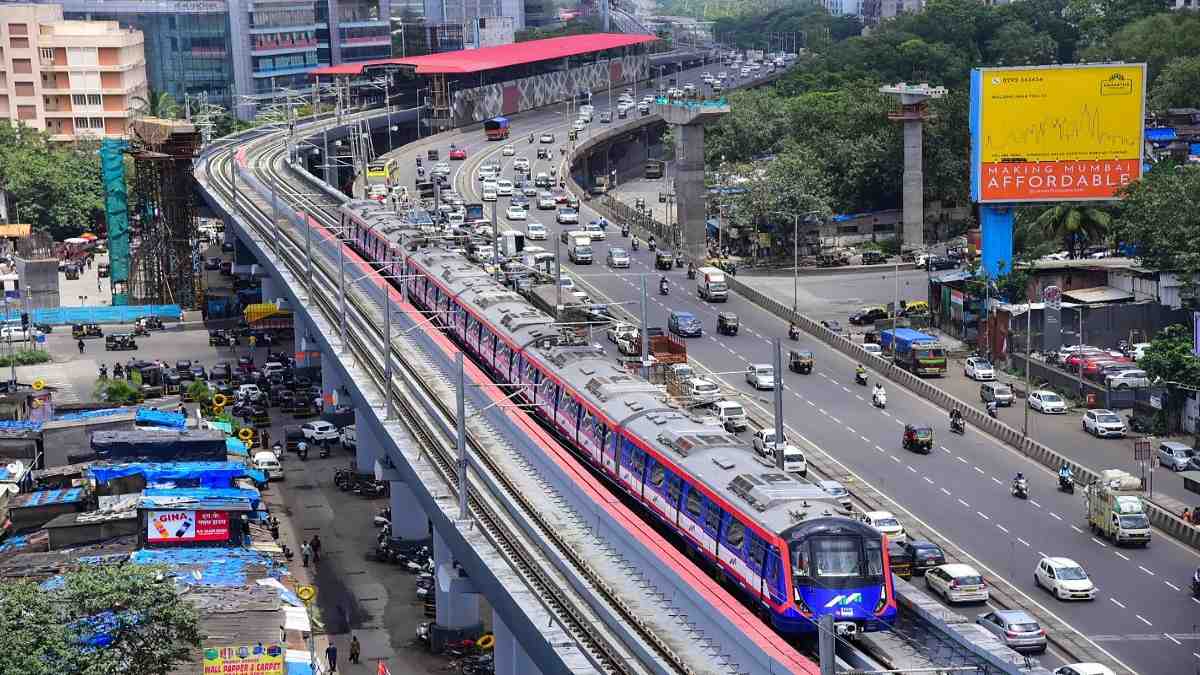
Mumbai’s long-awaited Metro Line 6, a 15.31‑kilometre elevated corridor spanning from Swami Samarth Nagar in Lokhandwala to Vikhroli on the Eastern Express Highway, is rapidly nearing completion and poised to redefine east‑west urban connectivity in the city. With 13 strategically placed stations and multiple interchanges across existing and future metro lines, the project aims to alleviate chronic road congestion and integrate densely populated western and central suburbs into a more cohesive public transport network — a crucial step for equitable, climate‑responsive urban mobility.
The fully elevated design, built predominantly along the Jogeshwari‑Vikhroli Link Road (JVLR), will provide direct metro access through residential, commercial and employment hubs including Andheri, Powai and Kanjurmarg. By linking Western Express Highway with the Eastern Express Highway, the route cuts across long‑standing barriers in Mumbai’s transport geography that have historically funnelled commuters onto overcrowded road corridors and limited east‑west rail options.Transport planners say Line 6’s real impact lies in its interconnectivity. The corridor will interface with Metro Lines 2A, 7, 3 and 4, creating seamless transfer points for commuters and offering alternatives to suburban rail and private vehicles. This networked approach is expected to redistribute travel flows, reduce pressure on local streets and complement the city’s broader goal of reducing carbon emissions through mass rapid transit usage.
When fully operational, the line is designed to cut east‑west travel times by up to 30–45 minutes, a meaningful improvement in a megacity where daily commutes often dictate quality of life and labour market access. Analysts note that faster mass transit not only supports labour mobility across jobs and services but also underpins more inclusive economic growth by connecting previously fragmented urban zones.Engineering and construction have navigated complex urban challenges, including elevated structures over existing highways and railway tracks, and innovative combined transport solutions. One notable feature is a 2.58‑kilometre dual‑purpose elevated section that houses both the metro viaduct and a road flyover on shared piers — an efficient design response aimed at maximising limited urban space whilst minimising land acquisition and environmental disruption.
However, the project has not been without hurdles. Land alignment adjustments, depot relocation and intricate structural demands have contributed to schedule shifts, highlighting the complexities of executing large‑scale infrastructure in densely built cities. These experiences underscore the need for adaptive planning and robust risk management in future transit expansions.For Mumbai’s millions of daily commuters, Line 6 represents more than a new metro line — it is a tangible upgrade in how the city moves. As authorities prepare for phased activation of stations and services, attention will turn to last‑mile connectivity, accessibility enhancements for differently‑abled users, and integrating fare systems across transport modes. Successful implementation could set a benchmark for sustainable urban mobility in India’s largest metropolitan regions.