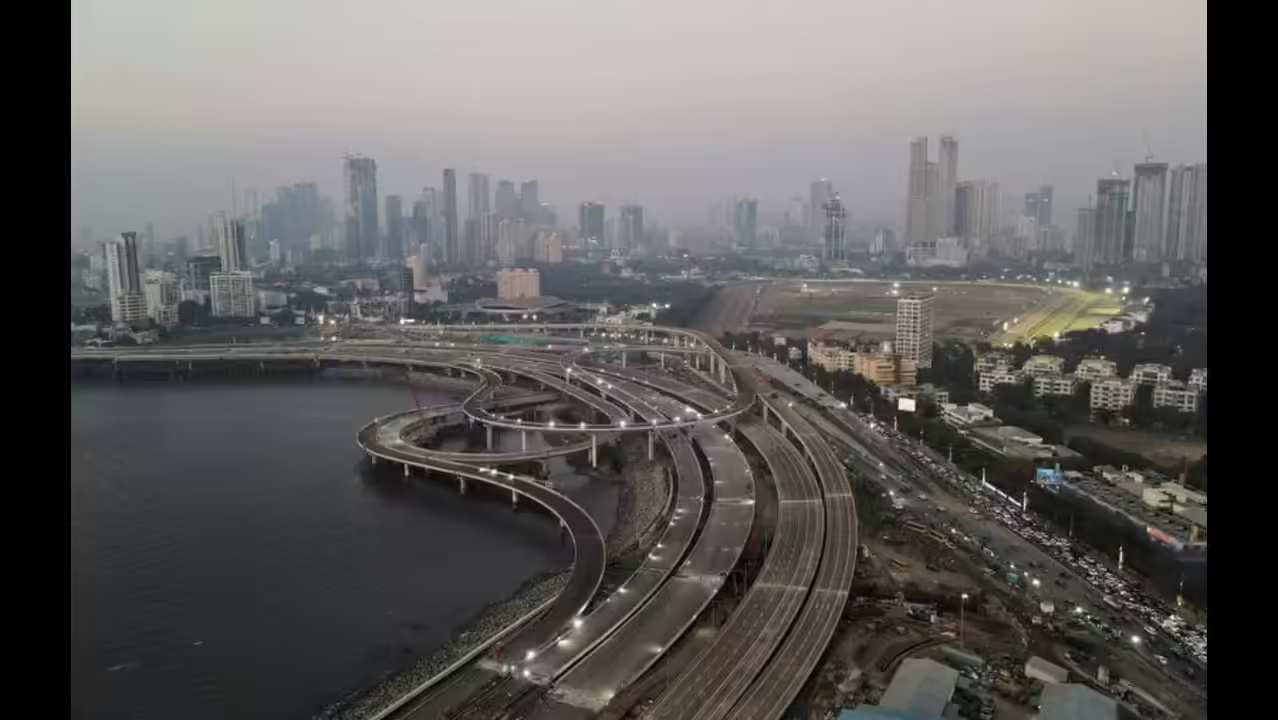
In response to a rise in traffic collisions along the Mumbai Coastal Road, city authorities have adopted stricter measures to curb speeding and enhance road safety, signalling a shift towards more disciplined urban mobility on one of the metropolis’s most high-profile transport corridors. The move reflects growing emphasis on integrating traffic management with safety enforcement as part of broader efforts to make infrastructure safer, greener and more people-centric.
The Mumbai Traffic Police and regional transport authorities have announced that drivers who exceed set speed limits will face direct action, including automated e-challans and the possibility of criminal charges for repeat violators rather than just monetary penalties. This pivot follows data showing thousands of speed-related violations recorded on the Coastal Road, a major link between Marine Drive and the Bandra-Worli Sea Link that was designed to ease congestion in the city’s western corridor.Authority officials confirmed clearly defined limits — 80 km/h on open stretches, 60 km/h within tunnels, and 40 km/h near interchanges — underscored by Automatic Number Plate Recognition (ANPR) cameras and an e-challan enforcement system to monitor adherence. Notices and fines will be issued to offenders, and serial violators may face criminal charges under traffic laws designed to strengthen deterrence.
Urban planners welcome the tougher stance, noting that high-speed driving on newly built express corridors often undermines safety gains achieved through improved infrastructure. While wide lanes and smoother surfaces can reduce travel times, they also tend to attract higher speeds if not paired with effective monitoring and enforcement. Sustained enforcement could drive better compliance and reduce accidents, including during off-peak hours when traffic density is lower. Community responses have been mixed, with some motorists appreciating the focus on safety but others warning that enforcement must be paired with clear signage, public awareness campaigns and consistent implementation across all sections of the Coastal Road. Without sufficient visibility of speed limits and enforcement equipment, drivers may inadvertently breach rules despite good intentions, particularly in tunnel sections where speeding has been linked to serious crashes elsewhere.
This policy shift also intersects with wider debates on urban transport governance and behavioural change in India’s megacities, where rapid infrastructure expansion must be matched with robust traffic discipline frameworks. Increasing reliance on digital monitoring systems such as ANPR, e-challans and potentially AI-driven detection tools signals a trend towards technology-enabled road safety management — a key component of sustainable and equitable urban mobility strategies.The Coastal Road’s role as a major commuter artery means that safety enhancements could yield significant benefits not just for private motorists but for public transport services, two-wheeler riders and vulnerable road users alike. Effective enforcement may also ease congestion by calming traffic flows and reducing disruptions caused by collisions.
Looking ahead, authorities emphasise the importance of ongoing evaluation of enforcement outcomes, installation of supplementary speed-detection signage, and community education campaigns to foster a culture of safe driving. As Mumbai continues to expand its roadway infrastructure, balancing efficiency with safety remains a critical challenge for planners and citizens alike.