


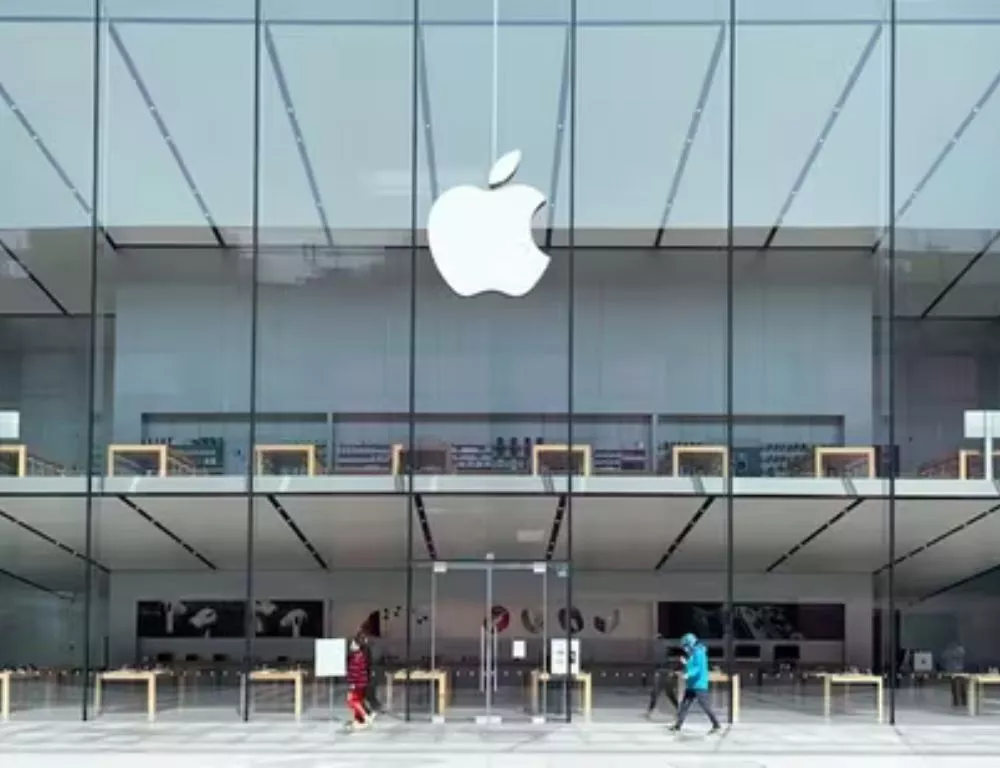
Apple has continued to scale its corporate footprint in Hyderabad, leasing additional office space at the WaveRock IT Park in the city’s Financial District, reinforcing the city’s position as a strategic node in global technology operations. The expansion takes the company’s total occupied area at the campus to approximately 6.3 lakh square feet, marking one of the more sustained multinational occupier commitments in India’s office real estate market.
The latest transaction involves a mid-sized addition within one of WaveRock’s completed office towers and follows a pattern of incremental growth rather than large, single-phase consolidation. Market participants view this approach as reflective of how global technology firms are adapting their India strategies expanding steadily in established campuses that offer operational stability, talent access, and long-term scalability. Apple’s association with the WaveRock campus dates back nearly a decade, during which the company has progressively expanded its leased footprint as teams supporting software development, digital services, and backend technology operations have grown. The continuity of expansion at the same location suggests a preference for institutional-grade campuses that allow phased growth without operational disruption. Hyderabad’s Financial District has emerged as one of India’s most resilient Grade A office micro-markets, supported by planned infrastructure, improving transit connectivity, and a concentration of multinational tenants. Unlike several legacy business districts in older metros, the area benefits from relatively modern building stock, larger floor plates, and integrated campus-style development features increasingly favoured by global occupiers recalibrating space usage in a post-pandemic environment.
Urban economists note that such expansions carry implications beyond commercial real estate metrics. Large, long-term occupier commitments contribute to employment stability, anchor ancillary services, and reinforce the case for continued public investment in transport, utilities, and digital infrastructure. In Hyderabad’s case, sustained interest from global technology companies has helped the city maintain leasing momentum even as office markets in other metros experience uneven demand recovery. From a sustainability and urban resilience perspective, the clustering of large occupiers within planned technology campuses can support more efficient energy management, shared mobility solutions, and lower per-employee infrastructure strain when compared to fragmented office development. However, planners caution that long-term benefits depend on parallel investments in public transport and inclusive urban services to avoid congestion and spatial inequality. The expansion also aligns with broader shifts in how multinational corporations view India not merely as a cost centre, but as a long-term base for specialised technology and services functions. Hyderabad’s ability to attract repeat expansions, rather than one-off leases, is increasingly seen as a measure of its maturity as a global office destination.
As India’s office market navigates changing workspace strategies and cautious capital deployment, incremental yet persistent expansions by global firms may prove more significant than headline-grabbing mega deals. In that context, Apple’s continued scaling at WaveRock underscores the role of stable urban ecosystems in anchoring long-term corporate investment.
Also Read: M.C. Layman Expands Property Management Role in Frederick
WaveRock Campus Strengthens Position with Apple Expansion
