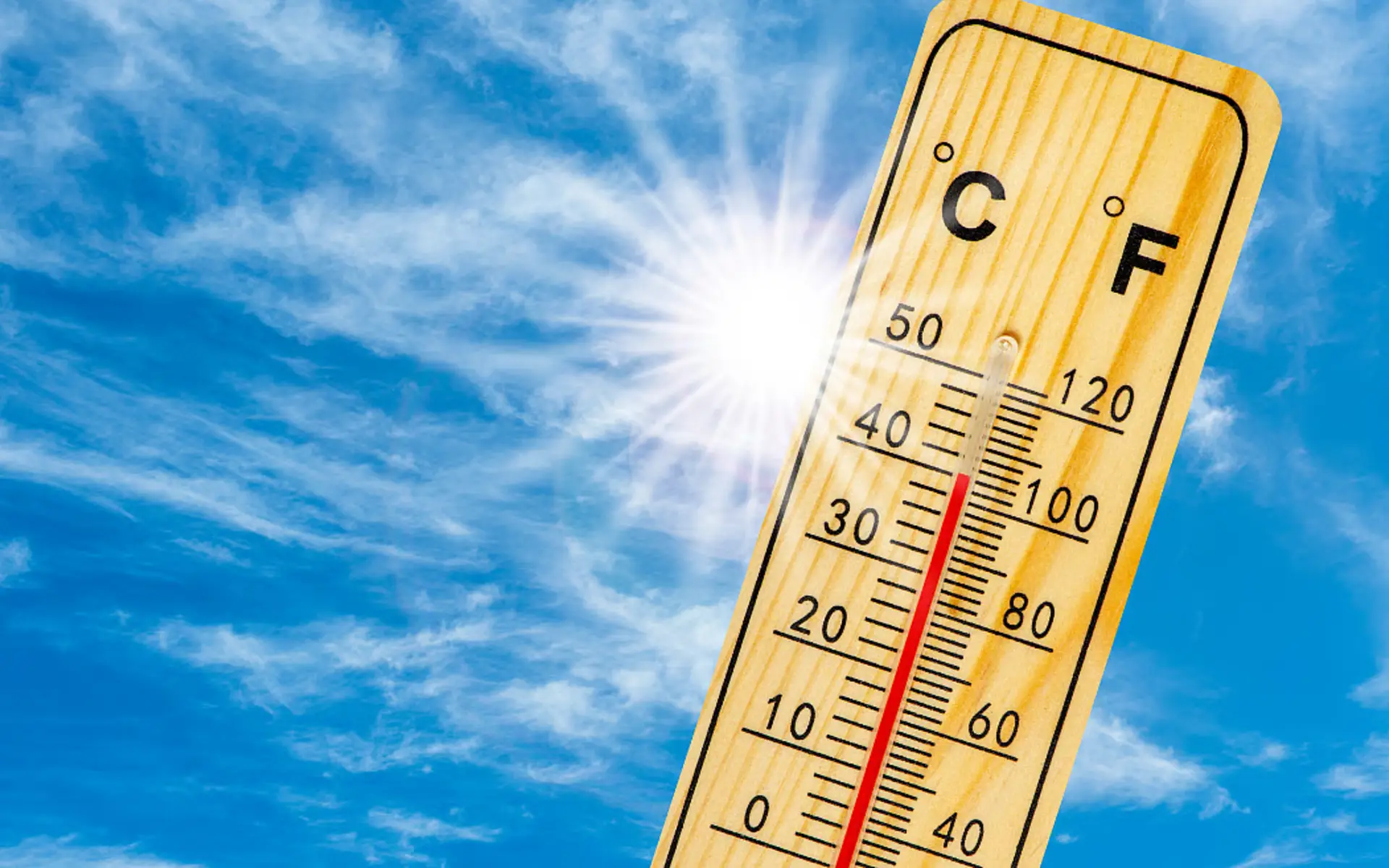
In a departure from typical early-February winter patterns, Maharashtra’s Vidarbha region is experiencing above-normal daytime temperatures with widespread dry weather, signalling a shift in local temperature trends that has implications for agriculture, health and climate resilience planning. The anomaly comes as most districts record maximum temperatures several degrees above their seasonal averages, even as nights remain relatively cool and dry conditions persist region-wide.
Latest meteorological observations show that maximum temperatures across Vidarbha ranged between roughly 30°C and 33.4°C over the past 24 hours, exceeding long-term norms for this time of year. The highest readings were logged in Brahmpuri, Amravati and Akola, while key urban centres such as Nagpur, Wardha and Yavatmal also reported elevated daytime heat relative to climatological baselines.By contrast, nighttime lows remained mostly within or slightly below expected values — with minimums between 11°C and 17°C — suggesting a large diurnal temperature range typical of dry continental conditions. Humidity levels in the mornings ranged widely across monitoring stations, pointing to pockets of residual moisture that fail to translate into rainfall or cloud cover.
The India Meteorological Department’s (IMD) regional forecast confirms that dry weather is likely to persist across Vidarbha and neighboring regions over the coming week, with little prospect of significant rainfall or cloud-induced cooling. Longer-range guidance also indicates that minimum temperatures could trend upwards in the short term, while maximums hold steady or rise further — underscoring the transition from winter chill to a pre-summer warmth phase.For communities and planners, these conditions matter on multiple fronts. Farmers depend on predictable winter weather for crop planning and irrigation scheduling; extended dry spells with warmer days can accelerate soil moisture depletion, putting stress on rabi crops and increasing reliance on artificial irrigation. With rainfall absent across reporting stations, groundwater demand is likely to increase, compounding existing water-security concerns in rural Vidarbha.
Public health experts and urban officials also note that sustained above-normal daytime heat — even if moderate compared with summer peaks — can raise risks for outdoor workers, the elderly, and other climate-sensitive groups. Warmer weather earlier in the year tends to lengthen the heat exposure season, increasing cumulative heat stress and straining informal safety nets in both urban and peri-urban communities.Climate analysts point out that such seasonal departures, while not unprecedented, are consistent with broader temperature shifts observed across Maharashtra and central India, where warming trends have been documented over recent decades. These patterns underscore the need for adaptive responses — from water management and agricultural advisories to heat-health action plans that prioritise equitable resilience outcomes.
Looking ahead, monitoring agencies advise residents to stay informed through IMD forecasts and to prepare for a gradual warming trend towards late winter and early spring, even as dry weather continues. Integration of early warning systems with local planning could help mitigate stresses on vulnerable populations as climatic variability intensifies.