


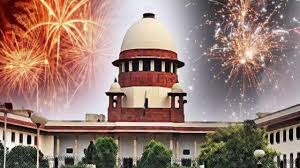
Kolkata — The Calcutta High Court has instructed the West Bengal Pollution Control Board (PCB) and law enforcement agencies to prevent the use of illegal and environmentally harmful firecrackers during the upcoming festival of Shab-e-Barat, signalling heightened judicial focus on festival-linked pollution and urban livability. This directive, issued on 2 February, aims to reduce air and noise pollution in densely populated urban areas while balancing cultural observance with public health and safety imperatives. A Division Bench of the High Court said fireworks that are not compliant with environmental norms should not be permitted during the festival period and imposed a time restriction on firecracker bursting between 10 pm and 6 am. Authorities have also been asked to submit a compliance report at the next hearing scheduled in April.
Urban planners and climate experts argue that unregulated firecracker use exacerbates particulate pollution and undermines efforts to build climate-resilient cities. Kolkata frequently records “unhealthy” air quality during major festivals when firecracker use peaks, posing risks to respiratory health and vulnerable populations. While the court’s order is festival-specific, its wider implications resonate with long-standing concerns about air quality management in Indian cities ahead of national policy frameworks on urban environment and public health. The directive follows a public interest petition highlighting that unregulated firecracker bursting disrupts communities, particularly children, elderly residents, individuals with health sensitivities, and animals. A senior civic official noted that festival-related pollution spikes not only strain municipal health systems but also dampen overall economic productivity through lost work days and increased healthcare demand in urban jurisdictions. Environmental advocates welcomed the court’s position, stating that city administrations must adopt proactive measures rather than reactive enforcement during festival seasons.
This judicial intervention occurs against the backdrop of broader air pollution control regimes in West Bengal, where only certified low-emission “green crackers” are permitted in some circumstances, and where local manufacturers have struggled to obtain environmental certification for fireworks. Municipal authorities had previously implemented time-bound restrictions for firecracker use during other festivals such as Diwali, with mixed compliance on the ground. For urban residents, the court’s order underscores a shift towards stronger regulatory oversight over cultural practices that have environmental and social externalities. A community leader in a Kolkata neighbourhood commented that noise and smoke from late-night crackers have led to lost sleep and stress for many families in high-density housing complexes.
However, enforcement challenges remain. Police and PCB officials will need to coordinate effectively across municipal wards, informal settlements, and commercial areas to uphold the court’s mandate without stigmatising religious observance. Urban governance experts suggest integrating public awareness campaigns with enforcement to ensure citizens understand the environmental rationale behind such measures and to reduce friction with communities during festivals. As West Bengal observes Shab-e-Barat with a public holiday, the focus now turns to how effectively city authorities translate judicial guidance into ground-level action that protects public health and supports more sustainable urban living.
Also Read: NDMC Air Pollution Record Reshapes Delhi Core
Calcutta High Court Limits Firecracker Use In Urban Spaces
