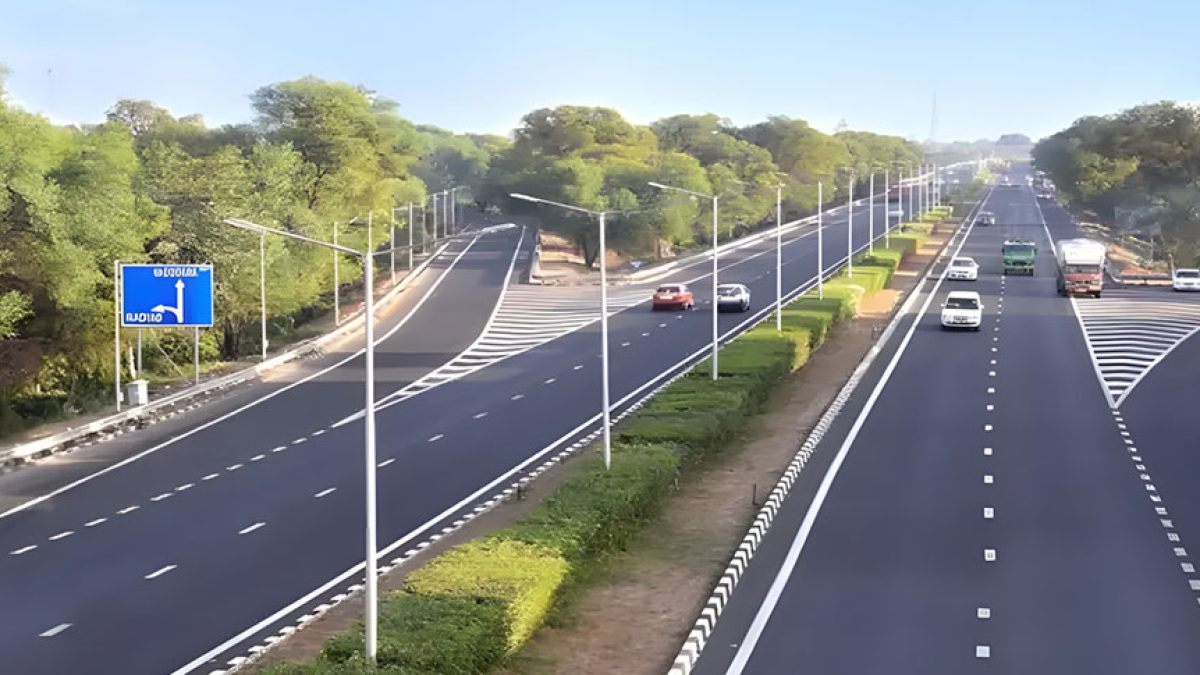
Ahmedabad Expressway Plan Reshapes Gujarat Mobility
Ahmedabad is set to anchor a new phase of highway-led economic expansion after the National Highways Authority of India invited bids for the first construction package of a proposed high-speed expressway connecting the city with Tharad in north Gujarat. The tender marks the operational start of a corridor intended to streamline long-distance freight, reduce travel time, and recalibrate regional logistics flows across western India.
The initial package spans just over 105 kilometres and represents nearly half of the planned Tharad–Deesa–Mehsana–Ahmedabad route. Designed as a six-lane, access-controlled greenfield expressway, the project signals a continued shift in national highway planning towards dedicated, high-capacity freight corridors that bypass congested urban centres while supporting industrial growth. With an estimated outlay of nearly Rs 3,740 crore for this stretch, the Ahmedabad-linked expressway tender is being offered under the Build–Operate–Transfer toll framework. Under this model, a private concessionaire will be responsible for construction, long-term operations, and maintenance before transferring the asset back to the public authority at the end of the concession period. Infrastructure analysts view this approach as a test of market appetite for large-scale road assets amid rising capital costs and stricter performance benchmarks.
The broader 214-kilometre corridor received central approval in 2024 and carries a projected capital cost exceeding Rs 10,500 crore. Once fully built, it will form a critical junction between the Amritsar–Jamnagar Economic Corridor and the Delhi–Mumbai Expressway, enabling faster goods movement from northern manufacturing clusters to western ports. Planners estimate a substantial reduction in both travel distance and journey time between Tharad and Ahmedabad, with implications for fuel consumption, fleet efficiency, and logistics pricing. Urban development experts note that such corridors increasingly influence land-use patterns beyond transport outcomes alone. Improved highway access is expected to trigger warehousing demand, agro-logistics hubs, and secondary industrial activity along the route, particularly in districts that have historically remained outside major investment cycles. At the same time, state agencies will need to manage peripheral growth carefully to avoid unplanned sprawl and environmental stress along the greenfield alignment.
Beyond commerce, the expressway is positioned to improve regional connectivity to heritage and pilgrimage destinations across Gujarat and Rajasthan, strengthening tourism-linked economies without routing traffic through dense city cores. For Ahmedabad, the project reinforces its role as a logistics gateway rather than just a destination city. Bidding for the project closes in mid-March, with evaluation to follow shortly thereafter. As construction timelines firm up, attention will shift to execution quality, land integration, and how the expressway aligns with broader goals of resilient, low-emission transport infrastructure across India’s fast-urbanising regions.