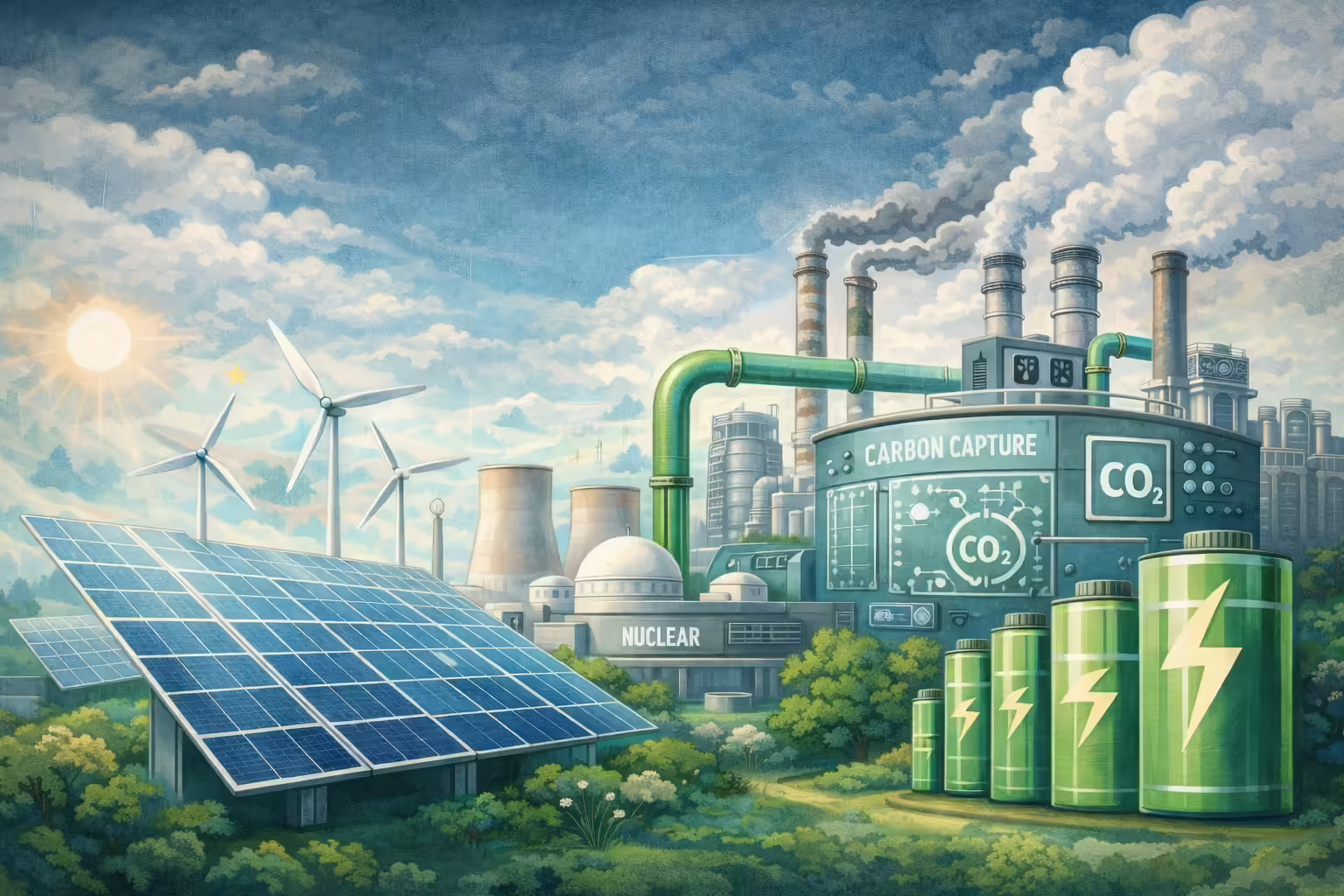
The Union Budget for 2026–27 has laid out a major public funding commitment to accelerate carbon capture technologies across India’s most emission-intensive industries, signalling a decisive policy shift towards industrial decarbonisation. An allocation of ₹20,000 crore over five years has been set aside to support Carbon Capture, Utilisation and Storage (CCUS) deployment in sectors such as cement, steel, power generation, refineries and chemicals—industries central to both economic growth and climate risk.
The move places industrial emissions firmly within India’s long-term climate strategy, aligning fiscal planning with the country’s net-zero target for 2070. While renewable energy has dominated decarbonisation efforts over the past decade, heavy industry remains a structural challenge due to process-related emissions that cannot be eliminated through electrification alone. CCUS is increasingly seen by policymakers and urban infrastructure planners as a necessary bridge technology for hard-to-abate sectors. According to officials familiar with the budget framework, the funding will be used to improve technology readiness levels, support pilot-to-commercial scale transitions, and reduce cost barriers that have limited CCUS adoption so far. The emphasis is on enabling deployment at industrial sites rather than restricting the initiative to laboratory research, reflecting a shift towards practical, end-use applications.
The cement sector is expected to be among the largest beneficiaries. As urbanisation and infrastructure investment continue to drive demand for construction materials, cement remains a foundational input for housing, transport networks and public works. Industry experts note that without carbon capture, emissions from cement production could rise sharply despite efficiency gains and alternative fuels. Budget-backed CCUS support could help reconcile infrastructure expansion with climate commitments. Steel, power and refining sectors are also likely to see downstream benefits, particularly in urban and industrial clusters where emissions concentration affects air quality and public health. Urban planners point out that decarbonising these industries has direct implications for city-level climate resilience, as industrial pollution often overlaps with densely populated regions.
Beyond emissions reduction, the CCUS allocation is expected to stimulate a domestic ecosystem of clean technology providers, engineering firms and skilled employment. Analysts suggest this could unlock new investment pathways in industrial retrofitting, low-carbon construction materials and climate-aligned infrastructure finance, strengthening India’s position in emerging green value chains. However, the success of the programme will depend on implementation clarity, regulatory support and coordination between central agencies, state governments and private operators. Issues such as long-term storage liability, transport infrastructure for captured carbon and commercial viability will need to be addressed alongside fiscal incentives.
As India balances rapid urban growth with climate constraints, the budget’s carbon capture push marks an important step in extending sustainability policy beyond power generation into the core of industrial development. The coming years will test whether this funding can translate into scalable solutions that reshape how cities are built and powered.
Budget 2026 Boosts Decarbonisation in Cement, Steel, Power Sectors