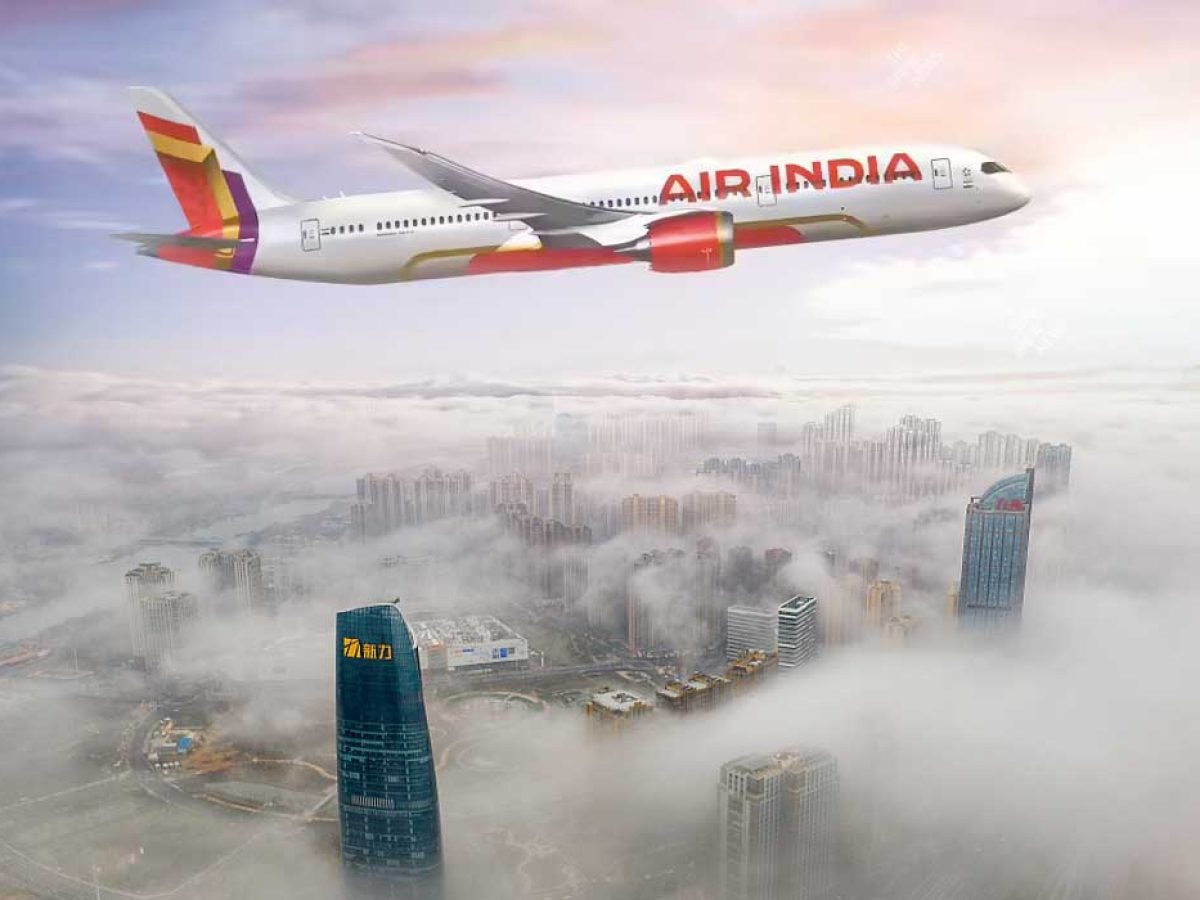
Air India has reinstated direct flight services between Shanghai and New Delhi, re-establishing a key aviation corridor between India and China after a prolonged suspension that began in 2020. The revival of the route marks a significant shift in cross-border mobility, with implications for trade flows, business travel, education exchanges, and long-term urban connectivity between two of Asia’s largest economic regions.
The restored service is being operated multiple times a week using wide-body aircraft, reflecting renewed confidence in passenger demand and operational viability. Aviation officials indicated that the return of the Shanghai–Delhi link responds to rising travel requirements driven by commercial engagement, institutional cooperation, and diaspora movement, particularly as both countries gradually rebuild disrupted transport networks. From an urban and economic perspective, the resumption strengthens Delhi’s role as a regional aviation and business hub while reinforcing Shanghai’s position as a gateway to East Asia. Urban planners note that international air links play a critical role in shaping city competitiveness by enabling faster access to capital markets, supply chains, and skilled talent. For metropolitan regions dependent on global connectivity, such routes influence real estate demand, office location strategies, and hospitality sector recovery.
The suspension of direct flights had forced travellers to rely on indirect routes, increasing travel time, cost, and carbon intensity per journey. Industry experts suggest that reinstating non-stop services can reduce aviation emissions per passenger by optimising routing and load factors, aligning with broader efforts to improve the environmental efficiency of long-haul travel. Airlines, including Air India, are increasingly deploying newer-generation aircraft with improved fuel performance on international routes to balance network expansion with sustainability goals. The renewed connectivity also supports people-centric urban exchanges. Education consultants and trade bodies point out that direct air services facilitate academic collaboration, tourism, and cultural engagement, particularly between India and economically active regions of eastern China. Such exchanges have downstream effects on city-level innovation ecosystems and knowledge-driven industries.
The return of the Shanghai–Delhi route follows a gradual normalisation of air services between the two countries since late 2024, alongside broader steps to ease travel restrictions and mobility barriers. Aviation authorities view this phase as critical to restoring predictable, resilient transport links that were disrupted not only by the pandemic but also by prolonged geopolitical tensions. Looking ahead, analysts believe sustained demand and operational stability will determine whether capacity is scaled further or extended to additional city pairs. For India’s urban centres, the focus remains on ensuring that international connectivity growth aligns with climate resilience, passenger affordability, and balanced infrastructure planning. As global travel rebounds, the challenge will be integrating aviation expansion into a low-carbon urban mobility framework without compromising economic opportunity.
Air India Restores Shanghai Delhi Air Link