Mumbai’s plan to decongest its historic southern core has entered a decisive phase, with the city’s deepest road tunnel now set to surface at Girgaon instead of further north along Marine Drive. The revised alignment of the Orange Gate–Marine Drive underground corridor signals a recalibration of how large infrastructure projects intersect with heritage precincts, dense neighbourhoods and long-term urban mobility goals.
The nearly 10-kilometre twin-tube tunnel, linking the Eastern Freeway at Orange Gate to the western coastline, is being positioned as a critical alternative to some of South Mumbai’s most overloaded surface roads. Once operational, the Mumbai tunnel road is expected to compress a journey that currently takes up to 40 minutes into a travel time of around five minutes, according to project planners. Urban authorities revised the alignment late last year after sustained feedback from citizen groups and conservation stakeholders raised concerns over safety, built heritage and the carrying capacity of Marine Drive’s surface infrastructure. Under the updated plan, both eastbound and westbound tunnels will now enter and exit at Girgaon, emerging close to a major suburban rail interchange and long-established residential clusters. Project officials indicate this shift reduces above-ground disruption while improving dispersal of traffic into the existing road network.
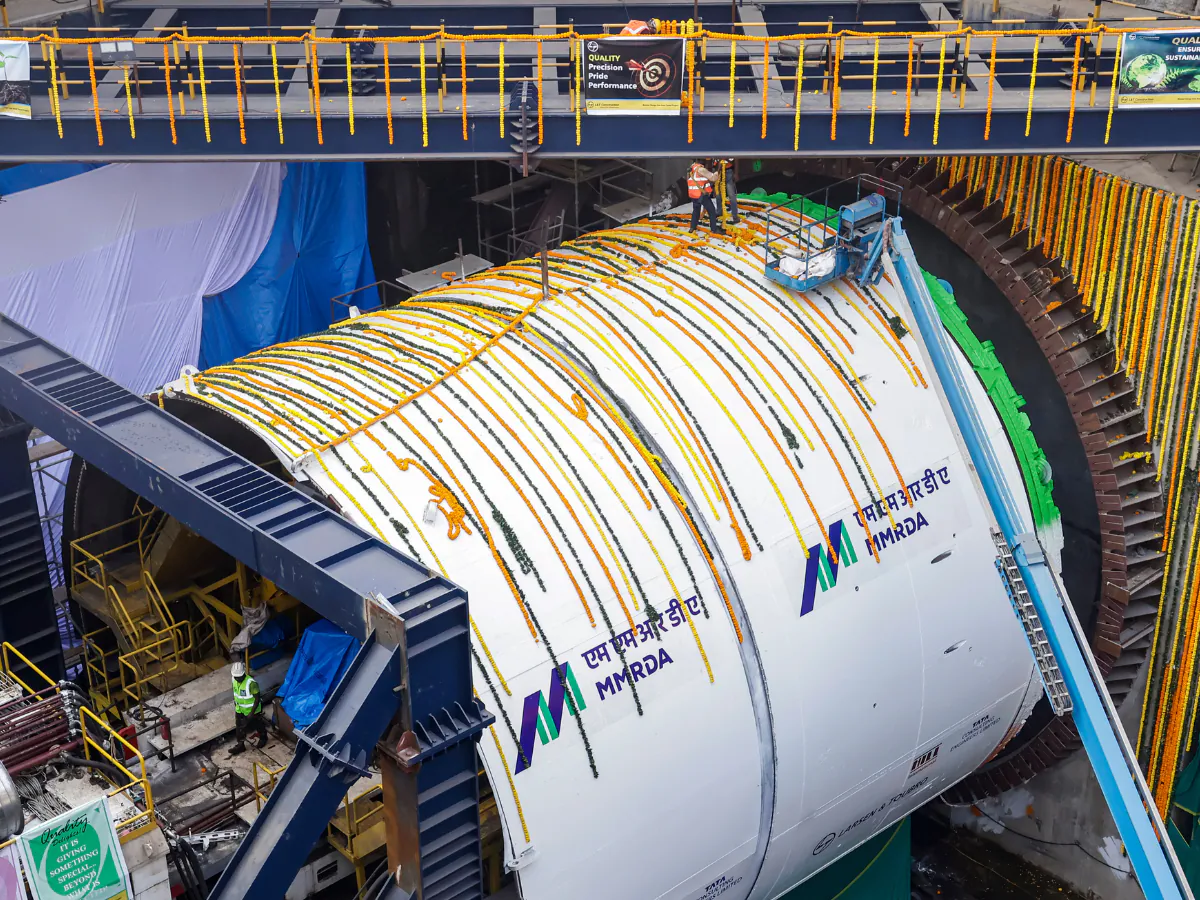
From Orange Gate, the tunnel descends sharply beneath P D’Mello Road before passing below railway corridors, flyovers, dense inner-city neighbourhoods and arterial roads. At its deepest point, the Mumbai tunnel road reaches more than 45 metres below ground, allowing it to clear utilities, foundations and the underground metro corridor without structural conflict. Engineers involved in the project describe it as one of the most technically complex urban tunnelling exercises undertaken in the country. Construction activity has accelerated following the deployment of tunnel boring machines, with roughly 15 per cent of the work completed. The targeted completion window of 2028 reflects the scale of geological, logistical and environmental challenges involved in building beneath one of India’s most congested and historically layered urban zones.
Beyond travel-time savings, planners argue the project has broader implications for climate resilience and urban liveability. By diverting through-traffic away from surface streets, the corridor is expected to reduce idling emissions in crowded neighbourhoods, improve pedestrian safety, and free up road space for public transport and non-motorised movement. Urban experts caution, however, that such benefits will depend on complementary traffic management and demand restraint measures once the tunnel opens. For South Mumbai, the revised alignment underscores a growing shift in how infrastructure is planned — balancing speed and scale with heritage protection, community impact and environmental risk. As the Mumbai tunnel road progresses, the focus will increasingly turn to how effectively it integrates with public transport, port traffic and coastal road systems, shaping not just faster commutes but a more resilient urban core.
Mumbai Reworks Underground Road Link With Girgaon Exit