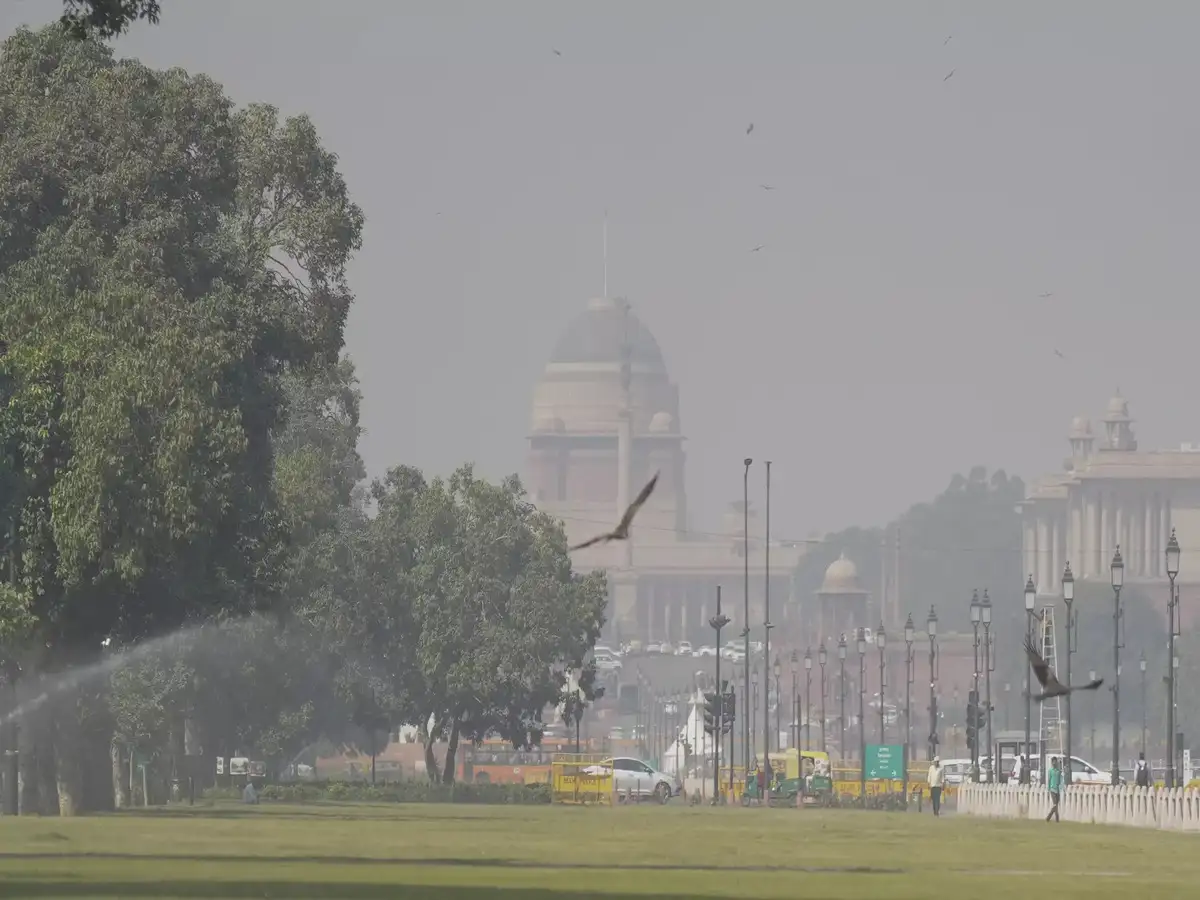
New Delhi’s central administrative district has quietly reached a milestone that many Indian cities continue to struggle with. An internal assessment by the New Delhi Municipal Council indicates that its jurisdiction currently has no officially identified air pollution hotspots, a development that urban planners say reflects how targeted technology, enforcement, and land-use management can alter environmental outcomes in dense city cores.
The NDMC area includes some of the capital’s most heavily trafficked corridors, commercial districts, and diplomatic zones. Yet monitoring data reviewed as part of the assessment suggests that sustained intervention—rather than episodic responses during winter smog events—has helped stabilise local pollution levels. For urban policymakers, the finding matters because it challenges the assumption that high-density, high-value districts are destined to be chronic pollution zones. At the centre of the NDMC air pollution strategy is a shift toward mechanised, continuous operations. Mechanical road sweeping, deployed across most arterial roads in multiple shifts, has significantly reduced re-suspended dust, a major contributor to particulate matter in cities. Civic officials say additional cleaner-fuel sweepers will soon expand daily coverage, while smaller electric units are being planned for footpaths, parking areas, and high-footfall commercial zones where manual cleaning has limits.
Dust suppression infrastructure has also been scaled up. Mobile and static misting systems, installed along key roads and around large construction sites, are now treated as permanent urban utilities rather than seasonal equipment. Urban environment experts note that this approach reflects a broader change in how municipal agencies are internalising air quality as core infrastructure—on par with roads, drainage, or lighting. Construction activity, often cited as a weak link in pollution control, is being addressed through tighter logistics. Daily collection and off-site processing of construction and demolition waste has reduced illegal dumping and roadside debris, while inspection teams monitor compliance with dust mitigation norms. According to urban governance specialists, such systems are essential in districts where redevelopment pressure is constant and land values incentivise rapid construction.
Green infrastructure has played an equally important role. With nearly half of its area under green cover, NDMC has prioritised micro-level greening—shrubs, roadside plantations, and the rehabilitation of unused land parcels. These interventions, planners say, do not replace emissions reduction but help moderate local heat and dust, improving liveability for pedestrians and public transport users. The transition to electric municipal fleets and the gradual rollout of charging infrastructure further reinforce the NDMC air pollution roadmap. While the scale remains modest compared to citywide needs, transport analysts view the programme as a testbed for cleaner last-mile operations in government districts.
For residents and workers in central Delhi, the implications are immediate: fewer dust-heavy streets, cleaner public spaces, and more predictable air quality management. For other cities, the larger lesson lies in governance—showing that consistent investment, enforcement, and data-led planning can deliver environmental gains even in the most complex urban settings. The next challenge will be sustaining these outcomes as redevelopment, traffic, and climate pressures continue to intensify.
NDMC Air Pollution Record Reshapes Delhi Core