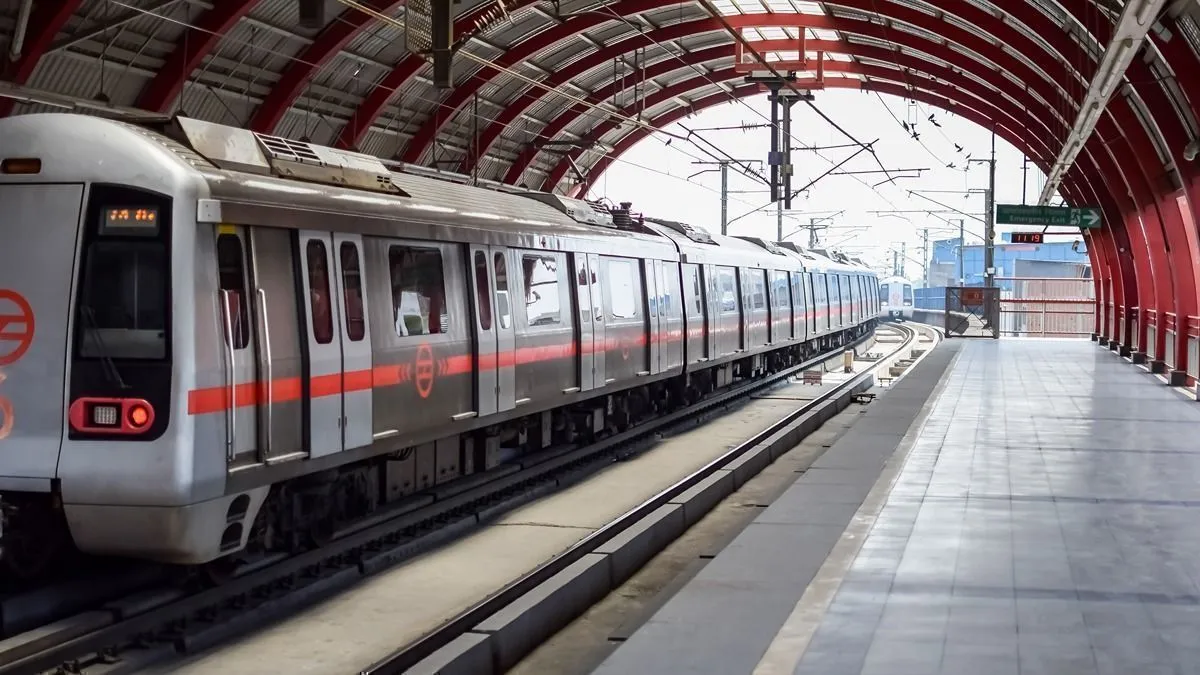
Delhi’s rapid transit network is preparing for another strategic leap, with the city’s metro operator confirming plans to introduce three new corridors under a Phase Five A expansion. The move is designed to address emerging travel gaps, improve cross-city accessibility, and strengthen the capital’s transition towards low-emission, mass public transport as daily commuting demand continues to rise.
According to officials familiar with the planning process, the proposed corridors will focus on linking underserved urban pockets with existing metro lines, reducing dependence on private vehicles and easing pressure on congested road networks. Unlike earlier phases that prioritised long-distance trunk routes, Phase Five A is expected to concentrate on improving network density and smoother interchange across residential, institutional, and employment hubs. Urban transport planners note that this approach reflects a maturing metro system. As cities expand outward and densify inward, the success of mass transit increasingly depends on last-mile access and shorter, high-frequency connections rather than only long corridors. The new additions are therefore expected to shorten door-to-door travel times for office-goers, students, and service-sector workers who currently rely on multiple transport modes.
Officials involved in metro operations indicate that the corridors will be developed using upgraded signalling, energy-efficient systems, and station designs that allow easier pedestrian movement and barrier-free access. This is aligned with Delhi’s broader climate and mobility goals, where public transport is positioned as a key tool to curb vehicular emissions and improve urban air quality. The expansion is also likely to influence land-use patterns. Improved metro access has historically triggered higher footfall for neighbourhood markets, encouraged mixed-use development, and increased demand for housing near stations. Real estate analysts suggest that Phase Five A could unlock growth in micro-markets that are currently transit-poor, spreading economic activity more evenly across the city rather than concentrating it in a few well-connected zones.
From a governance perspective, the new corridors are intended to integrate seamlessly with the existing metro grid, avoiding duplication while improving reliability. Transport experts emphasise that network resilience—having multiple route options during disruptions—is becoming increasingly important for a city of Delhi’s scale. While detailed alignments and timelines are yet to be made public, officials state that stakeholder consultations and technical assessments are underway to ensure minimal disruption during construction. Coordination with civic agencies will be critical, particularly for road diversions, utilities, and pedestrian safety around worksites.
As Delhi continues to grapple with congestion, pollution, and uneven access to jobs and services, the Phase Five A expansion signals a shift towards fine-tuning the metro as an everyday mobility solution rather than just a rapid transit backbone. The effectiveness of the new corridors will ultimately be measured by how well they integrate neighbourhoods into the city’s economic and social fabric while supporting a cleaner, more inclusive urban future.
Delhi Metro Plans New Phase Five Corridors