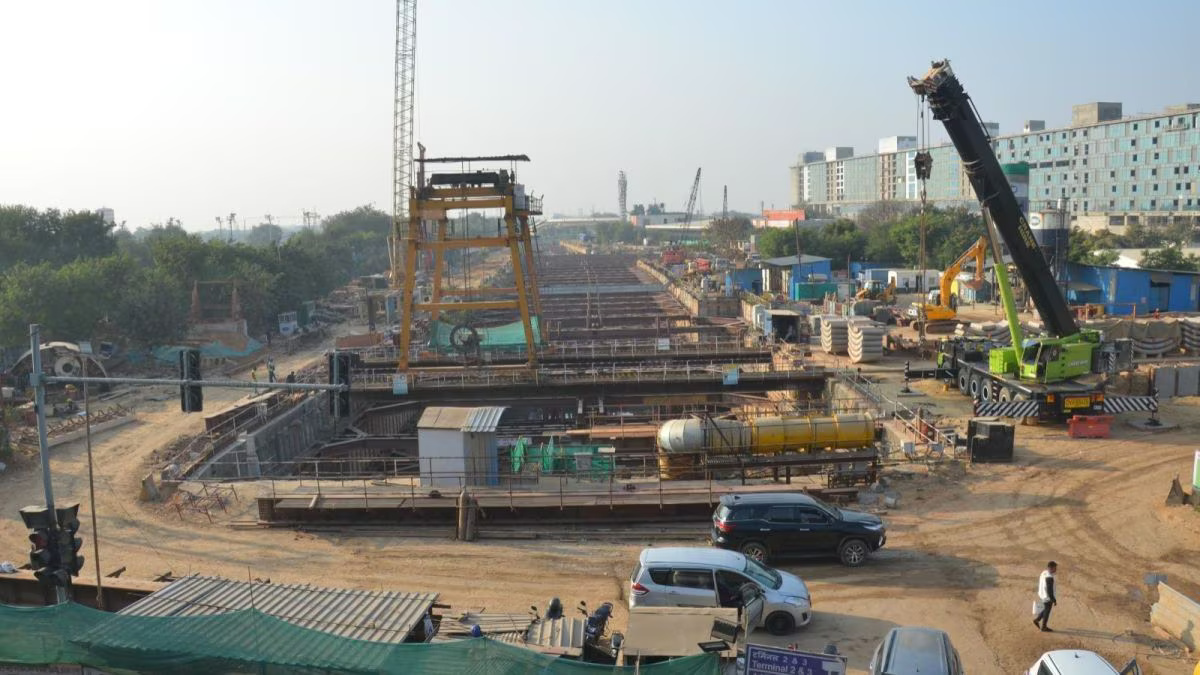
Delhi’s airport-adjacent Aerocity Metro station is poised to emerge as one of the Capital’s most significant transport nodes after approval was granted for a short but strategically critical metro extension linking it directly to the domestic terminal network. The move is expected to redefine airport access from south Delhi while strengthening integration between city, regional, and future intercity rail systems.
Under Phase Four of the Delhi Metro expansion, a new underground stretch of approximately 2.26 km will connect the Tughlakabad–Aerocity corridor with the Terminal 1 station of the Magenta Line. This will transform Aerocity into a rare triple interchange station, linking the Airport Express Line, the Golden Line, and a proposed regional rapid transit corridor planned to connect Delhi with towns in southern Haryana and Rajasthan. Transport planners view the development as a crucial step towards reducing dependency on private vehicles for airport travel. By enabling smoother transfers between domestic terminals and multiple metro lines, the interchange is expected to significantly cut travel times for residents of south Delhi neighbourhoods such as Tughlakabad, Khanpur, and Ambedkar Nagar. For daily commuters and airport staff, the enhanced connectivity offers a reliable, low-emission alternative to congested arterial roads.
Officials associated with metro planning indicate that the upgraded station will be engineered to handle heavy passenger volumes. The new Golden Line platform is planned at a greater depth than standard stations and will be longer than typical interchange platforms, allowing for higher throughput during peak travel hours. Seamless paid-area integration between lines will reduce walking distances and improve transfer efficiency, particularly for passengers carrying luggage. Importantly, the station design incorporates structural provisions for a future regional rail platform. By embedding this flexibility at the construction stage, authorities aim to avoid costly retrofitting and service disruptions later. Urban infrastructure experts note that such forward planning reflects a shift towards integrated transport ecosystems rather than isolated transit projects.
The Aerocity interchange also has wider implications for urban development. Improved airport access is expected to support commercial activity, hospitality investments, and employment clusters in surrounding areas, while aligning with the city’s long-term goals of transit-oriented growth. Better rail connectivity to the airport can also play a role in lowering transport-related emissions by shifting trips away from taxis and private cars. With Phase Four corridors focused on closing network gaps and improving last-mile integration, the Aerocity upgrade underscores Delhi Metro’s evolving role from a city railway to a backbone for regional mobility. As construction timelines firm up, attention will turn to execution and coordination with airport authorities to ensure that the new interchange delivers on its promise of faster, cleaner, and more inclusive urban movement.
Delhi Aerocity Metro Set for Interchange Upgrade