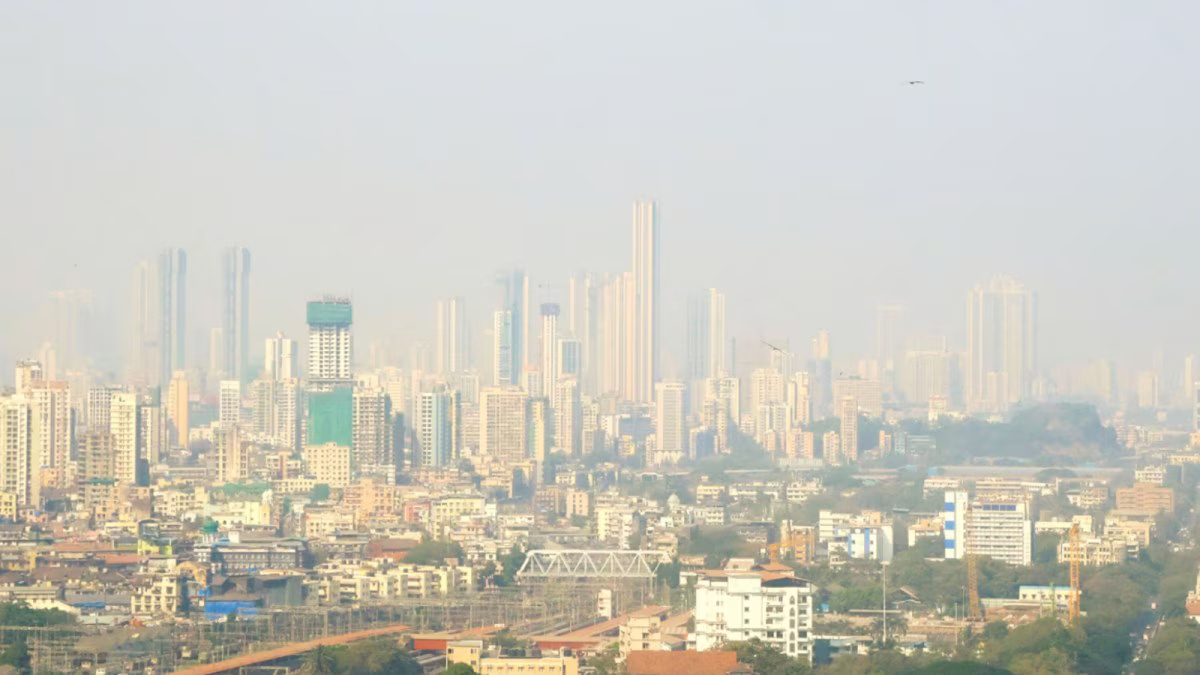
Mumbai woke up to a hazy Sunday morning on February 1, 2026, as air pollution in several parts of the city surged sharply, pushing the Air Quality Index (AQI) into the ‘Severe’ category. Reduced visibility and rising particulate matter levels have heightened public health concerns, underscoring the persistent environmental challenges facing India’s financial capital during winter months.
Data from official monitoring platforms indicated an overall AQI of 308 in the early hours, a substantial jump from the previous evening’s reading of 184 (‘Poor’). Localised hotspots such as Sindhi Society registered an alarming 428, categorised as ‘Hazardous’, while other densely populated neighbourhoods including Kannamwar Nagar II, B S Ambedkar Nagar, Yagna Nagar, and Swastik Park remained in the ‘Severe’ bracket. Urban planners and environmental experts attribute the spike to multiple contributing factors. Construction dust from redevelopment projects across the city has accumulated in the atmosphere, while calm early morning winds have prevented dispersion, creating a thick smog layer. “High-density construction, vehicular emissions, and limited air circulation in certain pockets collectively amplify particulate matter levels,” noted a senior urban environmental analyst.
While some parts of the city recorded comparatively better air quality, the contrast highlighted spatial inequities in exposure. Locations such as Gamdevi Station 1 reported AQI readings within the ‘Good’ range at 38, whereas Thakur Village, Colaba, Mazgaon, and RBI Staff Quarters reflected ‘Unhealthy’ conditions, emphasising uneven environmental management and the need for targeted interventions. From an urban health and planning perspective, sustained exposure to AQI levels above 300 significantly increases respiratory and cardiovascular risks, particularly for children, the elderly, and residents with pre-existing conditions. Industry experts stress that without coordinated monitoring, stricter construction and vehicle emission controls, and public awareness campaigns, episodic surges like these are likely to become seasonal norms rather than anomalies.
Municipal authorities have indicated ongoing efforts to curb air pollution through temporary measures such as dust suppression at construction sites and monitoring of industrial emissions. However, experts argue that long-term solutions must integrate climate-resilient urban design, green corridors, and equitable air quality planning to protect vulnerable populations. As Mumbai continues to grow and densify, the recent AQI surge serves as a critical reminder of the intersection between rapid urbanisation and environmental health. Residents are advised to limit outdoor activity, use protective masks, and stay updated with real-time air quality advisories while authorities evaluate sustained policy measures to mitigate winter smog.
Mumbai Faces Severe Smog As AQI Deteriorates