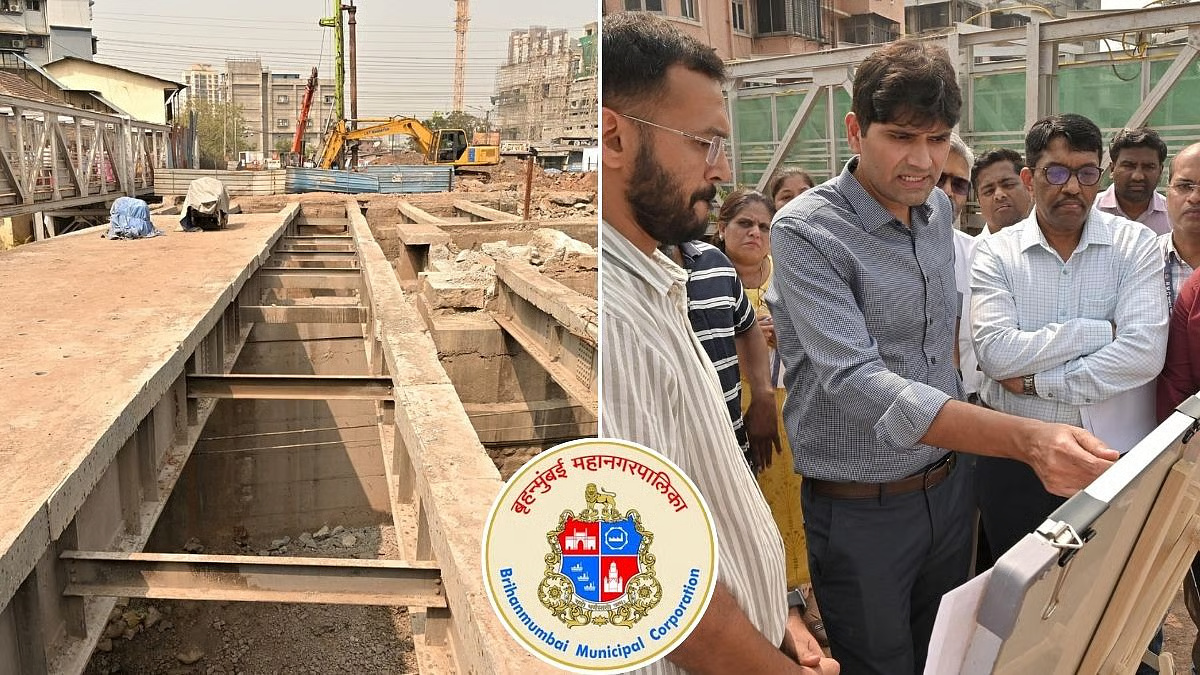
Mumbai is moving closer to a more sustainable urban water management model with the Brihanmumbai Municipal Corporation (BMC) initiating construction of a high-capacity underground tunnel to transport tertiary-treated water from Dharavi to Ghatkopar and further to the Bhandup complex. The project, designed to handle 970 million litres per day (MLD), represents a major step in reducing pressure on natural water sources while improving sewage treatment and reuse across the city.
The initiative involves upgrading seven sewage treatment plants (STPs) across Worli, Bandra, Dharavi, Versova, Malad, Ghatkopar, and Bhandup, collectively processing 2,464 MLD. These facilities will replace existing primary-level treatment with secondary and tertiary treatment, enhancing wastewater quality and mitigating pollution of the city’s creeks, rivers, and the Arabian Sea. Half of the city’s treated sewage under this project will undergo tertiary treatment, making it safe for reuse in urban applications. Construction of the underground pipeline connecting the Ghatkopar STP to Bhandup STP and onward to the Bhandup complex is already underway. The first tunnel alignment spans 4,365 metres between the Bhandup complex and Bhandup STP, with a 175-metre-deep launching shaft under construction and 45 metres already excavated. A retrieval shaft is planned at Bhandup STP to facilitate the tunnelling process.
A second tunnel, extending 7,245 metres from Bhandup STP to Ghatkopar STP, has also been aligned using a second tunnel boring machine (TBM). Construction of a 155-metre-deep launching shaft at Bhandup STP has commenced, with preliminary excavation already in progress. In total, the project will involve over 11.6 kilometres of tunnelling beneath the city. Urban planners note that such large-scale subterranean infrastructure addresses multiple challenges simultaneously. By diverting treated water to strategic locations, the project will reduce reliance on freshwater sources, support industrial and municipal demand, and lower environmental contamination from untreated sewage. “Tertiary treatment of wastewater is central to climate-resilient urban infrastructure,” said a senior civic official.
Officials acknowledge that rising urbanisation and population growth have escalated demand for sewage treatment and water reuse. The BMC project reflects a broader strategy to integrate sustainable water management into Mumbai’s urban development plans, balancing civic needs with environmental responsibility. While the project faces logistical and financial complexities, experts suggest it could serve as a blueprint for other metropolitan cities aiming to achieve circular water systems. Once operational, the tunnel and upgraded STPs are expected to enhance Mumbai’s capacity to treat and reuse water efficiently, cut pollution loads in coastal and riverine areas, and provide a resilient supply for municipal and industrial purposes, reinforcing the city’s long-term sustainability goals.
BMC Advances 970 MLD Treated Water Tunnel From Dharavi To Bhandup