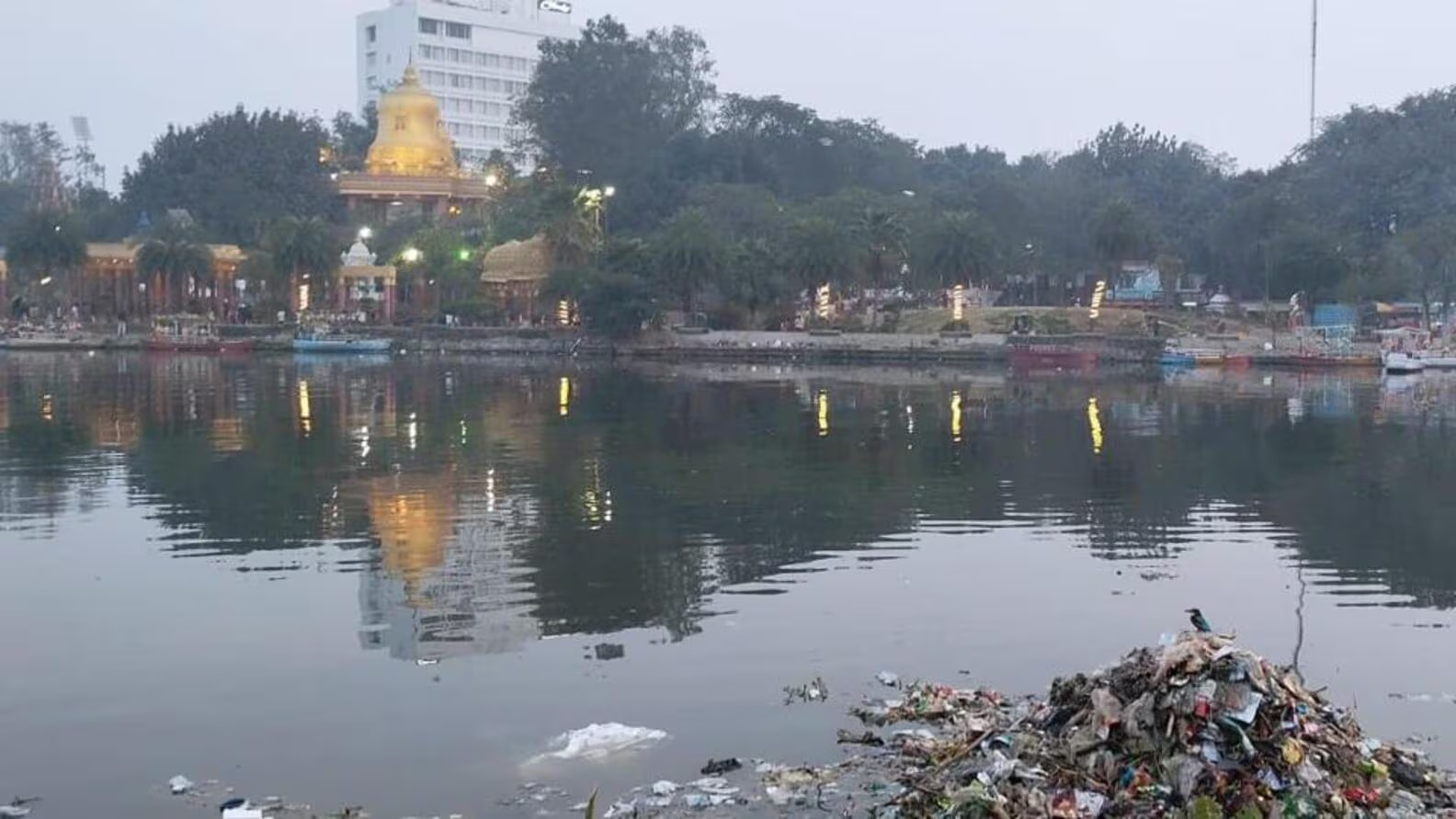
Lucknow’s Gomti riverbank is facing renewed environmental stress as stretches near Jhulelal Vatika and the Katki Mela venue have once again become sites of open garbage dumping. Despite extensive investment in riverfront cleaning and beautification, local authorities are struggling to prevent the accumulation of municipal and event-related waste along the waterway, raising concerns over urban sanitation, river ecology, and civic governance.
Field observations indicate that plastic bottles, disposable cups, polythene, and mixed household refuse have been deposited on the banks, with portions already entering the river. Experts note that the proximity of dumping points to the waterline makes these stretches highly vulnerable during rainfall, when debris can be swept downstream, exacerbating pollution levels and undermining ongoing restoration efforts. Urban environmental analysts highlight that repeated clean-up drives by municipal agencies have not been matched with robust post-event monitoring or enforcement mechanisms. The dumping near Jhulelal Vatika, a key pedestrian and recreational area, suggests that gaps persist in waste management planning for temporary public events and high-footfall zones. According to observers, neglecting these areas could reverse years of investment in riverfront infrastructure, threatening both public health and urban environmental quality.
Beyond immediate sanitation concerns, pollution on the Gomti has broader ecological implications. Environmental specialists warn that solid waste entering the river can release methane and microplastics, degrade aquatic ecosystems, and travel downstream into the Ganga basin, posing risks to regional biodiversity and water quality. The situation underscores the need for integrated river management policies that combine infrastructure development with rigorous monitoring, community participation, and strict regulatory enforcement. City planners emphasise that sustainable urban waterways require not only clean-up operations but also long-term behavioural change among citizens and event organisers. Measures such as designated waste collection points, biodegradable material usage for temporary events, and real-time monitoring systems could significantly reduce the risk of riverbank littering. Incorporating technology-driven surveillance and predictive waste management analytics could also help municipal authorities anticipate and prevent dumping before it reaches critical levels.
Experts suggest that the current scenario presents an opportunity for Lucknow to recalibrate its riverfront strategies, combining ecological restoration with resilient urban design and citizen engagement. Strengthening accountability mechanisms and enforcing strict penalties for illegal dumping will be essential to safeguard the Gomti as both a civic asset and a critical waterway in northern India. Without immediate corrective action, the river’s revitalisation projects risk being undermined, highlighting the challenge of aligning urban infrastructure investment with sustainable waste management practices.
Gomti Riverbank Again Plagued by Open Waste