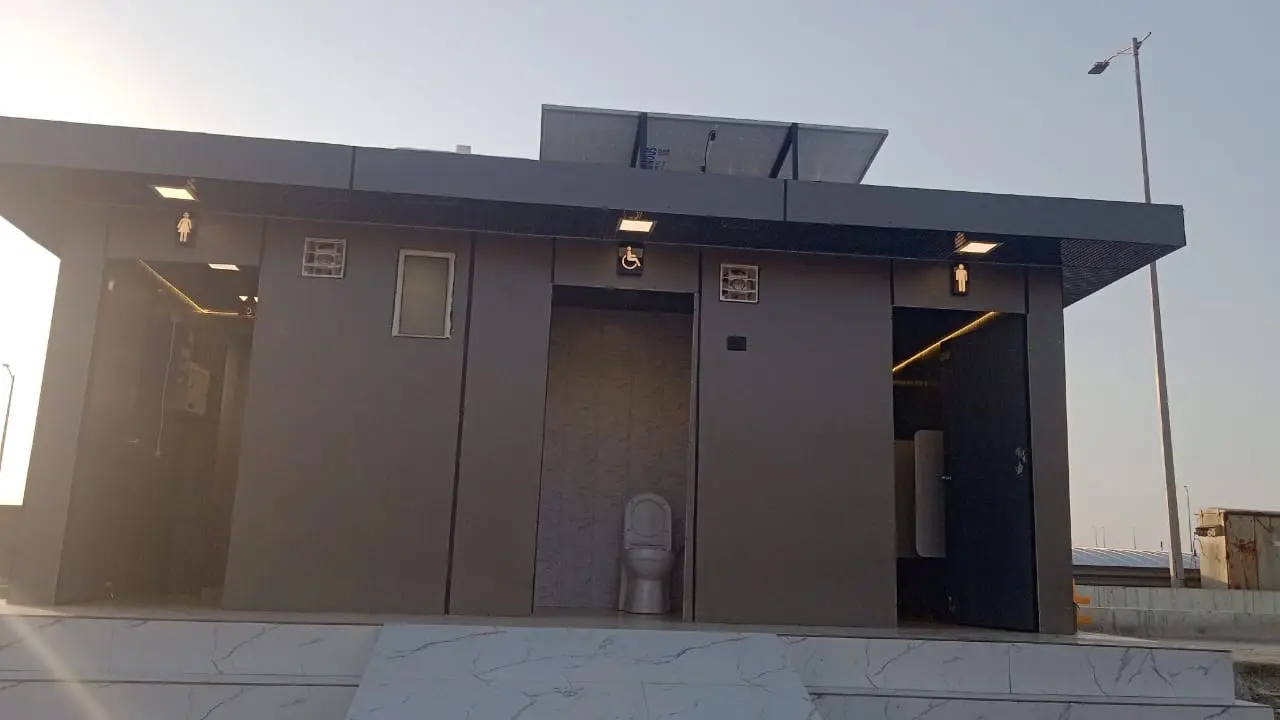
Mumbai is expanding its urban sanitation infrastructure with the installation of six solar-powered, biodegradable bio-toilets along the city’s Coastal Road South promenade. Commissioned by the Brihanmumbai Municipal Corporation (BMC), the facilities aim to provide clean, accessible, and environmentally sustainable sanitation for residents and visitors frequenting one of the city’s busiest pedestrian corridors.
The bio-toilets are strategically located at pedestrian underpasses along the promenade, including sites near Amarsons Garden, Haji Ali Junction, Worli Dairy, and other high-footfall zones. Each modular facility measures 20 x 20 x 8 feet and is powered by a 1 kW solar system, reflecting a commitment to renewable energy integration and low-carbon urban infrastructure. Officials note that the project addresses a long-standing need for hygienic and gender-inclusive sanitation along heavily trafficked public spaces. Each unit incorporates two toilets for women, two for men, a dedicated children’s toilet, and an accessible facility for persons with disabilities. The design also includes urinals, sensor-based washbasins and mirrors, a sanitary pad vending machine, and a bio-digester capable of processing waste in an environmentally responsible manner. By employing biodegradable treatment systems, the toilets minimise water use and reduce the environmental footprint of urban waste management.
The initiative represents a convergence of urban planning, technology, and sustainability. Civic planners point out that the Coastal Road has evolved into a prominent recreational and commuting route, drawing thousands of pedestrians daily. Incorporating renewable-powered sanitation not only supports public health but also enhances the promenade’s overall environmental and aesthetic quality, aligning with broader city goals for green and resilient infrastructure. A nominal user fee has been introduced to ensure operational sustainability, with revenues directed toward maintenance and upkeep. Experts indicate that combining affordability, accessibility, and eco-conscious design is essential for scalable urban sanitation solutions, particularly in densely populated metropolitan areas like Mumbai.
Urban development analysts suggest that such interventions demonstrate how municipal infrastructure can deliver multiple benefits—enhancing citizen convenience, promoting gender-inclusive amenities, and contributing to climate-conscious urban planning. As Mumbai continues to invest in public spaces and pedestrian-focused infrastructure, similar bio-toilet installations could be extended to other high-footfall corridors, parks, and transit hubs, complementing efforts to build more liveable, sustainable neighbourhoods. By integrating solar energy, biodegradable waste treatment, and inclusive design, the BMC project sets a benchmark for eco-friendly urban sanitation, illustrating the role of small-scale, technology-driven interventions in shaping resilient and people-first cityscapes.
Mumbai Installs Solar Bio Toilets Along Coastal Road