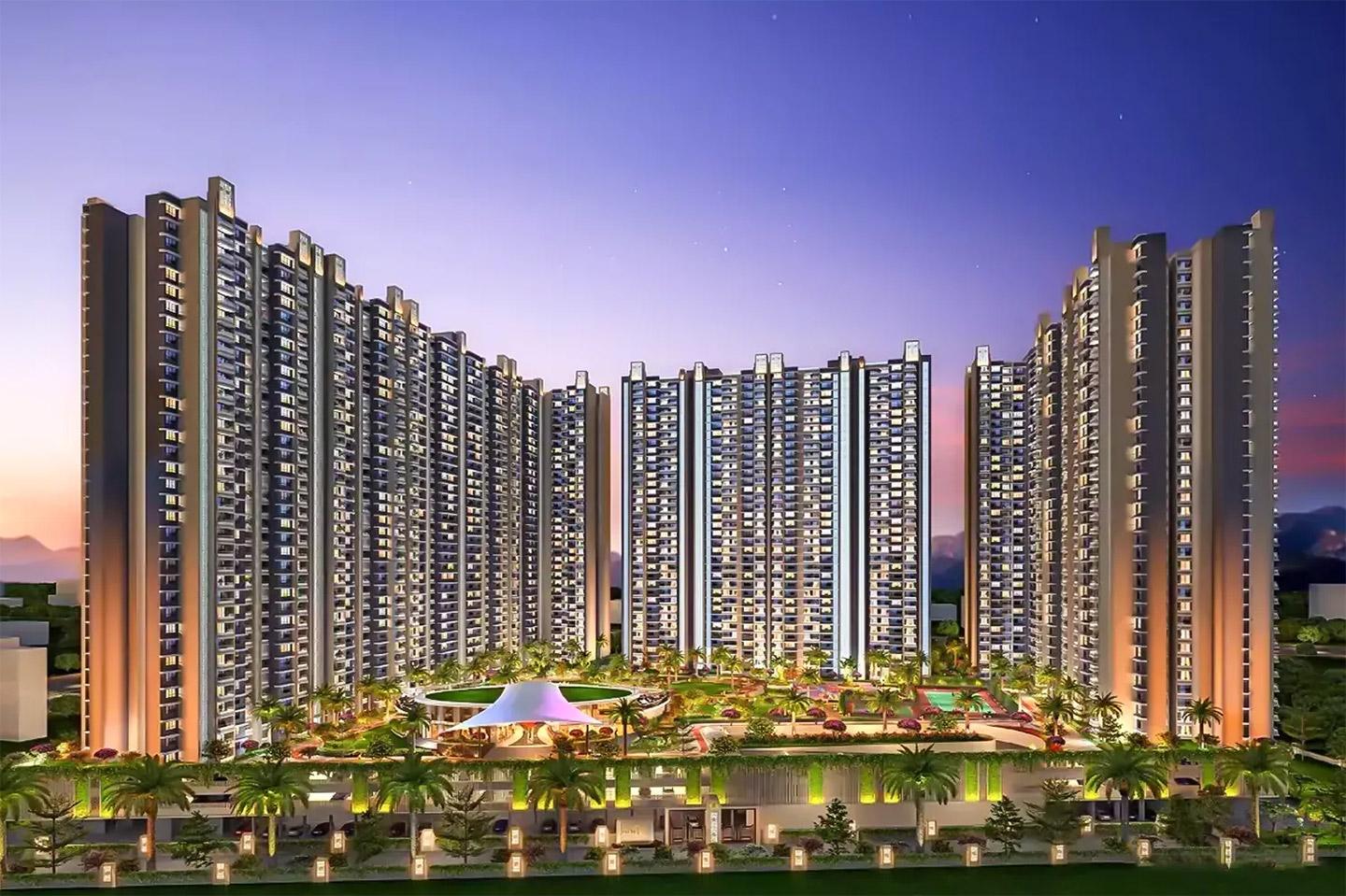
Pune’s fast-evolving western corridor has added another significant residential development to its pipeline, with a major listed real estate developer completing the outright purchase of an 8.5-acre land parcel in Mahalunge. The acquisition signals growing confidence in the Mahalunge–Hinjewadi belt, an area increasingly positioned as a bridge between the city’s technology-driven employment hubs and emerging residential neighbourhoods.
According to industry sources, the site is planned to be developed primarily as group housing, with a buildable potential of roughly 2.1 million sq ft. The project is expected to cater to mid- and upper-mid-income homebuyers, reflecting sustained demand for well-connected housing close to Pune’s IT employment clusters. Market estimates suggest the development could generate revenues of around Rs 2,000 crore over its lifecycle, placing it among the larger residential investments announced in the micro-market over the past year. Mahalunge, along with Maan and Nande, has emerged as one of Pune’s most closely watched growth pockets. Located near the Inner Ring Road alignment and offering relatively faster access to Hinjewadi, Baner and the Mumbai–Bengaluru highway, the area has seen a steady shift from low-density land use to planned residential and mixed-use development. Urban planners note that this transformation reflects Pune’s broader spatial expansion, where housing is increasingly following employment corridors rather than the traditional city core.
The new development also underscores how developers are prioritising land parcels that allow for integrated planning. Experts say larger contiguous plots make it easier to incorporate energy-efficient design, better water management systems and open spaces elements that are becoming critical as cities respond to climate stress and infrastructure constraints. In western Pune, concerns around traffic congestion, water availability and ecological balance have sharpened scrutiny of how new housing projects are planned and executed. From a market perspective, the deal reinforces Pune’s status as one of India’s most resilient residential markets. Despite periodic slowdowns, housing absorption in technology-linked micro-markets has remained relatively stable, supported by steady job creation and long-term migration. Analysts point out that developers are increasingly cautious, favouring outright land purchases in locations where infrastructure commitments are clearer and demand visibility is stronger.
For the city, the project adds to the challenge of ensuring that rapid private development is matched by timely public investment. Civic officials have repeatedly highlighted the need for coordinated planning in areas like Mahalunge, particularly around public transport, drainage and social infrastructure. Without this alignment, residents risk facing the familiar urban paradox of new housing without commensurate liveability. As Pune continues to expand westward, projects such as this will test whether growth can be steered towards compact, resource-efficient neighbourhoods rather than car-dependent sprawl. The coming years will reveal whether the Mahalunge–Hinjewadi belt evolves into a balanced urban extension or repeats the planning gaps seen in earlier growth cycles.