Surat Bharuch coastal highway to strengthen port connectivity
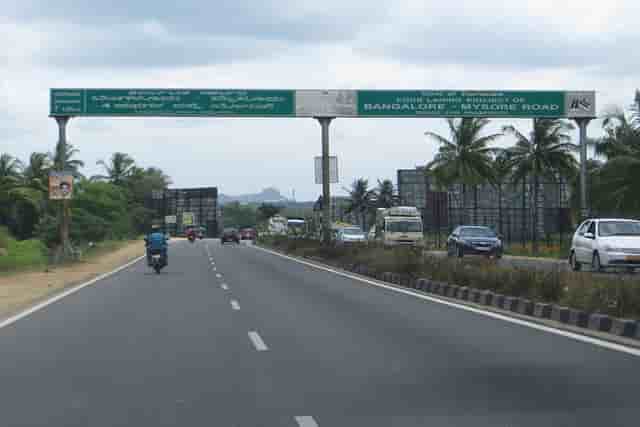
Commuters travelling between Bengaluru and Mysuru could soon experience uninterrupted highway journeys, as India’s road authority prepares to pilot a satellite-enabled toll collection system on the 117-kilometre national corridor. The shift marks a significant operational change for one of Karnataka’s busiest intercity routes and signals a broader transition in how road infrastructure is priced, managed and experienced by users.
Officials overseeing national highways confirmed that tenders have been issued to introduce a GPS-based tolling framework that removes the need for physical toll booths. Under the proposed system, vehicles will be charged digitally while moving at regular speeds, relying on vehicle identification technology and satellite tracking linked to existing FASTag accounts. The Bengaluru–Mysuru corridor is expected to become the state’s first highway to operate without traditional toll plazas once the pilot is stabilised. For daily commuters and logistics operators, the implications are immediate. Long queues at toll gates have been a persistent source of delay, fuel wastage and driver fatigue, particularly during weekends and holiday traffic peaks. Urban transport experts note that eliminating stop-and-go traffic at plazas can significantly reduce travel time variability, a key factor for businesses dependent on predictable road movement between the state capital and its manufacturing and tourism hubs.
From a city-planning perspective, the shift to GPS based tolling also aligns with wider sustainability goals. Vehicles idling at toll plazas contribute disproportionately to local air pollution and carbon emissions. A free-flow system lowers fuel consumption and emissions per trip, an outcome that becomes material when applied to high-volume corridors connecting expanding urban regions. Infrastructure planners view this as a necessary step as Indian cities grapple with congestion spillovers beyond municipal boundaries. During the initial trial phase, existing FASTag lanes will remain operational alongside the new technology. This hybrid approach is intended to allow system calibration, grievance redressal and user adaptation before physical infrastructure is dismantled. Industry specialists caution that data accuracy, privacy safeguards and billing transparency will be critical to public acceptance, particularly as satellite-based charging represents a more granular form of road pricing.
The Bengaluru–Mysuru experiment follows similar deployments on select national highway stretches elsewhere in the country, where authorities report smoother traffic flow and improved throughput. If successful, the model could influence future highway projects, including access-controlled expressways and urban ring roads, where conventional toll plazas are increasingly seen as bottlenecks rather than control points. For Karnataka’s rapidly urbanising regions, the move underscores a shift towards infrastructure that prioritises efficiency over form. As intercity travel becomes more frequent for work, education and services, systems like GPS based tolling may determine how seamlessly cities connect and how sustainably they grow over the next decade.