


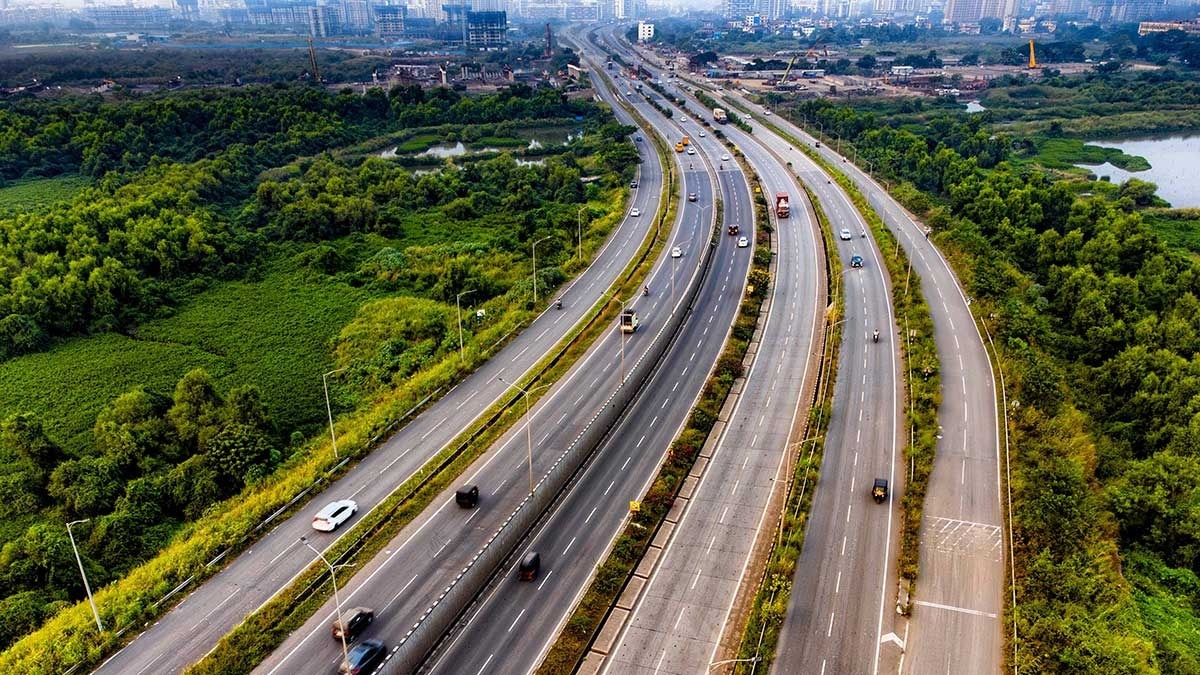
New Delhi — India’s flagship Bharatmala Pariyojana highway programme has registered substantial progress, with official data showing that more than 21,700 km of designated road projects are now physically completed out of roughly 26,425 km awarded for development across the country. This advance in national highway infrastructure has significant implications for urban-rural connectivity, freight movement efficiency and regional economic integration. Conceived as a strategic push to optimise road transport, reduce logistics costs and spur economic opportunity, Bharatmala was initially designed to develop around 34,800 km of corridors and ancillary routes, including Economic Corridors, Inter-Corridors, and feeder links. The bulk of these projects were sanctioned under Phase-I, and the latest construction figures demonstrate tangible implementation outcomes after years of planning and execution.
Infrastructure experts observe that delivering over 21,000 km of highway underscores both engineering capacity and logistical coordination across multiple states, given the complexities of land acquisition, environmental clearances and terrain-specific challenges. For citizens, this translates into more reliable inter-city travel, swifter movement of goods and improved access to jobs, healthcare and education hubs. Urban planners also note that dense highway networks help decongest cities by enhancing peripheral connectivity and supporting satellite town growth. Economists highlight that completed stretches under Bharatmala are strategically aligned with India’s broader economic corridors, which aim to streamline freight flows between major production centres and ports. Enhanced corridor connectivity typically reduces transit times and operating costs for logistics firms, thereby boosting competitiveness in export markets. For peri-urban and rural regions, well-integrated highways can act as conduits for local industries to access national and international markets more efficiently.
Yet, industry analysts caution that the pace of construction must be balanced with sustainability considerations. Highways are capital-intensive and can fragment landscapes if not designed with environmental sensitivity. Experts advocate for integrating green infrastructure practices — such as wildlife crossings, stormwater management and roadside vegetation — to mitigate ecological disruption and support long-term climate resilience. Moreover, comprehensive highway development intersects with urban development policy. Enhanced regional mobility can stimulate real estate demand along corridors, accelerate industrial land absorption and foster mixed-use economic clusters. Urban economists note that policymakers and investors should coordinate around zoning frameworks to ensure that growth along these new transport arteries supports inclusive, gender-neutral access and avoids disproportionate land speculation.
Despite these advances, some observers point out that Bharatmala’s original scope has been largely confined to Phase-I allocations, with formal plans for Phase-II still evolving. The discontinuation of new project sanctions under the first phase underscores the need for clear successor frameworks to sustain momentum while embedding resilience and equitable outcomes. For communities and markets alike, the scale of highway development reflects India’s ambition to modernise transport infrastructure. As these road networks mature, monitoring their integration into multimodal systems — including rail, logistics parks and urban transit hubs — will be pivotal in shaping sustainable, connected and economically vibrant regions.
Also Read: Delhi Expands Smart Card System For Women Bus Travel
India National Highway Network Expansion Underway
