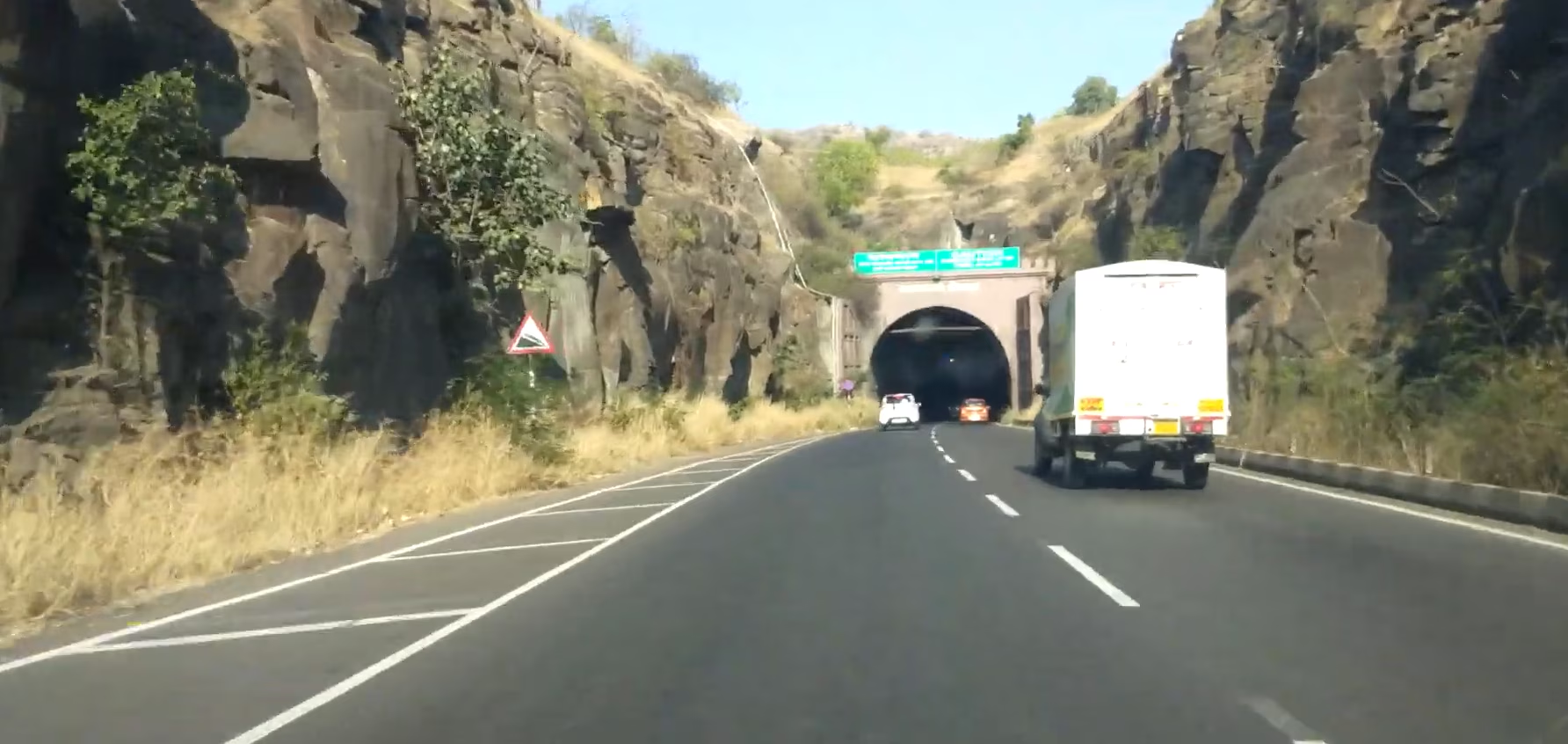
A long‑anticipated transport infrastructure upgrade on the Pune–Satara National Highway is set to enter a decisive phase, as the new Khambatki Ghat tunnel — designed to bypass a hazardous and congested mountain pass — is expected to open to full traffic by June 2026, promising dramatic reductions in travel time and improved safety for commuters and freight operators.
The Western Ghats section between Pune and Satara has historically been a bottleneck on National Highway 48 (NH‑48) due to steep gradients and sharp ‘S’ curves that lengthen journeys, create congestion, and contribute to road accidents, particularly during monsoons. The tunnel project — comprising twin bores with three lanes each — seeks to directly address these challenges by routing traffic through a straighter, more protected alignment.Infrastructure authorities have already commenced trial operations on the left‑hand tunnel tube, allowing light vehicles under monitored conditions while finishing works continue on the remaining alignment. Officials say opening both tubes in tandem will be necessary to accommodate heavier vehicles and ensure year‑round reliability. Once fully operational, the tunnel is projected to cut the ghat crossing from roughly 45 minutes to just about 7–15 minutes, a transformative change for daily commuters and intercity transport.
From an engineering and mobility perspective, the project reflects advancements in tunnelling and high‑performance road design tailored for complex geology in the Western Ghats. Incorporation of real‑time traffic monitoring, ventilation systems and emergency response provisions signal a shift toward higher safety standards on key freight and passenger corridors. Urban planners note that reducing topographical barriers can unlock new economic opportunities by strengthening linkages between Pune’s industrial hinterland and markets in Satara, Kolhapur and beyond.Economic modelling for such mega‑corridor improvements typically factors in savings from reduced fuel use, lower accident costs, and smoother supply chains for logistics operators. A shorter, predictable route could also support tourism growth around hill stations and rural hubs that lie along the Pune–Satara–Bengaluru axis. However, benefits will depend on how quickly full traffic flows are phased in and whether complementary upgrades — such as service roads and safety signage — are delivered in tandem.
Stakeholders, including transport economists and road safety advocates, stress that infrastructure in mountainous terrain must balance speed with resilience. To that end, officials highlight ongoing work on underpasses, viaducts and approach roads designed to mitigate landslide risks and ensure lane continuity during adverse weather — critical considerations in the Ghats region.Local communities and frequent travellers have broadly welcomed the nearing completion, anticipating fewer delays and reduced strain on vehicles, which often face overheating and increased brake wear on steep gradients. The tunnel opens a window to recalibrate regional travel patterns, diverting heavy traffic away from dangerous stretches and potentially reshaping logistics routes for goods moving between western Maharashtra and southern markets.
With safety checks, final surfacing and signage installation still underway, authorities are expected to release a firm opening date as summer approaches. Once fully commissioned, the Khambatki Ghat tunnel will stand as one of the most significant recent investments in Maharashtra’s road network — a milestone in efforts to harmonise mobility efficiency with commuter safety.