


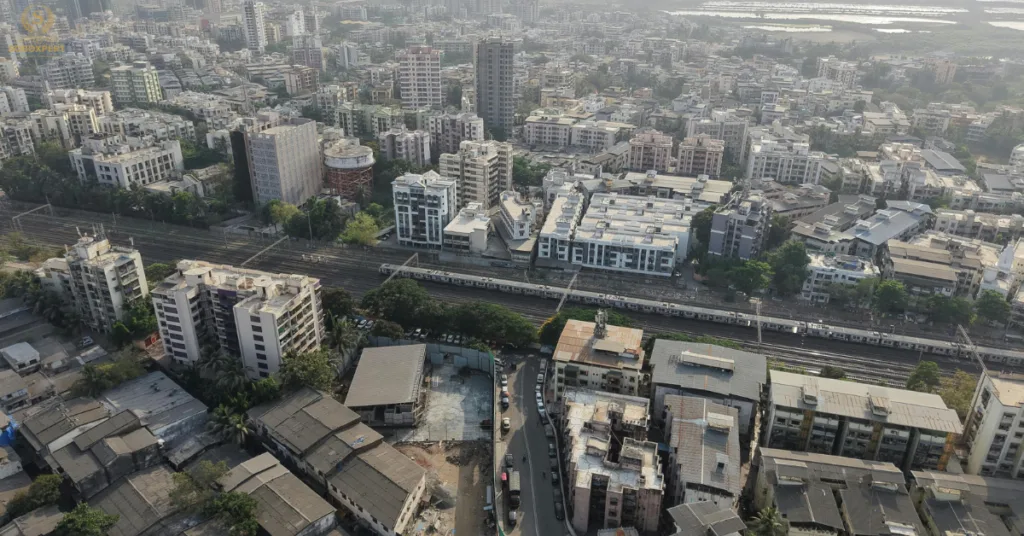
Families displaced by a key transport infrastructure project in central Mumbai are contesting their rehabilitation arrangements, raising renewed questions about how large-scale urban mobility projects align with equitable redevelopment commitments. The issue has emerged around the Sewri-Worli Elevated Corridor, where project-affected persons (PAPs) from two ageing residential buildings near Elphinstone Road face relocation away from their established neighbourhood.
The corridor, envisioned as a critical east–west connector to ease congestion and reduce travel emissions, requires the removal of existing structures along its alignment. While authorities had earlier indicated that affected households would be resettled within close proximity to their original homes, several families say their new allotments are spread across distant parts of the city, disrupting livelihoods, schooling, and social networks. According to community representatives, rehabilitation units have been assigned in multiple locations across Mumbai, some lacking basic building services such as functional elevators. Residents argue that this undermines the principle of in situ or near-site rehabilitation, long regarded by urban planners as essential for socially sustainable redevelopment, particularly in dense inner-city areas where informal support systems play a vital economic role. The concern is amplified by the presence of an ongoing cluster redevelopment proposal in the same precinct. The plan, which aggregates several old buildings into a comprehensive redevelopment scheme, is awaiting approvals from the state’s urban development authorities. Local residents contend that inclusion in this project would allow them to remain within walking distance of workplaces and transit, aligning rehabilitation with long-term urban regeneration rather than fragmented displacement.
Urban policy experts note that Mumbai’s infrastructure expansion is increasingly intersecting with redevelopment zones, making coordination between transport agencies, housing authorities, and private developers critical. When rehabilitation is handled in isolation, they warn, projects risk creating social and economic externalities that undermine the broader sustainability goals of compact, transit-oriented development. Another point of contention is the financial burden placed on PAPs. Some households have been asked to contribute additional sums for marginally larger rehabilitation units. Housing rights advocates argue that such costs disproportionately affect low- and middle-income families already bearing the indirect costs of displacement, including longer commutes and loss of local employment opportunities. Officials familiar with the matter say allotments have been issued to avoid delays to the corridor project, which is considered vital for improving freight and commuter movement between the island city and the eastern waterfront. However, they acknowledge that rehabilitation disputes can slow project timelines if not addressed through transparent engagement and flexible planning mechanisms. The situation underscores a recurring challenge in Mumbai’s redevelopment journey: balancing speed of infrastructure delivery with inclusive urban outcomes. As the city pushes ahead with climate-resilient transport networks and high-density renewal, the effectiveness of rehabilitation frameworks will play a decisive role in determining whether growth remains people-centred.
For now, residents are seeking clarity on whether temporary relocation can transition into permanent, near-site housing once redevelopment approvals are secured. How authorities respond may set an important precedent for future infrastructure-led transformations across the Mumbai Metropolitan Region.
Also Read: Ajmera Realty Margins Weaken Amid Sales Volatility
Mumbai Infrastructure Push Leaves PAPs Uncertain
