


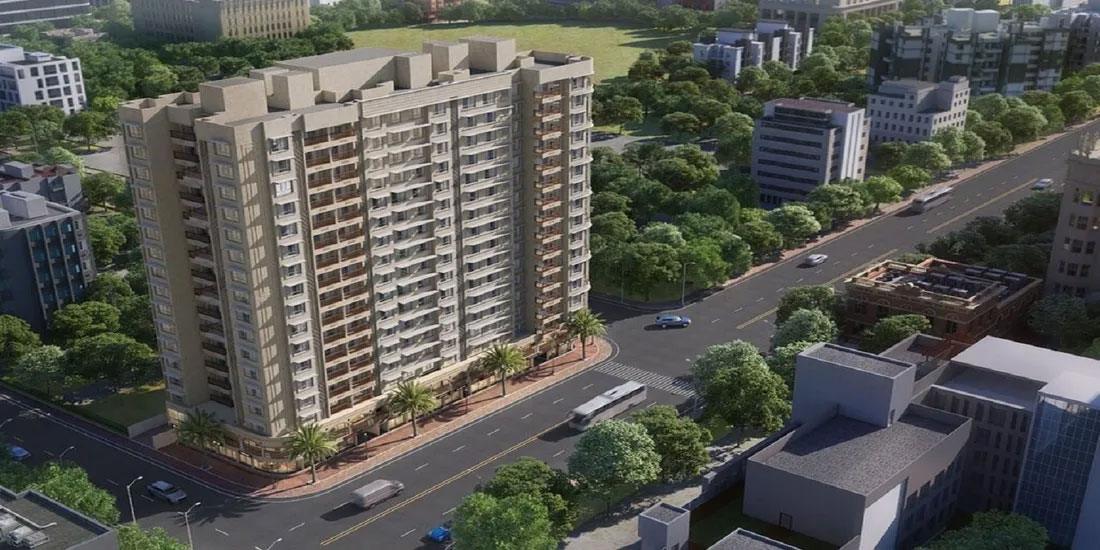
Mumbai’s eastern suburb of Chembur is witnessing a notable shift in its residential profile with the launch of a large-format gated housing development, reflecting changing buyer preferences and evolving urban land-use patterns in established neighbourhoods. Spread across approximately 3.5 lakh square feet, the newly announced project stands out in a locality where fragmented plots and mid-scale buildings have historically defined the housing stock.
Chembur occupies a unique position within Mumbai’s urban geography. Long regarded as a well-connected yet relatively low-density suburb, it has seen steady transformation over the past decade driven by improved transport links, redevelopment of ageing housing societies, and proximity to employment hubs in central and eastern Mumbai. Urban planners say the emergence of gated communities here signals a maturing residential market where demand is shifting toward larger, more self-contained living environments. Large gated developments remain uncommon in Chembur due to land constraints and legacy ownership patterns. As a result, projects of this scale are increasingly viewed as inflection points that reshape neighbourhood expectations around open space, security, and shared amenities. Housing experts note that such developments cater to households seeking a balance between city accessibility and the lifestyle features more commonly associated with peripheral suburbs. The project has been planned as an integrated residential precinct, with a strong emphasis on shared amenities, landscaped areas, and internal circulation that prioritises pedestrians over vehicles. From an urban design perspective, this reflects a broader recalibration underway in Mumbai’s housing sector, where quality of life, community interaction, and access to green spaces are becoming key differentiators in dense city environments.
Architectural observers point out that contemporary residential developments in older suburbs are increasingly being used to redefine local skylines. Design-led projects can influence how redevelopment unfolds around them, setting new benchmarks for scale, aesthetics, and environmental responsiveness. In Chembur, where redevelopment activity is accelerating, such projects may shape future expectations for both developers and residents. From a sustainability standpoint, planners stress that the success of gated communities in inner-city areas depends on how well they integrate with surrounding infrastructure. Water management, energy efficiency, waste handling, and connectivity to public transport networks will be critical in ensuring that high-amenity housing does not add pressure to already stretched civic systems. The rise of premium gated housing also reflects broader socio-economic shifts in Mumbai’s residential demand. As households prioritise safety, wellness, and community-oriented living, developers are responding with projects that combine private homes with shared social and recreational spaces. However, urban policy experts caution that such developments must be balanced with inclusive housing strategies to avoid deepening spatial and social divides.
As Chembur continues its transition from a traditionally low-rise suburb to a denser residential hub, developments of this scale are likely to play a defining role. Their long-term impact will depend not only on architectural ambition, but on how responsibly they contribute to the suburb’s liveability, resilience, and urban fabric.
Also Read: Brigade Group Expands Telangana Housing Footprint
Chembur Residential Landscape Shifts With New Gated Project
