


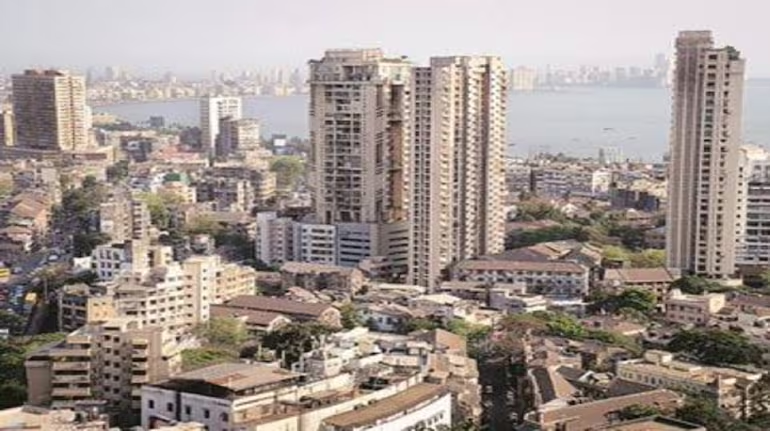
Mumbai’s affordable housing landscape is expected to see a significant infusion of new supply as the state housing authority prepares to roll out its next major lottery, potentially offering around 5,000 homes across the city within the next few months. The development comes at a time when homeownership remains increasingly out of reach for large sections of the urban population, despite steady growth in housing demand.
According to officials familiar with the planning process, a substantial share of the upcoming inventory is likely to be concentrated in the western suburbs, with Goregaon emerging as the single largest contributor. The location reflects a broader shift in public housing strategy, where redevelopment-led projects are being leveraged to generate fresh housing stock while unlocking land value in well-connected urban pockets. The proposed homes are expected to cater to a wide income spectrum, ranging from economically weaker households to higher-income buyers. Urban housing experts point out that this mixed-income structure allows cross-subsidisation, enabling affordable units to be priced below prevailing market rates while ensuring financial viability for large redevelopment schemes. However, a notable portion of the flats will come from projects that are still under construction, meaning possession timelines may extend several years into the future. One of the largest contributors to the forthcoming lottery is anticipated to be a long-running redevelopment project in Goregaon West, originally developed as worker housing. Through redevelopment, the housing authority has been able to rehouse eligible occupants while creating additional saleable inventory. Planners see this model as increasingly central to Mumbai’s housing future, given the city’s limited availability of vacant land.
Housing policy specialists caution, however, that delayed possession remains a key concern for buyers, particularly those from lower-income segments who may already be paying rent while servicing home loans. They argue that greater transparency on construction timelines and phased delivery could improve confidence in public housing programmes. The MHADA lottery system continues to play a critical role in Mumbai’s housing ecosystem by offering an alternative to market-driven pricing in a city where real estate costs are among the highest in the country. For many first-time buyers, the lottery represents the only viable pathway to homeownership within city limits, close to employment hubs and public transport networks. From an urban sustainability perspective, experts stress that future housing supply must be aligned with transit access, social infrastructure, and climate resilience. Locating affordable homes in areas with established connectivity reduces commuting distances and supports lower-carbon urban living, while redevelopment-driven densification can help curb unchecked sprawl.
As the housing authority prepares to formally announce the lottery schedule, the scale and structure of this offering will be closely watched. Its success could influence how Mumbai balances redevelopment, affordability, and inclusive growth in a city under constant pressure to house its growing population responsibly.
Also Read: Mumbai Metro Station Named After Roswalt Realty
Mumbai Affordable Housing Supply Gets Boost
