


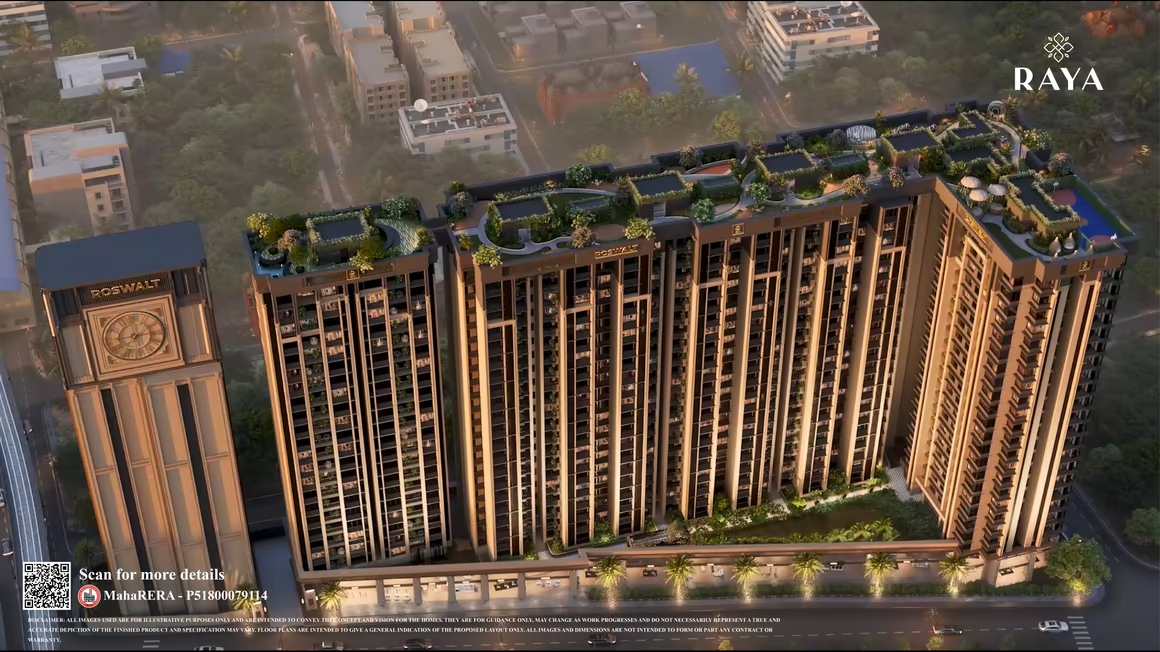
Mumbai’s urban transport network has entered a new phase of public–private collaboration with the temporary renaming of the Oshiwara Metro station, marking a growing trend of monetising transit assets to support infrastructure funding. The station will carry a corporate-linked identity for a one-year period, reflecting how cash-strapped urban authorities are exploring non-fare revenue streams amid rising operational and expansion costs.
The Oshiwara station sits along one of Mumbai’s busiest metro corridors, serving a dense mix of residential neighbourhoods, commercial districts, and redevelopment clusters in Andheri West. With thousands of daily commuters passing through the station, naming rights offer visibility comparable to large-scale outdoor advertising while embedding brands directly into everyday urban routines. Urban transport experts say such arrangements are increasingly being evaluated as cities attempt to balance affordability for commuters with long-term financial sustainability of mass transit systems. For metropolitan authorities, station naming partnerships provide predictable short-term revenue without increasing ticket prices. This is particularly relevant as Mumbai continues to invest heavily in expanding its metro network, upgrading stations, and improving last-mile connectivity. Officials familiar with urban transport financing note that advertising, leasing, and branding rights are becoming essential tools to supplement farebox income, which rarely covers full lifecycle costs of metro operations. The choice of Oshiwara is also significant from an urban development perspective. The area has emerged as a high-intensity redevelopment zone, shaped by transit-oriented growth, mixed-use projects, and improving public transport access.
Urban planners observe that metro-linked branding reflects how infrastructure and real estate markets are increasingly interlinked, with mobility shaping land values, investment decisions, and neighbourhood transformation. However, governance experts caution that such initiatives must be carefully managed to avoid over-commercialisation of public spaces. Clear guidelines on signage, wayfinding clarity, and time-bound naming agreements are essential to ensure commuter convenience and preserve the civic character of transport infrastructure. Transparency in contracts and equitable distribution of revenues back into service improvements are also viewed as critical to maintaining public trust. From a sustainability lens, diversified revenue models can indirectly support climate goals by strengthening the financial viability of low-carbon mass transit. Stable funding enables better maintenance, energy-efficient station upgrades, and service reliability key factors in encouraging commuters to shift away from private vehicles.
As Mumbai evaluates this model over the coming year, transport authorities and urban policymakers will assess whether station naming rights can be scaled responsibly across the metro network. The outcome may influence how Indian cities fund future transit systems while balancing commercial partnerships with inclusive, people-first urban mobility.
Also Read: Navi Mumbai Tightens Property Tax Enforcement
Mumbai Metro Station Named After Roswalt Realty
