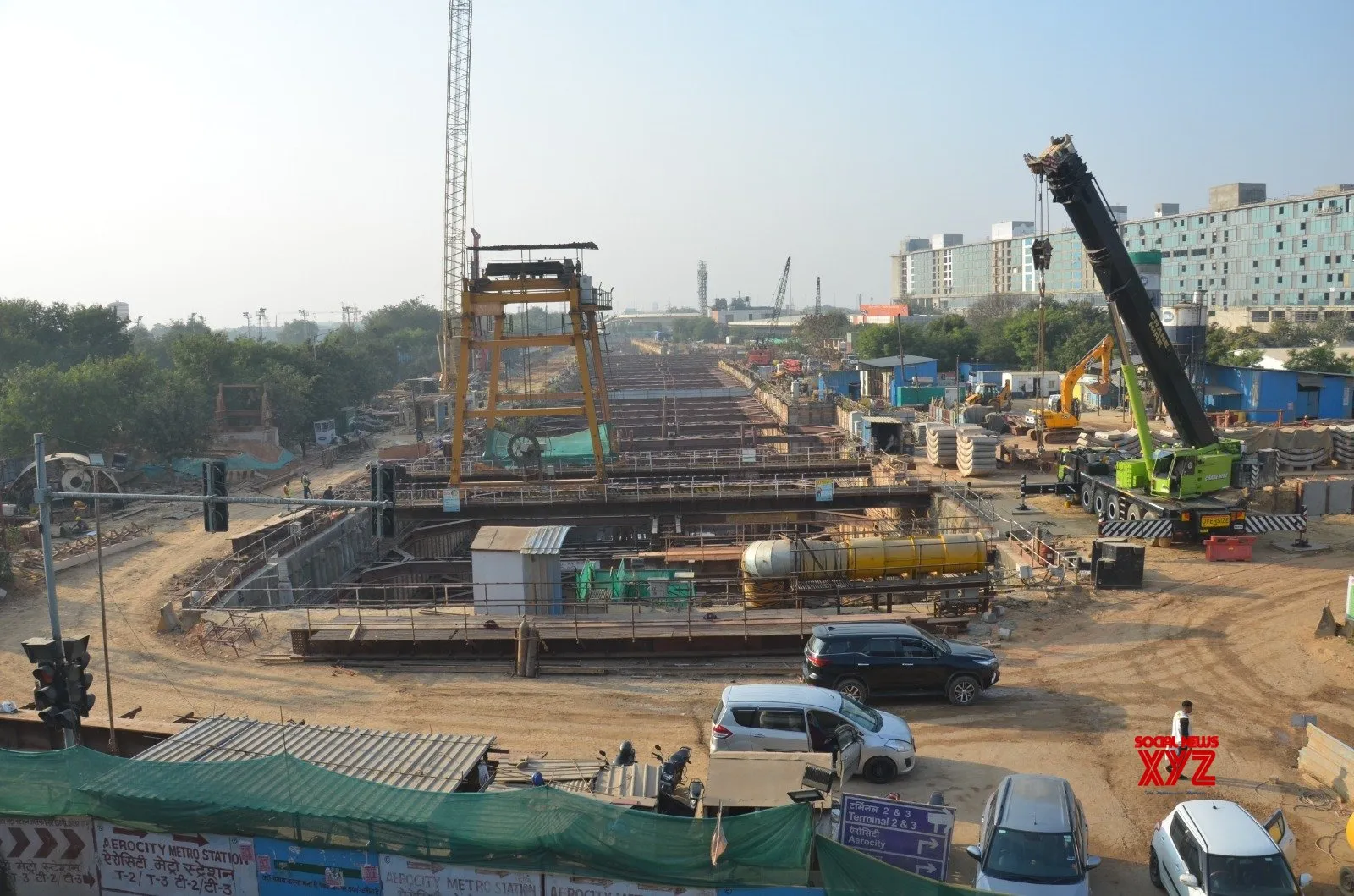
Delhi’s aviation gateway is set for a major public transport upgrade as a key metro station near the airport evolves into a high-capacity interchange linking multiple rail corridors. The expansion at the Aerocity area is expected to reshape how passengers, workers and nearby residents reach Indira Gandhi International Airport, while reinforcing the capital’s push towards transit-led urban growth.
The project integrates an existing airport-focused metro line with a new corridor under construction as part of the network’s ongoing expansion phase. Transport officials indicate that the upgraded facility will enable seamless transfers between lines serving south Delhi neighbourhoods and the airport zone, reducing travel time for daily commuters and air travellers alike. At the centre of the plan is the creation of the Aerocity metro hub as a multi-level interchange. The upcoming corridor connecting southern districts to the airport zone has received clearance for a short extension to the domestic terminal, closing a long-standing last-mile gap in rail access. Urban mobility experts say this move can shift a portion of airport-bound trips away from private cars and taxis, easing congestion on arterial roads.
Design provisions show the new platforms will be built deep underground and longer than typical stations to manage higher footfall and interchange flows. Engineers are incorporating both direct platform transfers and paid-area concourse links, which reduce exit and re-entry time for passengers switching lines. Such layouts are increasingly common in global cities where airport rail links double as commuter corridors. The Aerocity metro hub is also being planned with future regional rail integration in mind. Structural allowances are being built so that a proposed rapid rail system linking the capital with neighbouring cities can intersect here at a later stage. If realised, this would allow travellers from satellite towns to reach the airport through a single integrated network rather than multiple road transfers.
From a city-planning perspective, transport economists note that strong airport connectivity often influences real estate and commercial development patterns. Hospitality districts, business parks and logistics facilities tend to cluster around well-connected airport nodes. However, planners emphasise that such growth must be balanced with environmental safeguards, mixed land use and pedestrian-friendly design to avoid car-dependent sprawl. Metro expansions also carry climate implications. Electrified mass transit produces far lower per-passenger emissions than road traffic, supporting Delhi’s broader air quality and decarbonisation goals. By improving reliability and coverage, interchange hubs encourage more residents to adopt public transport for routine travel, not just airport trips.
As the network adds new stations and interchange points over the coming years, the success of projects like the Aerocity metro hub will depend on execution quality, last-mile connectivity and integration with buses and non-motorised transport. For a city grappling with congestion and pollution, each effective interchange can play a small but meaningful role in steering growth towards a more connected and lower-carbon future.
Delhi Aerocity interchange boosts airport reach